

Italy Yacht Charter
Crewed yachts from the Amalfi Coast to the Costa Smeralda, from €15,000 a week plus 22% VAT. Broker-led since 1992.
Reviewed by Adrian Sneed, Charter Broker at Sneed Charters — a family brokerage arranging crewed yacht charters in the Mediterranean since 1992.
A crewed week in Italy runs from about €15,000 for a catamaran to €500,000 and beyond for a superyacht, and it buys the finest coastline in the Mediterranean: the Amalfi Coast and Capri, Sardinia’s Costa Smeralda, the Aeolian Islands. It is also the most heavily taxed — charter VAT is 22%, the highest of the Mediterranean majors, and the old lump-sum reduction for yachts over 24 metres was abolished in November 2020. Relief for time spent outside EU waters still exists, but it now has to be evidenced rather than assumed. The other thing that decides an Italian week is the marine parks: Portofino and La Maddalena each set their own anchoring and mooring rules, and in Portofino’s case a charter yacht cannot moor inside the protected area at all.
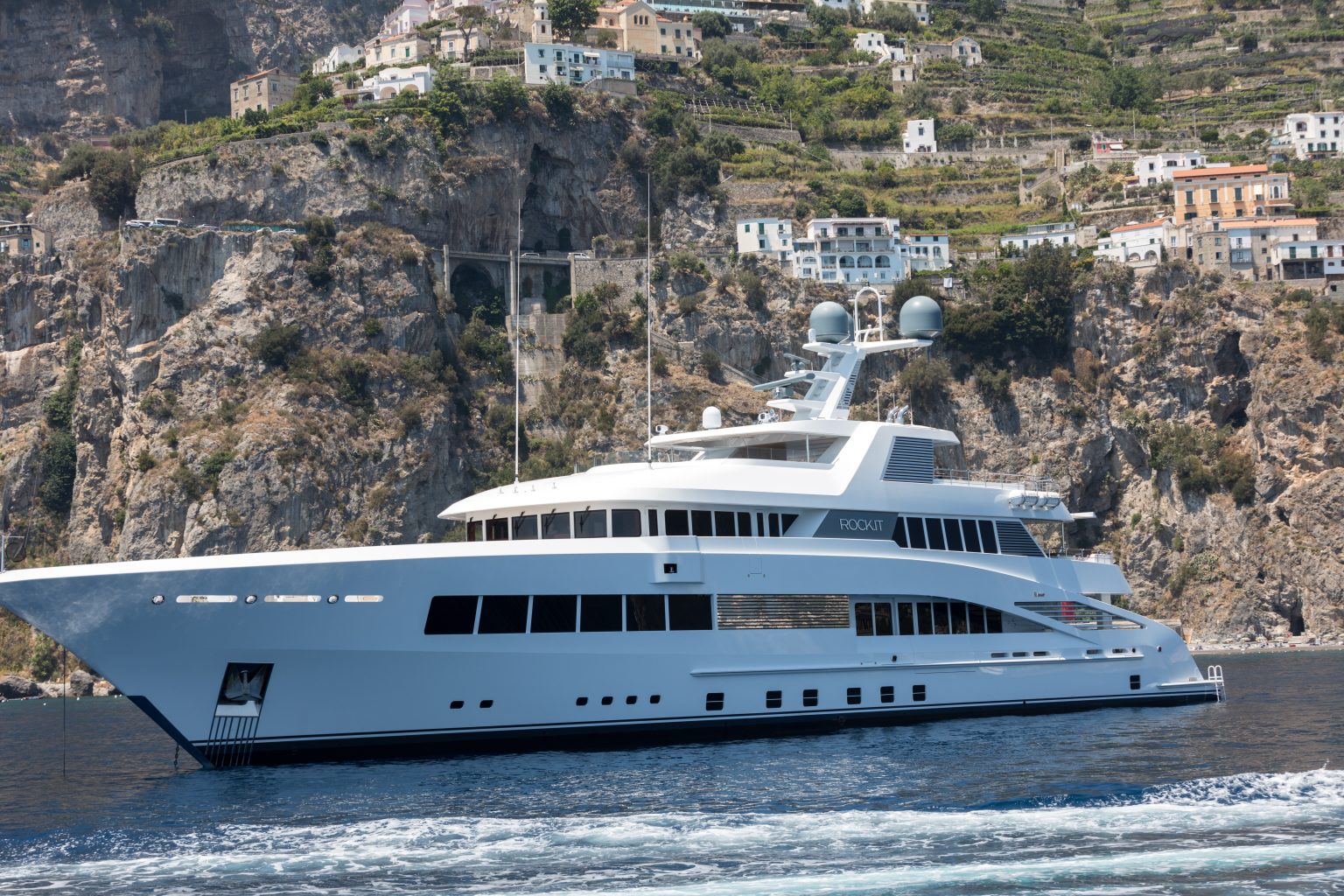
Where to charter in Italy
Five grounds, and they do not cruise alike. The Amalfi Coast and the Aeolians are short-hop island circuits. Sardinia is a permit regime as much as a cruising ground. The Ligurian Riviera is a day-trip coast with a protected area in the middle of it. The Tuscan archipelago is the quietest and the least visited.
Five cruising grounds at a glance
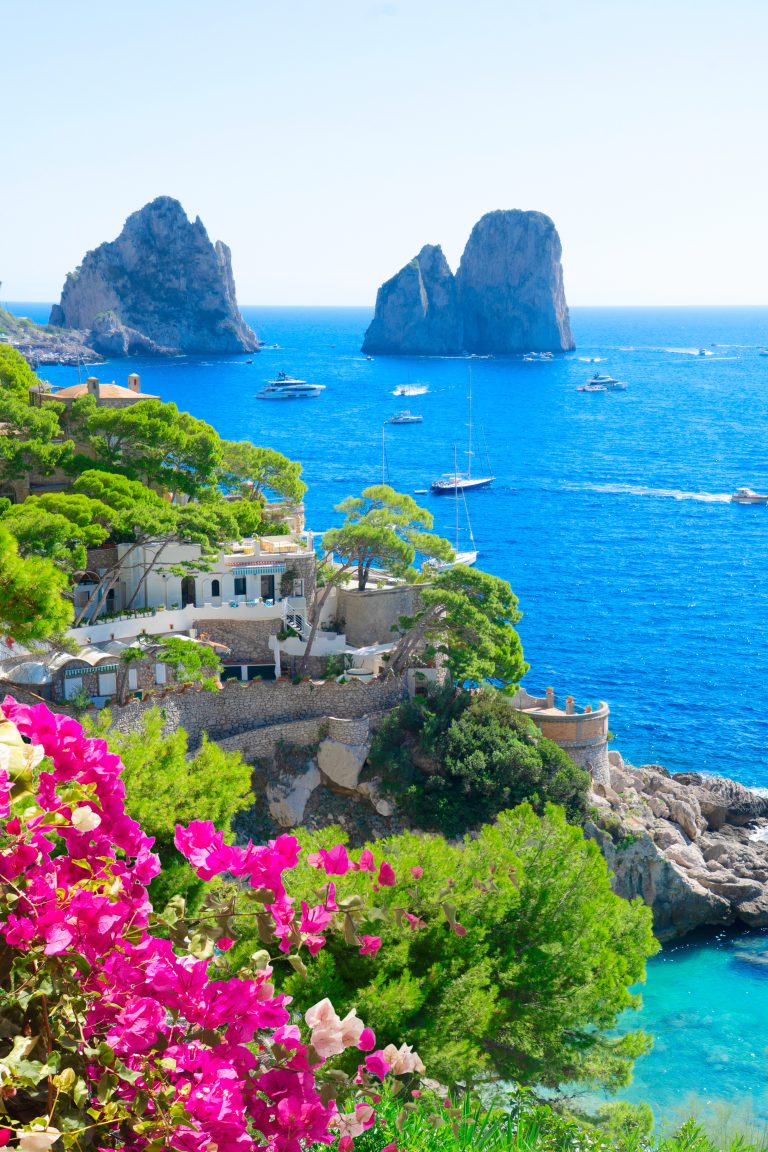 Capri
CapriAmalfi Coast & Capri
Best monthsMay–Jun, Sep
Very short hops and heavy ferry traffic. A first Italian charter, and the best shore programme.
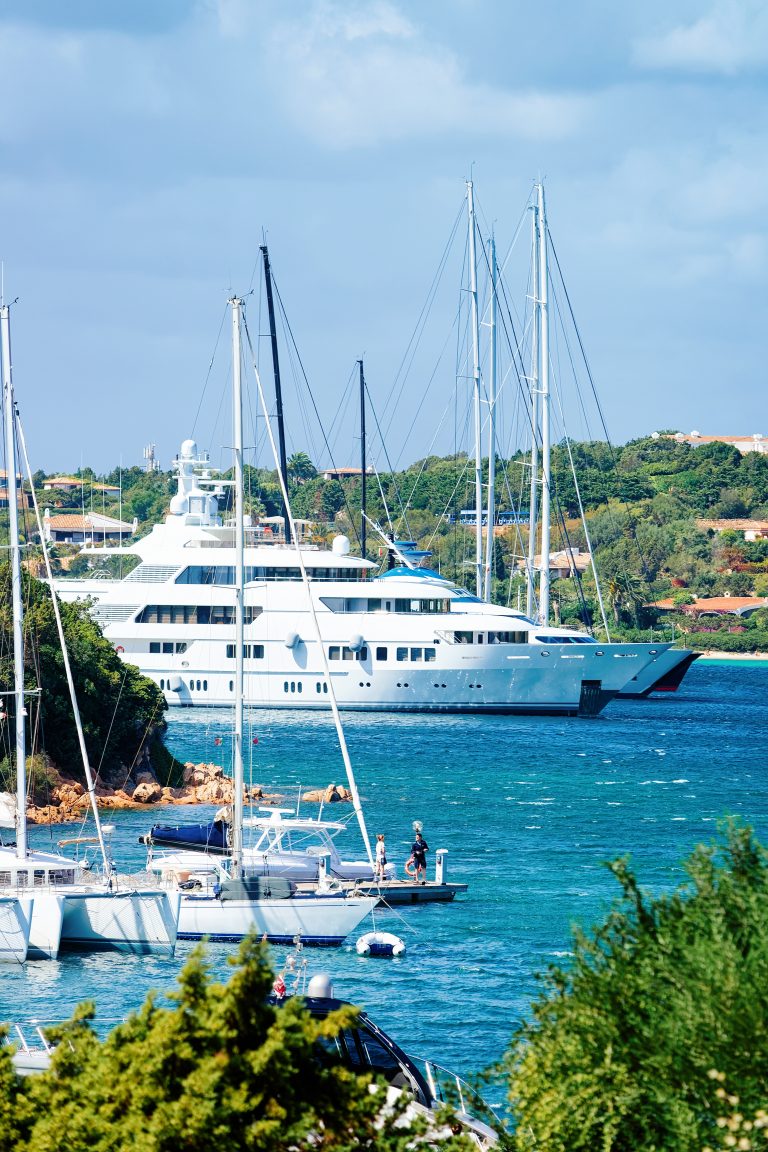 Porto Cervo
Sardinia — Costa Smeralda & La Maddalena
Best monthsJun, Sep
Short passages inside a national park with paid permits. Anchorages, water, larger yachts.
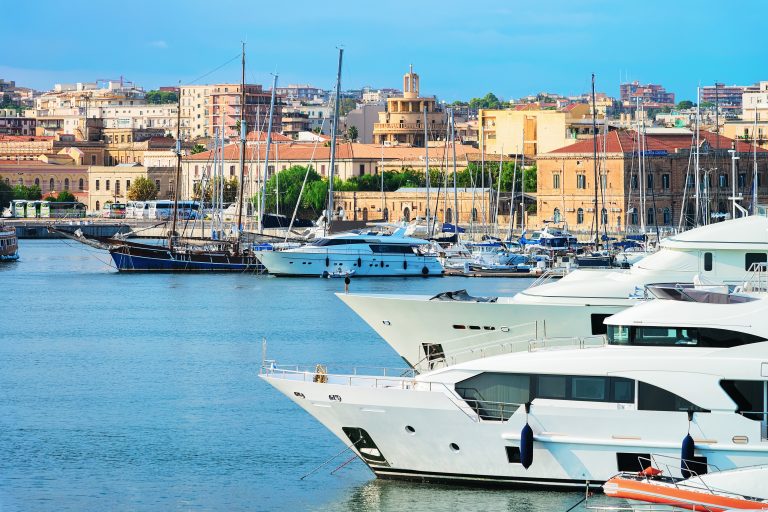 Siracusa
Sicily & the Aeolian Islands
Best monthsJun, Sep
Compact island group, long legs to reach it. Volcanic scenery and fewer crowds.
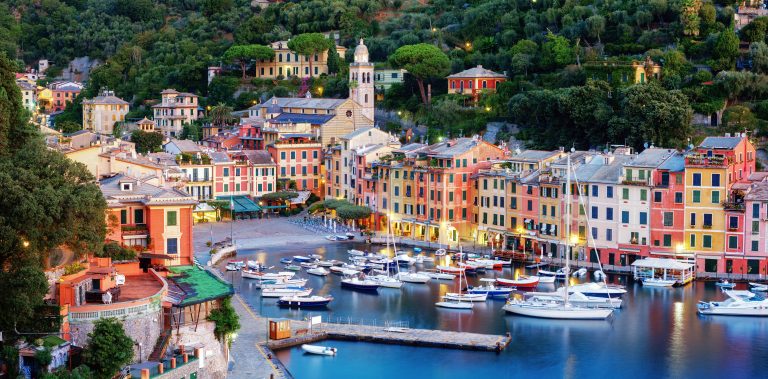 Portofino
Ligurian Riviera & Portofino
Best monthsJun, Sep
A day coast, and the protected area limits mooring. Restaurants and towns, not anchoring.
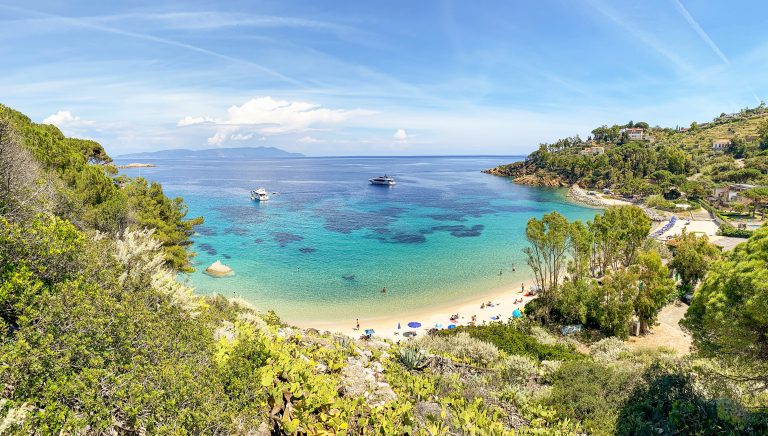 Isola del Giglio
Tuscan archipelago
Best monthsMay–Jun, Sep
Seven islands inside a national park. Quiet weeks, sailing yachts.
“Best months” is our own recommendation, not an industry standard.

The trade-off worth saying out loud: Italy gives you the best coastline in the Mediterranean and charges you 22% for it. If the shore programme is the point, that is money well spent. If you mainly want to be at anchor, Greece and Croatia deliver a comparable week at 13%.
If Italy turns out not to be the right water for you, we broker the whole basin — see our Mediterranean yacht charter guide.
Amalfi in August or September?
September, and it is not close. The water is as warm, the ports have emptied, and you pay shoulder rates. August buys you one thing only: school holidays. If you are not tied to them, do not charter Italy in August. The season runs May to October. A useful objective marker: the marina at Capri prices its high season as 16 May to 15 September, with shoulder rates in the first half of May and from mid-September to mid-October. That is the industry's own read on when demand peaks, expressed in money rather than opinion.
Around Naples, air temperatures average roughly 18–28°C in June and 17–27°C in September, with sea temperature peaking near 27°C in August and holding well into September.
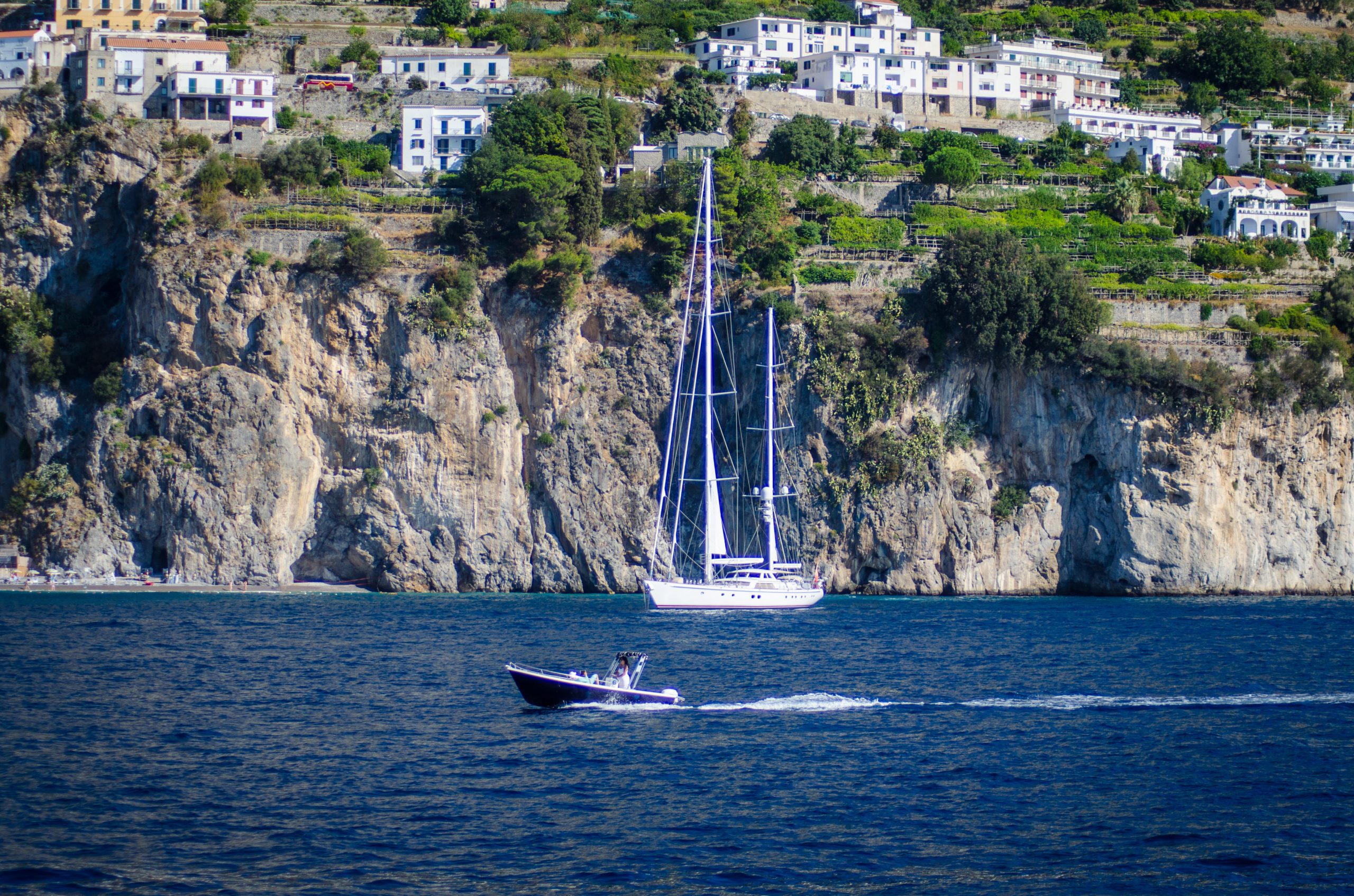
A sample week on the Amalfi Coast
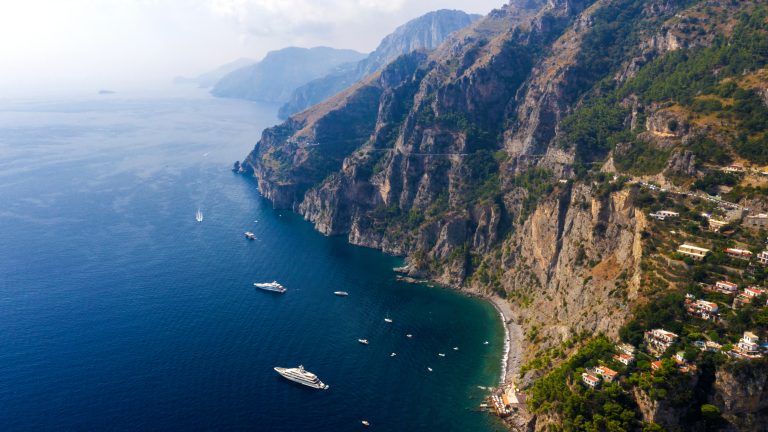
The most requested Italian week, as we would plan it in June or September: a round trip from Salerno, about 70 nautical miles in all, with no leg longer than a couple of hours on a motor yacht. It is a starting point, not a fixed route — the captain sets the final plan around weather and berths.
7 days · round trip from SalernoAbout 70 nm in allBest in June & September
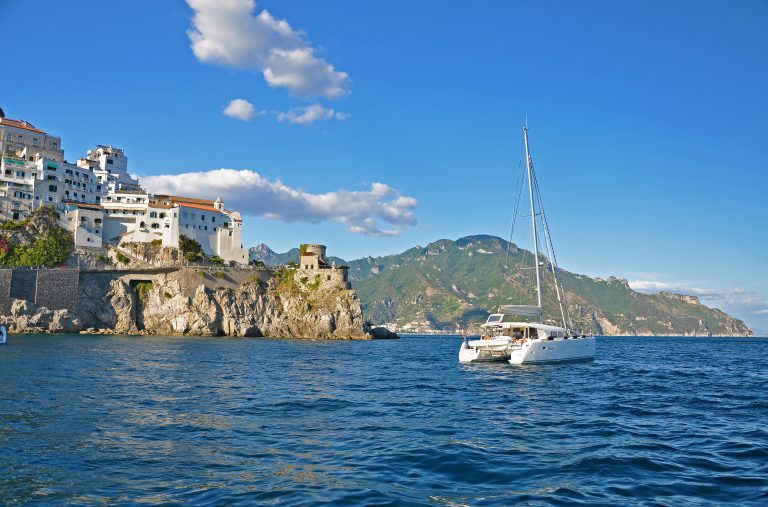
Day 1 of 7 · about 10 nm
Salerno to Amalfi
Board at Marina d’Arechi in the afternoon and run west along the coast to Amalfi. Dinner ashore in the town.
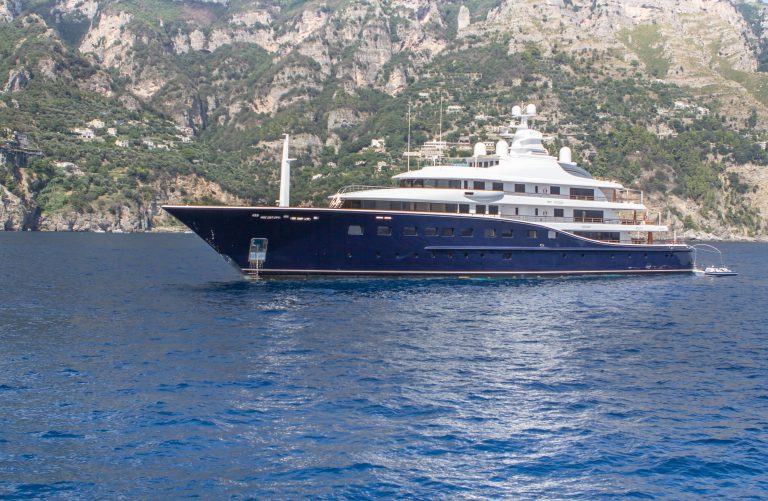
Day 2 of 7 · about 8 nm
Amalfi to Positano
Swim stops along the coast on the way, then a night at anchor off Positano with the town lit up above you.
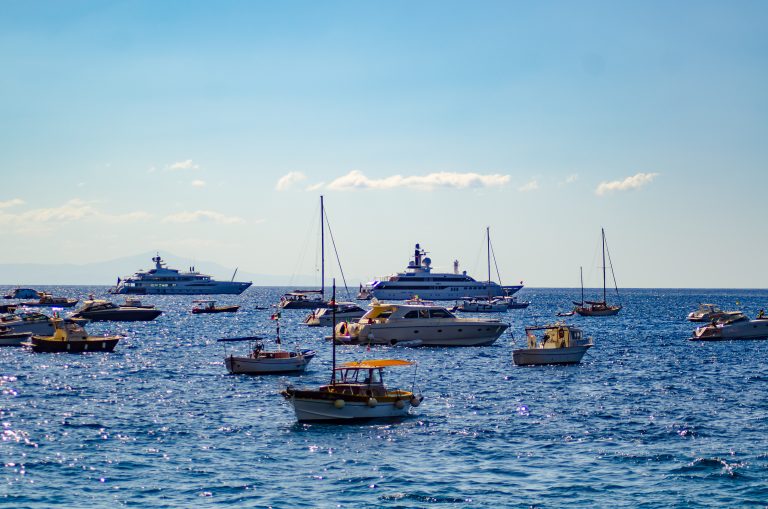
Day 3 of 7 · about 13 nm
Positano to Capri
A morning swim at the Li Galli islands, then on to Capri. Your captain arranges the berth in advance — Capri is not a port you turn up at.
Day 4 of 7 · at anchor
Capri
The Faraglioni by tender, the Blue Grotto early before the crowds, and the evening in Capri town or Anacapri.
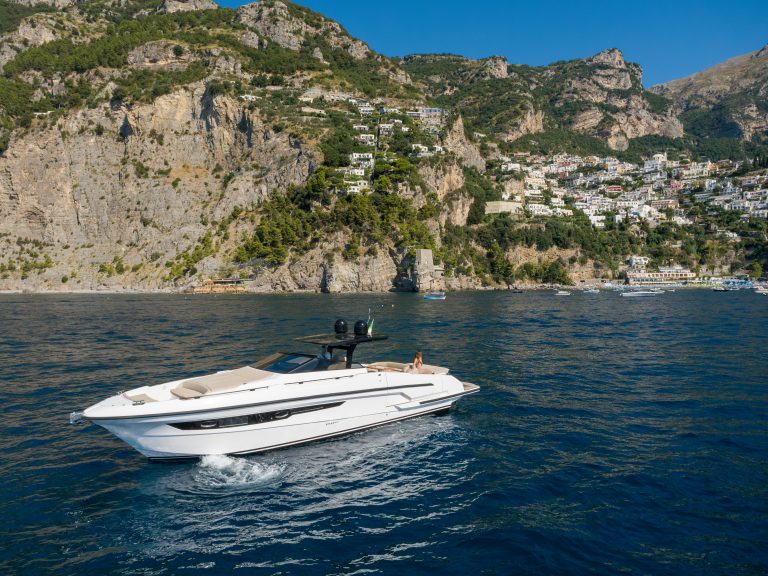
Day 5 of 7 · about 8 nm
Capri to Nerano
Across to the Sorrento peninsula for a long lunch on the water at Nerano, and a quiet night in the bay.
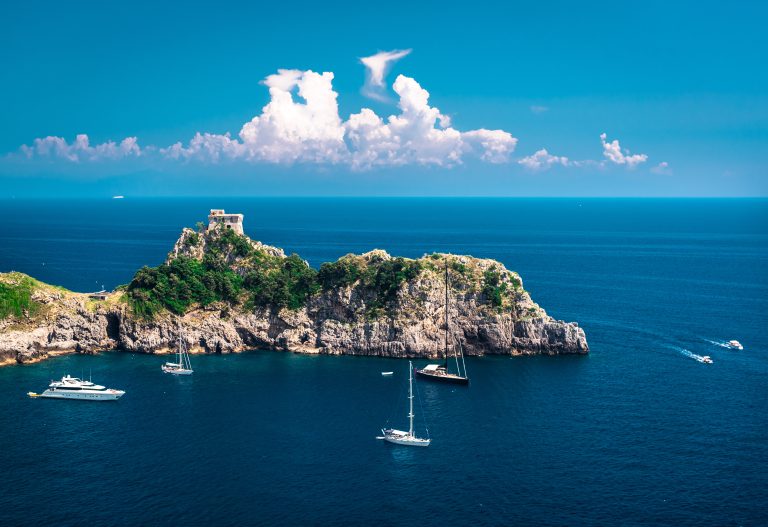
Day 6 of 7 · about 20 nm
Nerano to Amalfi
Back along the coast, with an afternoon ashore at Ravello above Amalfi.
Day 7 of 7 · about 10 nm
Amalfi to Salerno
A last swim, then a short run back to Salerno to disembark.
Want this week planned around your dates and the yacht you have in mind?
Plan my weekWhat an Italian charter costs, and what the tax adds
Weekly rates track the rest of the Mediterranean — roughly €15,000 for a crewed catamaran to €500,000 and beyond for a large superyacht, quoted on MYBA terms — the Mediterranean Yacht Brokers Association contract that is the industry standard for crewed charter — plus an APA of 25–35%: an Advance Provisioning Allowance, a float the captain spends on your fuel, food and berthing and reconciles with receipts at the end. What is specific to Italy is the tax on top.
| Yacht | Weekly rate | With 22% VAT | Where it suits Italy |
|---|---|---|---|
| Crewed catamaran 45–75 ft · 6–10 guests | €15,000–€60,000 | €18,300–€73,200 | Shallow draft for Sardinian and Tuscan anchorages. The sensible first charter. |
| Sailing yacht 75–150 ft · 6–12 guests | €30,000–€250,000 | €36,600–€305,000 | La Maddalena and the Tuscan islands; sailing vessels pay 40% less for the La Maddalena permit. |
| Motor yacht 75–130 ft · 8–12 guests | €60,000–€250,000 | €73,200–€305,000 | The Amalfi Coast and Capri, and the long legs out to the Aeolians. |
| Superyacht 130 ft and above · 10–12 guests | €250,000–€500,000+ | €305,000–€610,000+ | Based at Salerno’s Marina d’Arechi for the Amalfi Coast. Portofino means a tender from Santa Margherita. |
Want to see real yachts in these bands? Browse our fleet, or ask for a shortlist of yachts free on your dates.
Charter VAT in Italy is 22%, applied to the charter fee. On a €60,000 week that is €13,200, against €7,800 for the same yacht boarding in Greece or Croatia. That gap — about €5,400 — is the single largest line item you can move by changing where the week starts.
The old 6.6% rate is gone. Italy used to tax yachts over 24 metres at an effective rate of around 6.6%; that regime ended on 1 November 2020, so any quote still citing it is out of date. Relief for the part of a week spent outside EU waters still exists, but the yacht has to evidence it with tracking data or logs — we confirm whether it applies to your yacht before you sign.
What a week actually costs, all in
A €60,000 charter fee is not what leaves your account. Add an APA of 25–35% for fuel, food and berthing, and 22% Italian VAT on the fee, and the realistic all-in for that week is €88,200 to €94,200 — roughly 47 to 57% above the headline. A crew gratuity is customary and sits on top of that.
| Line | Low case | High case |
|---|---|---|
| Charter fee | €60,000 | €60,000 |
| APA at 25–35% | €15,000 | €21,000 |
| Italian charter VAT at 22% | €13,200 | €13,200 |
| All in | €88,200 | €94,200 |
Two of those three lines are fixed the moment you choose Italy. The VAT is 22% because the week starts in an Italian port — begin the same yacht in Greece or Croatia and that line is €7,800 instead of €13,200. The APA is a float you get the balance of back, not a fee. What the table really shows is that the only large number you can move by deciding something is the tax, and you move it by changing the country, not by negotiating.
What is included, and what is not
The charter fee buys the yacht, her crew, and her insurance. Everything you consume on board is billed separately through the APA — fuel, food, drink, berthing and park permits — and Italian VAT sits on top of the fee. On MYBA terms that split is standard and not negotiable.
In the charter fee
- The yacht herself, and her tenders
- The crew — wages, their food, uniforms
- Hull and third-party liability insurance
Billed through the APA, against receipts
- Fuel, for the yacht and the tenders
- Food and drink, provisioned to your preferences
- Berthing — marina fees and harbour dues
- Marine-park permits for La Maddalena, Portofino and the Tuscan archipelago
Extra, on top of both
- Italian charter VAT at 22%, charged on the fee
- Crew gratuity, at your discretion
- Your own trip-cancellation cover
Water toys are the one line that genuinely varies — on some yachts they are in the fee, on others they are an APA item. Confirm it on the specific vessel before you assume.
The part people misread is the APA. It is not a service charge and it is not profit — it is your own float, held by the captain, spent on your week and reconciled with receipts at the end. If you underspend it, the balance comes back to you. If you run a lot of air conditioning at anchor and eat ashore rarely, you will spend more of it than you expected, because fuel and provisioning are the two lines that move most.
Want this worked out for a real yacht and your dates?
Your broker sends a shortlist of yachts that are free that week, each priced all in — APA and Italian VAT included.
Get My ShortlistWhere your week starts
Most Italian charters board at Naples, Salerno, Olbia, Palermo or Genoa. The starting port fixes Italian VAT at 22% for the whole charter, so a week that begins in Italy is taxed at 22% even if most of it is spent elsewhere.
Two practical notes. Capri takes yachts up to 60 metres with 8 metres of depth, but access requires a prior call under the harbour ordinances, commercial ferry traffic has priority, and there is a two-knot speed limit inside. It is not a port you turn up at. Salerno's Marina d'Arechi is the practical superyacht base for the Amalfi Coast — a dedicated quay for yachts from 32 to 100 metres, 8 metres of depth, a 170-metre entrance, bunkering and a helipad, close to Salerno Costa d'Amalfi airport.
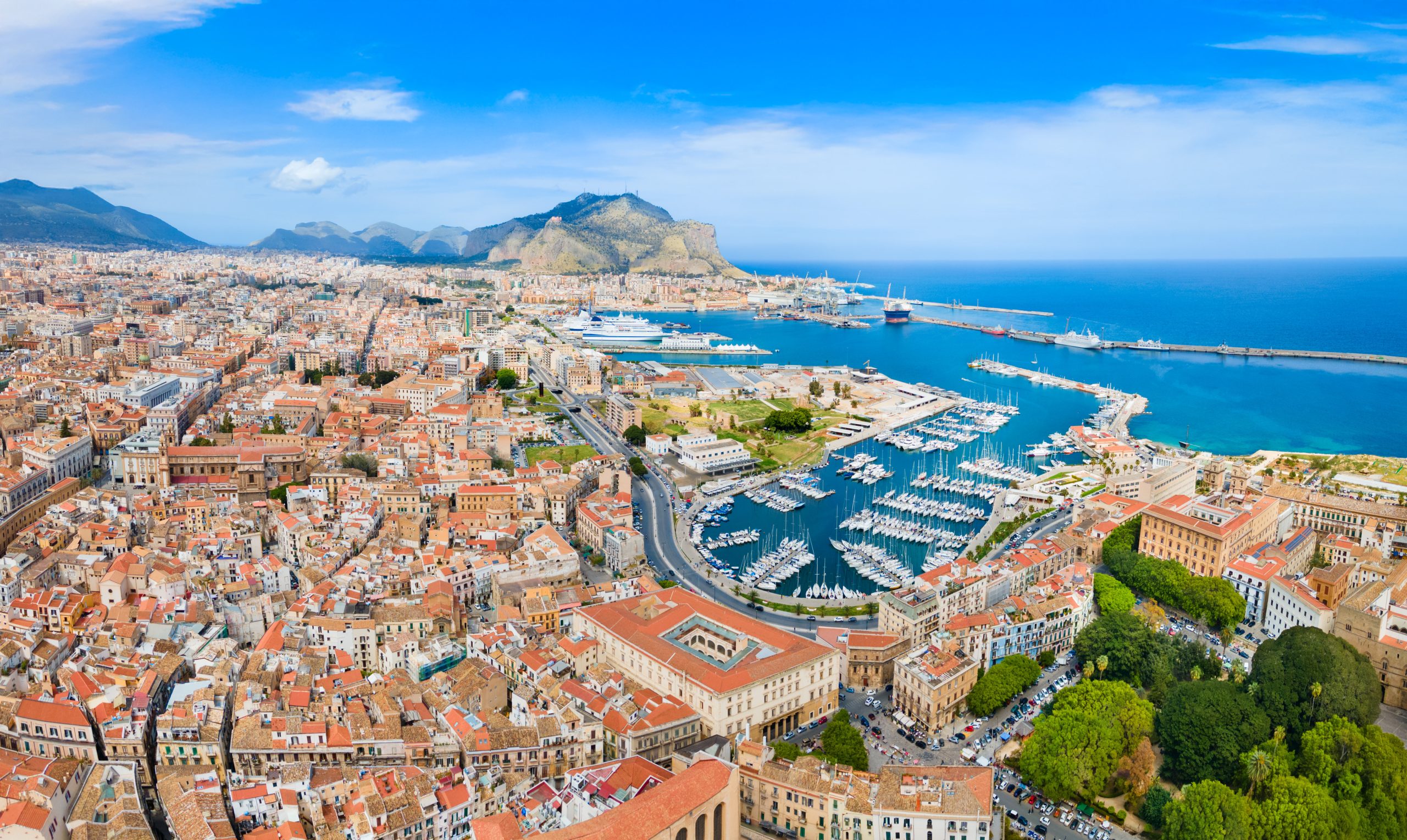
The marine parks decide where you can actually moor
Italy has 32 marine protected areas, zoned A, B and C: Zone A is an integral reserve where navigation and anchoring are both prohibited, Zone B is regulated, Zone C is a buffer. On an Italian charter these zones do more to shape the itinerary than the weather does.
Portofino — the one nobody mentions
The Portofino marine protected area publishes a mooring tariff that stops at 24 metres, and most of its buoys are limited to vessels under 7.5 metres. In Zone A, navigation, anchoring and mooring are all prohibited. In Zone B, yachts above the eco-compatibility thresholds may transit only perpendicular to the shore at five knots, to reach the San Fruttuoso moorings. In Zone C, anchoring is permitted only 100 metres or more from shore.
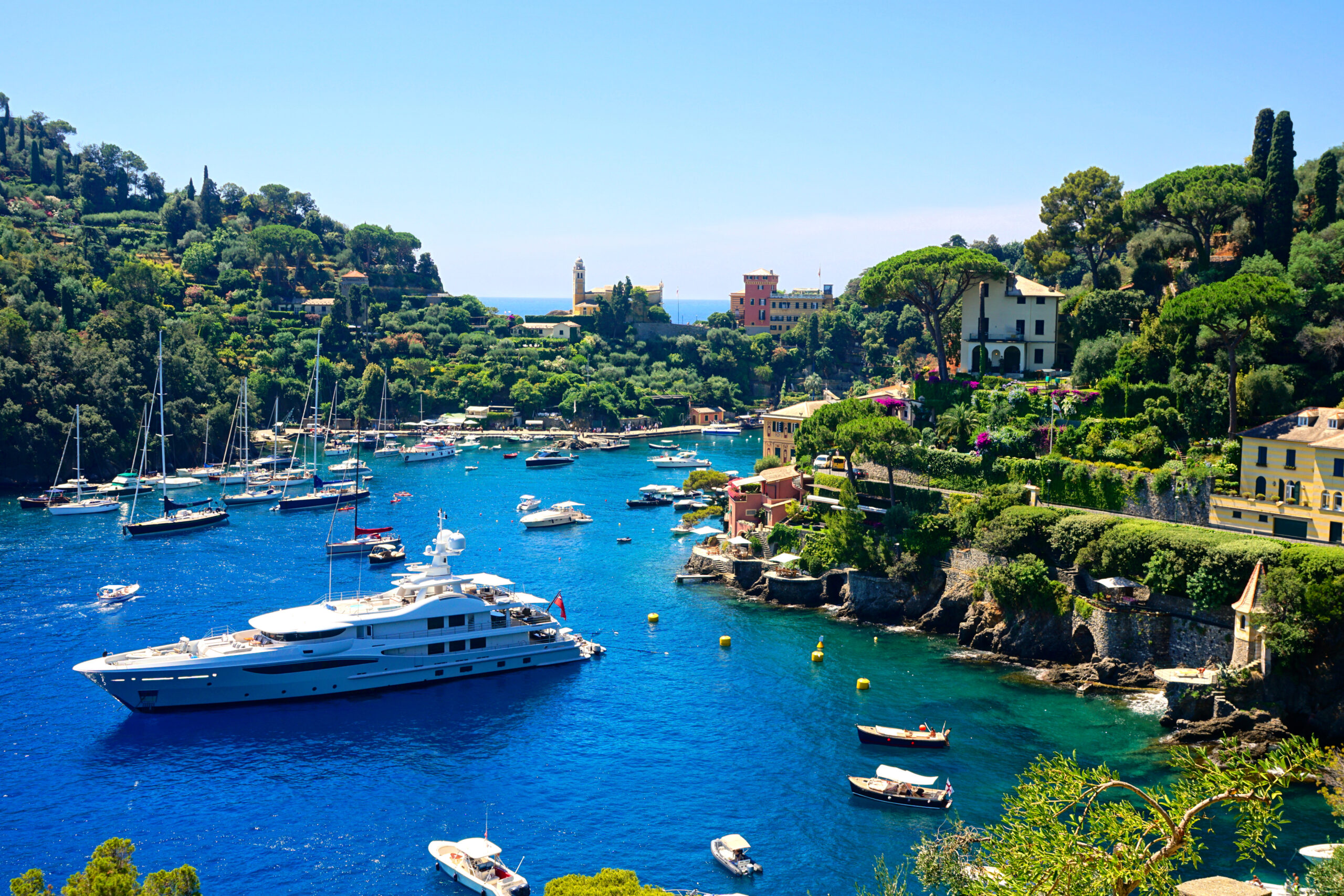
The honest version: a charter yacht of any real size cannot moor inside the Portofino MPA. You visit Portofino by tender from Santa Margherita Ligure, which is a couple of miles away and where the yacht can actually lie. Brokers who put Portofino on an itinerary without saying this are setting up a disappointing afternoon.
La Maddalena — a permit, priced by the metre
Sardinia's La Maddalena National Park charges for access by length of the vessel. For 2026 the daily permit runs €4.50 per metre for yachts of 24 to 35 metres and €5.00 per metre above 35 metres; a seven-day permit for a yacht in the 40-metre-plus band is €760. Buying online takes 5% off, and sailing vessels get 40%.
New rules for 2026 also cap commercial activity inside the park: charter permits have been cut to 450, day-boat rentals are limited to 700 units a day in the marine areas, and tender landings on beaches are prohibited — landings are permitted only at docks and piers, and only between 17:00 and 09:00. Operating without a permit carries fines of €1,032 to €3,098.
Your brokers
You get a named broker, not a call centre. The same person takes your first message, negotiates the contract and is reachable while you are aboard.

Hansel Sneed
Founder & Charter Broker
Hansel founded Sneed Charters in 1992 and has been placing crewed charters for more than thirty years.

Adrian Sneed
Charter Broker
Adrian is the broker who reviewed the rates, taxes and marine-park rules published on this page, and the person who will answer when you send your dates.
Get a shortlist for your dates
Tell us the week, the part of Italy you are drawn to and how many are aboard. Your broker replies within one business day with yachts that are genuinely free for those dates, priced with APA and VAT included. No fee to you — the yacht's owner pays our commission.
Prefer to talk it through? Call 1-561-463-6840.
Italy yacht charter FAQs
How much VAT do I pay chartering a yacht in Italy?
22% on the charter fee — the highest rate of the Mediterranean majors. Relief is available for the documented portion of the charter spent outside EU territorial waters, but it must be evidenced under the Agenzia delle Entrate rules of October 2020, not presumed.
Is the 6.6% Italian yacht VAT rate still available?
No. The lump-sum presumption regime, under which yachts over 24 metres were commonly quoted an effective rate near 6.6%, was repealed and ceased to apply from 1 November 2020. Any quotation still citing it is out of date.
Is Italy or Greece cheaper for the same yacht?
Greece, by a wide margin on tax alone. Charter VAT is 13% in Greece against 22% in Italy — about €5,400 on a €60,000 week. Choose Italy when the coastline and the shore programme are what you are buying.
Can we moor at Portofino?
Realistically, no. The Portofino marine protected area's mooring provision caps at 24 metres and most buoys are limited to under 7.5 metres, with anchoring in Zone C permitted only 100 metres or more offshore. Charter yachts lie at Santa Margherita Ligure and visit Portofino by tender.
Will I be fined for anchoring over seagrass in Italy?
Italy has no national posidonia fine regime. The large fines reported in the press are French — the €90,000 case was in Corsica. Italian anchoring restrictions are set by individual marine parks and local port ordinances, and a captain working those waters will know them.
How far in advance should I book a yacht charter in Italy?
For July and August, six to twelve months ahead. Peak weeks on the better yachts go early, and Capri, Positano and Porto Cervo fill first. Shoulder weeks in May, June, September and October can often be arranged inside three months.
When is the best month for an Italian charter?
September. The sea is still warm, the ports have emptied after the August peak, and you pay shoulder-season rates — Capri's marina, for instance, drops out of high season on 15 September.
What is APA on a yacht charter, and how much should I budget?
APA stands for Advance Provisioning Allowance — a float of 25 to 35% of the charter fee, paid before boarding and held by the captain. It covers fuel, food, drink, berthing and park permits, and is reconciled against receipts at the end of the week. Unspent money is returned to you.
What is included in an Italian yacht charter fee?
The yacht, her crew and her insurance. Fuel, food, drink, berthing and marine-park permits are billed separately through the APA, and Italian charter VAT of 22% is added to the fee. Crew gratuity is discretionary and on top. This split is standard under MYBA terms.
What does a week chartering a yacht in Italy cost all in?
Expect 47 to 57% above the advertised fee before gratuity. On a €60,000 week that is roughly €88,200 to €94,200 once you add APA at 25 to 35% and Italian VAT of 22% on the fee. The VAT alone is €13,200, against €7,800 in Greece.
Can I charter a non-EU-flagged yacht in Italy?
Since customs circular ADM 11/2026 of 15 May 2026, yes — non-EU-flagged commercial yachts can charter in Italy under temporary admission rather than full importation. The conditions on who aboard must be established outside the EU are read differently by different advisers, so confirm it yacht by yacht.
Sources
Checked September 2026.
- Agenzia delle Entrate — Provvedimento n. 341339/2020, evidence of navigation outside EU waters
- Watson Farley & Williams — the Italian VAT regime on chartering of pleasure vessels
- Parco Nazionale dell'Arcipelago di La Maddalena — 2026 permit tariffs
- Area Marina Protetta Portofino — navigation and mooring rules
- Porto Turistico di Capri — 2026 tariffs and season dates