

How Much Does It Cost to Charter a Yacht?
Weekly rates by yacht type, how the APA works, what is included and what is not — written by the brokers who quote these charters every week.
Rates reviewed August 2026A crewed yacht charter costs roughly $15,000–$45,000 a week for a catamaran (45–62 ft), $40,000–$150,000 for a sailing yacht (60–100 ft), $20,000–$250,000+ for a motor yacht (50–130 ft) and $300,000–$1,000,000+ for a superyacht (150 ft+). Day charters start around $3,000.
WHAT SITS ON TOPThat figure is the base charter fee. On most motor and larger sailing yachts you also fund an Advance Provisioning Allowance (APA) of 25–35% of the base fee for fuel, food, beverages and dockage — anything unspent is returned to you. Many crewed catamarans are all-inclusive instead. Budget a further 10–20% for crew gratuity, plus local taxes and cruising permits.
Yacht charter rates by yacht type
These are the ranges we quote from most often. Where a yacht sits inside its range comes down to age, build quality, crew size and how in-demand the week is — a newly refit yacht in the Mediterranean in August and the same yacht in May are different numbers.
-
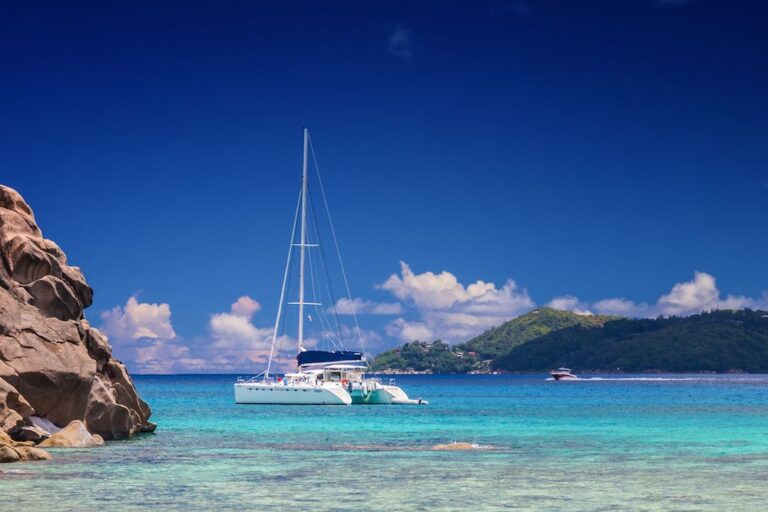
Catamaran45–62 ft
$15,000–$45,000per week
Often all-inclusive
Families, first-time guests, relaxed Caribbean and Bahamas cruising
-
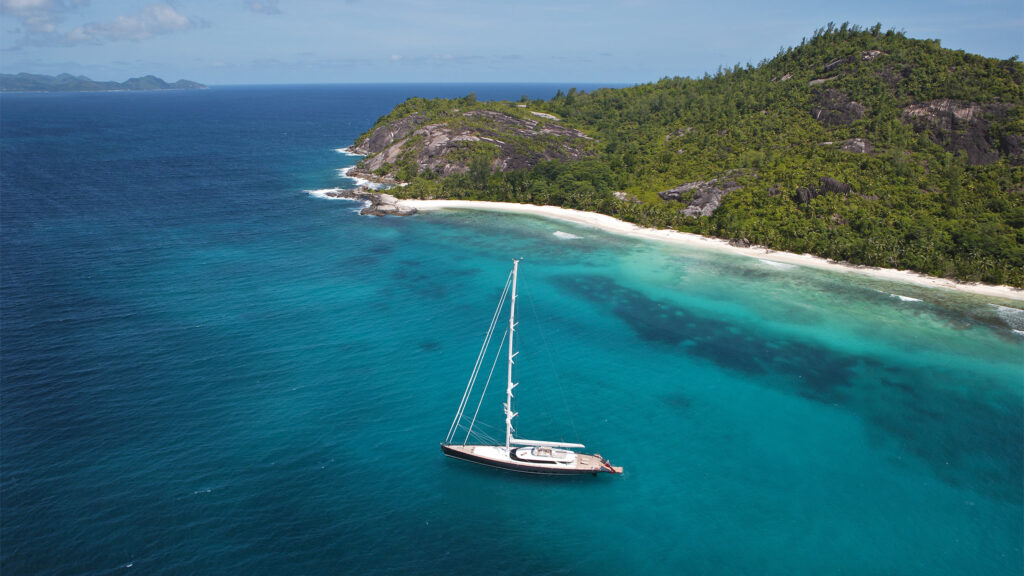
Sailing yacht60–100 ft
$40,000–$150,000per week
Plus expenses (APA)
Sailing enthusiasts, couples, guests who want the quiet and the craft
-
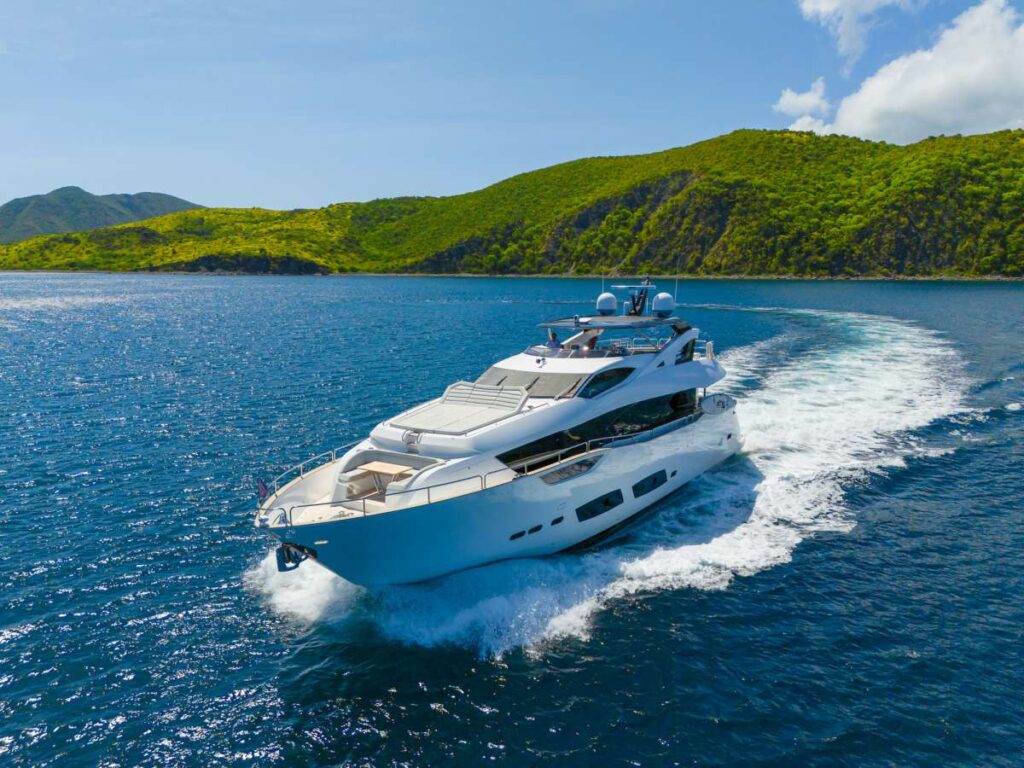
Motor yacht50–130 ft
$20,000–$250,000+per week
Plus expenses (APA)
Multi-destination itineraries, families, corporate groups
-
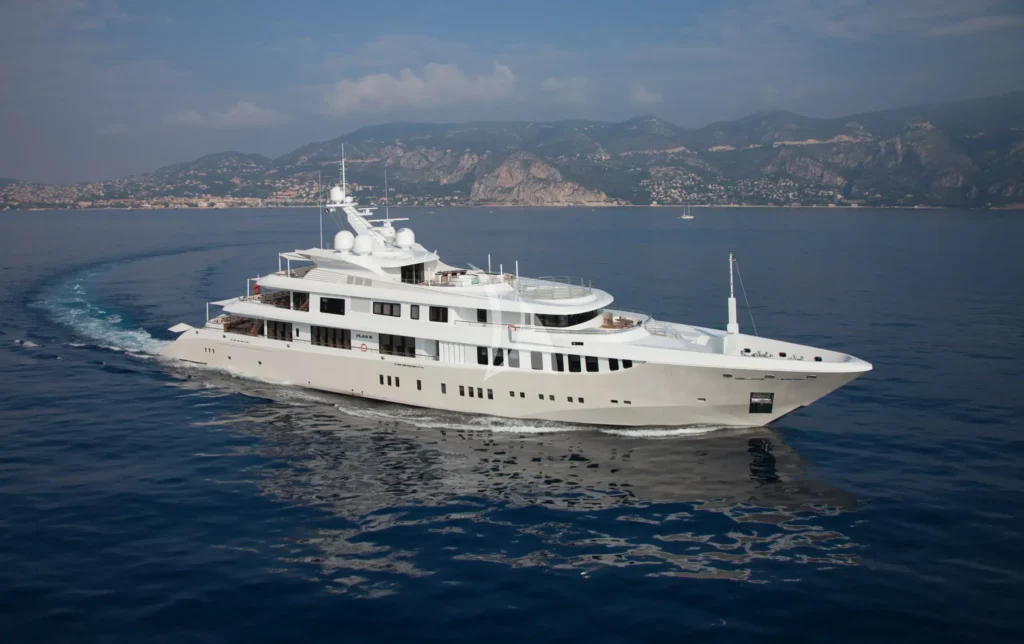
Superyacht150 ft+
$300,000–$1,000,000+per week
Plus expenses (APA)
Large groups, VIP travel, maximum privacy and crew
-

Day charterBy the day
$3,000–$15,000+per day
Usually inclusive
Celebrations, short escapes, testing the water before a full week
Estimate your charter cost
Pick the yacht, the season and how long you want to be aboard, and this gives you a realistic total — base fee, APA, crew gratuity and local tax — built from the rates published above. It is an estimate to budget against, not a quote; a broker prices your exact week against real availability.
Charter cost estimator
Four questions. Everything updates as you change it.
—
How this is calculated. The base fee comes from the published weekly ranges, scaled by length across each yacht type's band — steeply, as charter rates actually rise with length, then adjusted for season (high season +10%, low season −10%) and pro-rated by days, with a 15% uplift on charters shorter than a week. On plus-expenses charters an APA of 25–35% of the base fee is added; all-inclusive charters carry none. Crew gratuity is shown at 10–20%, and local tax at the rate for your cruising ground from the table above, charged on the base fee only. Figures are indicative ranges, not a quote.
Turn that estimate into real numbers
An estimate tells you roughly what to budget. A broker tells you what a specific yacht costs for your exact week — with the APA, taxes and what is included spelled out. Eight questions, about a minute, no obligation.
Prefer to talk it through? Call 1-561-463-6840, or use the full enquiry form if you would rather give more detail up front.
Yacht Charter Cost & APA Planning Guide
Eight pages you can budget against and take to a broker — the same figures published on this page, in a form you can print, mark up and share with whoever is paying.
- Weekly rates by yacht type, and what moves a yacht within its range
- The APA explained properly — what it covers, and why the balance comes back to you
- Who pays for what on all-inclusive versus plus-expenses charters
- Charter tax by cruising ground across ten regions
- Two worked example budgets, and the booking timeline from first call to boarding
- A budget worksheet plus the seven questions worth asking before you sign
Your guide is ready
Thank you — the download should start automatically. If it does not, use the button below.
Download the PDFWe send the guide and occasional charter planning notes. No spam, unsubscribe any time, and your details are never shared.
How yacht charter pricing works
Almost every week-long charter is quoted on one of two models, and knowing which one you are looking at is the difference between a realistic budget and a surprise.
All-inclusive (mostly crewed catamarans)
One price covers the yacht, the crew, meals, a standard open bar, snacks, non-motorised water toys and fuel within normal cruising. Premium wines and champagne, specialty provisioning requests, transfers and certain permits sit outside it. Simple to budget, and the reason many families choose a crewed catamaran for a first charter.
Plus expenses, with an APA (motor and larger sailing yachts)
You pay a base charter fee for the yacht and crew, then a separate Advance Provisioning Allowance — typically 25–35% of the base fee — which funds running costs during the charter. The captain draws from it for fuel, food and beverages, dockage, local taxes and permits, and incidentals, accounts for every expense, and returns anything unspent at the end of the charter. If you spend beyond it, you top it up on board.

What is an APA, exactly?
The Advance Provisioning Allowance is not a fee and not a deposit — it is your money, held and spent on your behalf by the captain, with the balance returned. On a plus-expenses charter it is the single largest variable in your total cost, and it is where a good broker earns their keep: fuel burn on a fast 130 ft motor yacht crossing between islands looks nothing like a sailing yacht moving 20 miles a day.
What the APA typically covers:
- Fuel for the yacht and tenders — the largest single item on most motor yacht charters
- Food and beverages provisioned to your preference sheet
- Dockage and mooring fees — significant in the Mediterranean, minimal in much of the Caribbean
- Local taxes, cruising permits and port charges
- Incidentals — laundry, communications, shoreside deliveries
On plus-expenses charters the captain provides regular updates on fuel, communications and beverage consumption during the trip, and a full expense report at the end.
What's included — and what isn't
| Item | All-inclusive charter | Plus-expenses charter |
|---|---|---|
| Yacht and professional crew | Included | Included in base fee |
| Meals and standard bar | Included | Paid from APA |
| Fuel within normal cruising | Included | Paid from APA |
| Dockage and mooring | Usually included | Paid from APA |
| Local taxes and cruising permits | Some permits extra | Paid from APA or added to base fee |
| Non-motorised water toys | Included | Included on most yachts |
| Premium wines and champagne | Extra | Paid from APA or extra |
| Transfers, spa, jetski licensing | Extra | Extra |
| Crew gratuity | Extra (10–20%) | Extra (10–20%) |
What drives the final price
- Season and dates. High season — holidays, Mediterranean summer, Caribbean winter — commands premium rates. The same yacht in a shoulder week can be materially cheaper.
- Destination. Tax structures, cruising permits and fuel distances vary by region, and dockage in the Western Mediterranean is in a different league to the Bahamas.
- Yacht size, age and brand. Newer or recently refit yachts with larger crews and better amenities price higher.
- Itinerary and fuel use. Faster cruising and longer passages increase fuel spend, which comes straight out of your APA.
- Guest count. More guests means more cabins, more crew and more provisioning.
Charter terms also differ by cruising ground — Western Mediterranean Terms, Standard Eastern Mediterranean Terms, Standard Caribbean Terms and Greek Terms each include and exclude different items. We break those down in the fees and expenses section of our how-to-charter guide.
Charter tax and VAT by cruising ground
Tax is the cost line guests most often miss when comparing quotes, and it varies more than anything else on this page. A week in Italy and the same week in Montenegro are not the same number once tax lands. These are the rates we see applied most often — indicative, not a quote, and always confirmed in writing before you sign.
| Cruising ground | Charter tax / VAT | How it works in practice |
|---|---|---|
| France & Monaco | 20% | May be reduced pro-rata for the portion of the charter spent outside EU waters, where the itinerary is properly documented. |
| Italy | 22% | The effective rate can fall depending on the itinerary and time spent in non-EU waters. |
| Spain & Balearics | 21% | Requires the yacht to hold a Spanish charter licence. The Canary Islands apply IGIC instead of VAT. |
| Greece | 13% (24% short charters) | 13% on crewed charters over 48 hours; 24% on shorter or bareboat charters. Certification reductions bring the effective rate as low as 5.2% on some yachts — your quote states the certified rate. |
| Croatia | 13% | Applies to qualifying multi-day charters on yachts holding a Croatian licence. |
| Montenegro | 0% | No charter VAT in Montenegrin waters, but Croatian VAT applies to any time the itinerary spends in Croatia. |
| Turkey | 20% | Some charter arrangements are treated differently under local rules. |
| Bahamas | 14% | 4% charter tax plus 10% VAT, charged on the base fee and not on the APA. A cruising permit and a $30 per person passenger tax apply separately. |
| British Virgin Islands | None | No charter VAT. Instead a cruising permit of roughly $4–$16 per person per day, a $10 per person environmental levy, and national park fees. |
| US & US Virgin Islands | No federal VAT | State and local taxes vary by jurisdiction. |
Two things worth knowing. Tax is normally charged on the base charter fee rather than on the APA, so a headline percentage applies to a smaller number than guests expect. And the charter terms your yacht is contracted under — Western Mediterranean, Standard Eastern Mediterranean, Standard Caribbean or Greek Terms — decide what is bundled into that base fee in the first place, which changes the amount being taxed. We break those terms down in the fees and expenses section of our how-to-charter guide.
Rates above were verified in August 2026 and are indicative only. Charter tax depends on the yacht's flag, licences and certification, the exact itinerary and the contract used — we are brokers, not tax advisers, and your broker confirms the figure that applies to your charter in writing before you commit.
Two worked examples
Illustrative only, using mid-range figures — your broker quotes real numbers for your exact yacht, dates and guest count.
A family of eight — crewed catamaran, British Virgin Islands, one week

| Base charter fee (all-inclusive, 55 ft catamaran) | $32,000 |
| APA | n/a — all-inclusive |
| Crew gratuity at 10% | $3,200 |
| Estimated total, before flights and transfers | ≈ $35,200 |
Works out around $4,400 per guest for the week, crew, meals and standard bar included.
A group of ten — 120 ft motor yacht, Western Mediterranean, one week
| Base charter fee | $150,000 |
| APA at 30% | $45,000 |
| Crew gratuity at 10% | $15,000 |
| Estimated total, before VAT and transfers | ≈ $210,000 |
VAT and cruising permits vary by country and are confirmed before you sign. Any unspent APA is returned at the end of the charter.
How to get more for your budget
- Move your dates. A week either side of peak season can shift the rate noticeably on the same yacht.
- Consider a catamaran. All-inclusive pricing removes APA uncertainty and suits families and first-time guests well.
- Cruise less ground. A tighter itinerary burns less fuel, which comes directly out of your APA.
- Ask about fuel efficiency early. If it matters to your budget, tell your broker at the shortlist stage rather than after you have fallen for a yacht.
- Book ahead. Six to twelve months out for peak season gives you the pick of the fleet rather than what is left.
Yacht charter cost FAQs
How much does it cost to charter a yacht for a week?
A crewed week typically runs $15,000–$45,000 for a catamaran, $40,000–$150,000 for a sailing yacht, $20,000–$250,000+ for a motor yacht and $300,000–$1,000,000+ for a superyacht. On plus-expenses charters, add an APA of 25–35% of the base fee and 10–20% for crew gratuity.
Is the APA refundable?
Yes. The APA is your money held by the captain to fund running costs during the charter. Every expense is accounted for and anything unspent is returned to you at the end of the charter. If spending exceeds the APA you top it up on board.
Why do some yachts cost so much more than others of the same length?
Age and refit history, build quality, crew size and experience, amenities and how in-demand the yacht is all move the number. A recently refit yacht with a larger crew in peak Mediterranean season will price well above an older yacht of the same length in a shoulder week.
What is not included in the charter fee?
On plus-expenses charters the base fee covers the yacht, crew and standard amenities only — fuel, provisioning, dockage, local taxes and permits come from the APA. Crew gratuity, premium wines and champagne, transfers, spa services and jetski licensing are extra on every charter type.
How much should I budget for crew gratuity?
Tipping is customary but optional. As guidance, 10% of the charter fee for good service and 15–20%+ for exceptional service, given to the captain at the end of the charter and distributed among the crew.
Do I pay VAT on a yacht charter?
It depends on the cruising ground. Taxes and cruising permits vary by country and are either added to the base fee or paid from the APA. Mediterranean charters commonly attract VAT — 20% in France, 22% in Italy, 21% in Spain, 13% in Croatia — while the British Virgin Islands charge none and the Bahamas apply 14%. See the full table of charter tax by cruising ground. Your broker confirms exactly what applies before you sign.
When do I have to pay?
A 50% deposit confirms the booking when the charter agreement is signed. The balance is typically due one month before departure, along with the APA where one applies.
Is a yacht charter cheaper than a luxury resort?
For a group it can compare closely. Split across guests, an all-inclusive crewed catamaran week often lands near the per-person cost of a high-end resort suite — with private crew, meals included and a different anchorage each day. Larger motor yachts and superyachts sit well above that.
Get a real number for your dates
Ranges only go so far. Tell us your destination, dates and guest count and a dedicated broker comes back with yachts that are actually available — each one quoted for your week, with the APA and local taxes spelled out.
Request a QuotePlanning the whole trip? See our full guide to how to charter a yacht — the booking process, contracts, deposits and what happens once you step aboard.