

Puerto Rico & Spanish Virgin Islands Yacht Charter: Culebra, Vieques and Fajardo
Crewed charters from around $19,500 a week and superyachts to 250ft out of San Juan. Culebra, Vieques and anchorages you will often have to yourself. Brokers since 1992.
Twenty-five miles west of St Thomas sit two islands almost nobody charters. Culebra and Vieques — the Spanish Virgin Islands — have free public moorings, protected reefs and anchorages you will often have to yourself, reached from Fajardo on Puerto Rico’s east coast. This is crewed and superyacht cruising ground: the resident fleet is small and based at Puerto del Rey in Fajardo, and anything brought in from elsewhere carries a repositioning charge. Crewed weeks start around $19,500. Brokers since 1992.
Eight questions, about a minute · No obligation, and no fee to you for using a broker
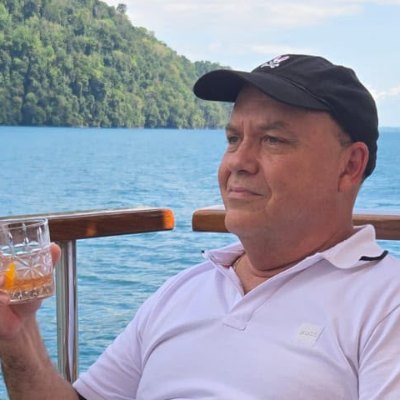

Hansel and Adrian Sneed — your enquiry goes straight to them, not a call centre. Sneed Charters has been placing clients on these boats since 1992.
Where do you sail in the Spanish Virgin Islands?
The cruising ground runs from Fajardo on Puerto Rico’s east coast out to Culebra and Vieques, with St Thomas about 25 miles further east. It is a small area — you can see the whole of it on one chart — but it sails very differently from the British Virgin Islands, because you are crossing open sound rather than running down a sheltered channel.
Swipe for more islands →
 Puerto del Rey · Villa Marina · 1 hr from San Juan · 17nm to Culebra
Fajardo
The departure point for essentially every charter here. Safe Harbor Puerto del Rey is the main base — the marina describes itself as the largest in the Caribbean, with over 1,200 wet slips, transient berths from 32 to 200ft and a fuel dock.
Villa Marina nearby handles more day charter and tour work. Fajardo is about an hour from San Juan by road, which is how most people arrive.
 Dakity moorings, free · Flamenco · Culebrita · wildlife refuge
Culebra
The reason to come. Ensenada Honda is one of the safest natural harbours in the Caribbean, and Dakity — a mooring field tucked inside the reef at the entrance — is the standard overnight spot.
Most of the archipelago is a national wildlife refuge across 21 offshore cays. Of those, only Cayo Luis Peña and Culebrita are open to visitors.
 No marina · Esperanza · Sun Bay · bio bay by kayak only
Vieques
Larger than Culebra, visited far less. There is no marina, the anchorages are open roadsteads rather than protected basins, and both headline attractions are shore-side rather than reachable by yacht.
Ensenada Honda and Puerto Ferro offer good all-round protection; Sun Bay, Isla Chiva and Esperanza are the usual stops.
 Crewed & superyacht departures · Club Náutico to 250ft
San Juan
The arrival airport for almost everyone, and the departure point for Puerto Rico’s crewed and luxury charters. Club Náutico de San Juan takes yachts up to 250ft, which is what lets the city work as a base at the top of the market.
Bringing a yacht round from Fajardo for a repositioning charge is a routine arrangement at this end of the market. Cangrejos Yacht Club, by contrast, is limited to around 50ft with 6ft depth and does not suit a cruising yacht.
Passages and conditions in the Spanish Virgin Islands
| Leg | Distance | Roughly |
|---|---|---|
| Fajardo to Culebra | about 17nm | 3 hr |
| Fajardo to Vieques | about 19nm | 3 hr |
| Vieques to Culebra | about 10nm | 2 hr |
| Culebra to St Thomas | about 30nm | 5 hr |
Times assume a 43ft yacht at six to seven knots in average conditions. The important point is the geometry: Fajardo to Culebra is east-north-east, straight into the trades. You work upwind on the way out and come home easily — the opposite of the BVI, where the Sir Francis Drake Channel gives you a reach in both directions.
Vieques Sound has a reputation for being bumpier than its distances suggest. The honest explanation is crossed swell: Atlantic swell arriving from the north through the passages meeting the trade-wind sea from the south-east, which can produce two wave sets at once. Nothing about it is dangerous in normal conditions, but a crew expecting BVI-style flat water will notice.
Customs: you must report in both directions
This is the single most misunderstood thing about sailing between Puerto Rico and the US Virgin Islands, and getting it wrong is expensive. Both are US territory, so people assume it is a domestic hop. It is not: the USVI sits outside the US customs territory while Puerto Rico sits inside it, which makes the crossing a customs event.
On a crewed charter this is the captain’s job rather than yours — and it is worth knowing that commercial charter yachts are not on the CBP ROAM pathway that private boats use. They file electronic manifests before departure and hold an International Carrier Bond. What matters to you is that it is actually being done, which is a fair question to put to your broker. Designated inspection points include Puerto Real pier in Fajardo, Dewey Dock on Culebra and Mosquito Pier on Vieques.
There is a further distinction that explains most of the confusion online. Reporting arrival is required for everyone. Formal entry and clearance depends on the flag: US-flagged vessels report into Puerto Rico but do not have to formally enter, and do not clear when leaving for the USVI. Foreign-flagged vessels must formally enter on first arrival, clear when departing for the USVI, and clear between Puerto Rican ports.
Free public moorings, and anchorages you will often have to yourself.
When is the best time to charter in Puerto Rico?
November through April is the season, with the split peak described above. January to March brings the strongest wind — predominantly north-easterly and often in the twenties — while the rest of the year settles to a steadier easterly around 15 to 18 knots. The Christmas Winds period can push considerably harder, which matters more here than in the BVI because your outbound leg is upwind.
Hurricane season officially runs 1 June to 30 November, with the climatological peak around 10 September. If you are booking inside that window, take travel insurance covering named-storm cancellation.
What does a Puerto Rico charter cost?
Puerto Rico is a crewed and superyacht market. These are the weekly bands across the yachts that list Puerto Rico as a cruising area for the 2026/27 season.
| Type of charter | Weekly | What that buys |
|---|---|---|
| Crewed sailing yacht or catamaran | from $19,500 | Crew, all meals, bar, fuel and water toys. The entry point to the market here. |
| Crewed motor yacht | $43,900–$350,000 | Where most of the inventory sits. Usually plus expenses, with an APA of 20–35% for food, drink, fuel and dockage. |
| Superyacht | to $1.4m+ | 80ft and up, departing San Juan. Plus expenses. |
Gratuity sits on top of all of these. The Caribbean convention is 15 to 20% of the charter fee, so on a $50,000 week that is $7,500 to $10,000. It is expected rather than optional, and worth building into the budget from the start rather than discovering at the end.
Around two dozen crewed yachts list Puerto Rico as a cruising area, most of them motor yachts positioning through the Caribbean rather than boats that live here. San Juan is usually the departure point at this level — Club Náutico takes yachts to 250ft, and bringing a boat round from Fajardo for a repositioning charge is a routine arrangement at the top of the market rather than an obstacle. Remember the coastwise restriction above before planning a crewed round trip from Fajardo.
Tell us your dates and we will tell you what is actually free
One resident base and a handful of crewed yachts — availability goes early, and repositioning takes lead time.
The Puerto Rico charter fleet is small — book early
We would rather say this plainly than have you discover it after you have set your dates. Puerto Rico has one resident charter base, Safe Harbor Puerto del Rey in Fajardo. Beyond that, the yachts listing Puerto Rico as a cruising area are mostly boats positioning through the Caribbean rather than vessels that live here — around two dozen of them, against more than 300 for the Virgin Islands on the same platform.
Two consequences. Availability goes first, so book earlier than you would for Tortola or St Thomas. And if the yacht you want is not already here, it can be brought in — but that carries a repositioning charge. At this end of the market that is a normal line on a quote rather than a dealbreaker; it is simply worth pricing into the decision early rather than late.
What you get in exchange is the thing the Virgin Islands no longer have. Moorings on Culebra are free public DRNA buoys, first come first served, for vessels up to 60ft — no $55 a night, no reservation apps, no racing for a ball at seven in the morning. And the anchorages are genuinely quiet.
Looking to sail it yourself? Bareboat chartering is a Virgin Islands trip — the fleets, the bases and the short protected passages are all there rather than here. See the British Virgin Islands and US Virgin Islands pages.
Planning the week around these? Tell us your dates and we will send the yachts actually free →
Things to do in Culebra, Vieques and San Juan
The Spanish Virgins reward crews who get off the boat. Several of the best things here — the bioluminescent bay above all — are shore excursions with licensed operators rather than places you can sail into, so it is worth knowing which is which before you plan the week.
Swipe for more →
 Culebra · no-take reserve · free moorings · 6am–6pm
Cayo Luis Peña and the no-take channel
The Canal Luis Peña reserve runs down Culebra’s west coast — 1,208 acres designated in 1999 and closed to all fishing ever since. Public mooring buoys sit over the coral, so you pick up a ball rather than dropping an anchor on it.
The cay itself is one of only two in the Culebra National Wildlife Refuge that visitors may land on; Culebrita is the other. Public areas open at six in the morning and close at six in the evening, and the remaining cays are closed.
 Culebra · day-use moorings · open to north swell
Culebrita and Bahía de Tortuga
The cay east of Culebra, and the other half of the refuge you are allowed to land on. Bahía de Tortuga on its northern side is the anchorage — a curve of sand with turtles in the shallows and the ruined lighthouse on the hill above it.
There are free day-use mooring balls here, but the bay is open to northerly ground swell and is rarely a comfortable overnight. Treat it as a long lunch stop and sleep back inside Ensenada Honda.
 Culebra · Mamacita’s · own dinghy dock · 1–9pm daily
Take the tender into Dewey
Culebra’s only town sits on the western shore of Ensenada Honda, one of the safest natural harbours in the Caribbean and a short ride in from the Dakity mooring field. It is where you reprovision, clear in at the CBP station on the dock, and get off the boat for an evening.
Make it Mamacita’s on Calle Castelar — open one until nine, seven days a week, with its own dinghy dock on the canal, so you tie up and step straight off the tender. Order the local seafood and a Bushwacker, the rum-and-coffee frozen thing the island is known for.
 San Juan · UNESCO World Heritage · $10 covers both forts
Old San Juan, the city walls and El Morro
Old San Juan is a walled colonial city, and the walls are the point. La Fortaleza, Castillo San Felipe del Morro, Castillo San Cristóbal, El Cañuelo and a long surviving stretch of the San Juan City Wall — including the old San Juan Gate — were inscribed together as a UNESCO World Heritage Site in 1983.
One $10 ticket covers both El Morro and San Cristóbal and stays valid 24 hours; under-16s go free, and the park takes cards only, no cash. Most crews fly in through San Juan anyway — it is worth a night either side of the charter rather than a taxi straight to the boat.
 Vieques · licensed operators only · no swimming
See the bio bay — by kayak, not by yacht
Mosquito Bay is the brightest bioluminescent bay in the world and a protected natural reserve. Your yacht and its tender cannot go in: access is by kayak with a licensed local operator, and swimming is prohibited to protect the dinoflagellates that make the glow.
Anchor off Esperanza or Sun Bay, go ashore, and book ahead — the moonless nights are the good ones.
 Vieques · a shore trip, not an anchorage
Black Sand Beach
Volcanic sand streaked dark against pale water, reached overland from Esperanza rather than from the water.
Like most of the best of Vieques, it is a reason to go ashore rather than somewhere to park the boat.
What a charter week actually costs
Fuel, provisioning, moorings, permits, the damage waiver, and how an APA really works — set out so you can build a realistic budget before you speak to anyone. No obligation, and no fee to you for using a broker.
Puerto Rico and Spanish Virgin Islands charter FAQs
Do I need a passport to charter in Puerto Rico?
Not if you are a US citizen — Puerto Rico is US territory and arriving from the mainland is domestic travel. You will need REAL ID-compliant identification to fly. A passport only becomes necessary if your itinerary continues to the British Virgin Islands.
Do I really have to report to customs sailing between Puerto Rico and the USVI?
Yes, in both directions. CBP has said so explicitly and is enforcing it — penalties start at $5,000. The USVI sits outside the US customs territory even though it is US soil. On a crewed charter the captain files the paperwork, but it is worth confirming your operator does it properly — the penalties fall on the vessel.
Are the moorings really free?
The DRNA mooring buoys around Culebra are public, first come first served, for vessels up to 60ft, and we found no documented fee. The supporting government documents are old, so treat free as likely rather than guaranteed and be ready to move if a buoy is taken.
Can I sail into the bioluminescent bay?
No. Mosquito Bay is a protected reserve reached by kayak with a licensed operator. Yachts and dinghies are not permitted, and swimming is prohibited. Anchor off Sun Bay or Esperanza and go ashore for the tour.
Should I charter here or in the BVI?
The BVI for choice of boat, short sheltered hops and a busy shoreside scene. Here for empty anchorages, free moorings and the sense of having the place to yourself — accepting a much smaller fleet, a windward leg out, and an itinerary that needs planning around customs.
Can I combine Puerto Rico with the US and British Virgin Islands?
Yes, and it is a genuinely good ten-day-plus trip. Sail east from Fajardo to Culebra, on to St Thomas and St John, then into the BVI if your operator is licensed for it. Each territory crossing has its own reporting requirement, so it needs a route planned around clearance points rather than only around anchorages.
Get a shortlist for your week
The fleet here is small, so availability is the first thing worth checking. Tell us your dates and we will come back with what is genuinely free — from Fajardo, or from St Thomas if that opens up better boats for your week.
What happens next: a broker reads this personally and comes back within 24–48 hours with three to five boats that genuinely fit your dates and budget — not an automated list.
Prefer to talk it through? Call 1-561-463-6840. We have been brokering Caribbean charters since 1992, and there is no fee to you for using a broker.


Keep planning
The Spanish Virgin Islands are the quietest of three territories that make up a Virgin Islands charter. The Virgin Islands overview compares all three, or read about the British Virgin Islands and the US Virgin Islands.
Last updated 25 August 2026. Rates and rules checked for the 2026/27 season against operator rate cards, CBP San Juan and the National Park Service.
Ready to plan your week in the Spanish Virgins?
Tell us your dates and your group. Within 24–48 hours you will have the crewed yachts genuinely available that week, from Fajardo or San Juan, with the clearance and repositioning already worked out.
Get my shortlist →Prefer to talk it through? 1-561-463-6840 · No fee to you for using a broker