
Virgin Islands Yacht Charter: Three Territories, Sixty Islands, One Week
Bareboat from $1,650 a week, crewed all-inclusive from $18,000. Real 2026/27 rates, permits and routes, across the British, US and Spanish Virgin Islands. Brokers since 1992.
Eight questions, about a minute · No obligation, and no fee to you for using a broker
Sixty-odd islands and cays, three flags, and passages measured in hours rather than days. The Virgin Islands are the most forgiving cruising ground in the Caribbean: line-of-sight navigation the whole way down the Sir Francis Drake Channel, a tidal range of roughly twelve inches, and anchorages that are rarely more than three hours apart. Bareboat monohulls start near $1,650 a week off-season and bareboat catamarans near $5,000. Crewed all-inclusive catamarans start around $18,000, and the largest motor yachts working these islands run past $200,000. We have been placing clients on these boats since 1992.
Where do you actually sail in the Virgin Islands?
The archipelago sits at the top of the Lesser Antilles, 60 miles east of Puerto Rico, split across three flags. The British Virgin Islands are the eastern group — Tortola, Virgin Gorda, Jost Van Dyke, Anegada and the chain of small islands along the south side of the channel. The US Virgin Islands are the middle group — St Thomas, St John, Water Island and, 33 to 38 nautical miles south across open water, St Croix. West again, and almost unsailed by charter traffic, are the Spanish Virgin Islands — Culebra, Vieques and the cays off eastern Puerto Rico, which are also US territory.
Almost all the sailing happens along the Sir Francis Drake Channel, a 20-mile corridor of protected water with Tortola on its north side and Norman, Peter, Salt, Cooper and Ginger strung along the south. The trades blow from the east all year, the channel islands take the swell out of the water, and you can see your next anchorage from the one you are leaving — which is why this is the standard recommendation for a first bareboat and still the place experienced crews come back to. Thirteen places account for almost every charter here. The chart below is drawn to scale from coastline data, so the distances you see are the distances you sail. Pick one.
Most BVI charters start here
Tortola
Road Town, Nanny Cay, Hodges Creek and Scrub Island bases · EIS airport · port of entry · 7nm to Norman Island
Road Town is the charter capital of the Caribbean. The Moorings base, Village Cay, Nanny Cay with its 300 berths and 70-ton travel lift, Hodges Creek on the East End and Scrub Island’s deep-water slips all sit within a few miles of the airport. Cane Garden Bay on the north shore is the liveliest anchorage on the island, with the Callwood rum distillery a walk up the hill. Soper’s Hole at West End is the calm last night before you hand the boat back, and a port of entry for anyone arriving from St Thomas.
Full British Virgin Islands guide →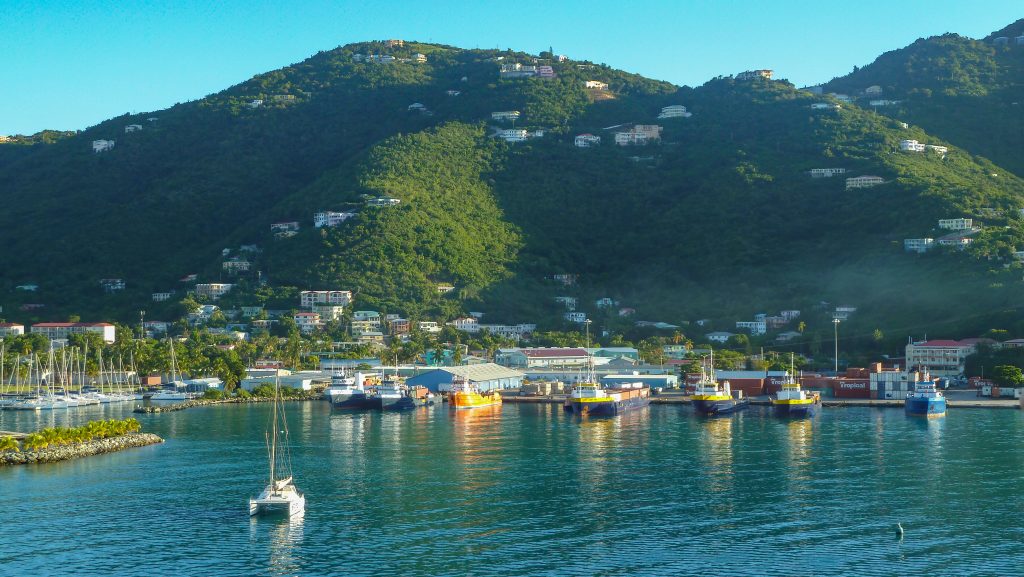
The Baths, and the staging point for Anegada
Virgin Gorda
Spanish Town is a port of entry · yacht harbour takes 160ft and 10ft draft · 6nm from Cooper Island
The Baths are the most photographed thing in the territory — house-sized granite boulders forming grottoes and tide pools you swim and scramble through to reach Devil’s Bay. They sit inside a national park with day-use moorings only, no anchoring and no overnight stay, so arrive early and beat the day boats out of Road Town. North Sound at the top of the island is a large protected basin with Bitter End, Saba Rock and Leverick Bay, and it is where almost every crew stages the run north to Anegada.
Full British Virgin Islands guide →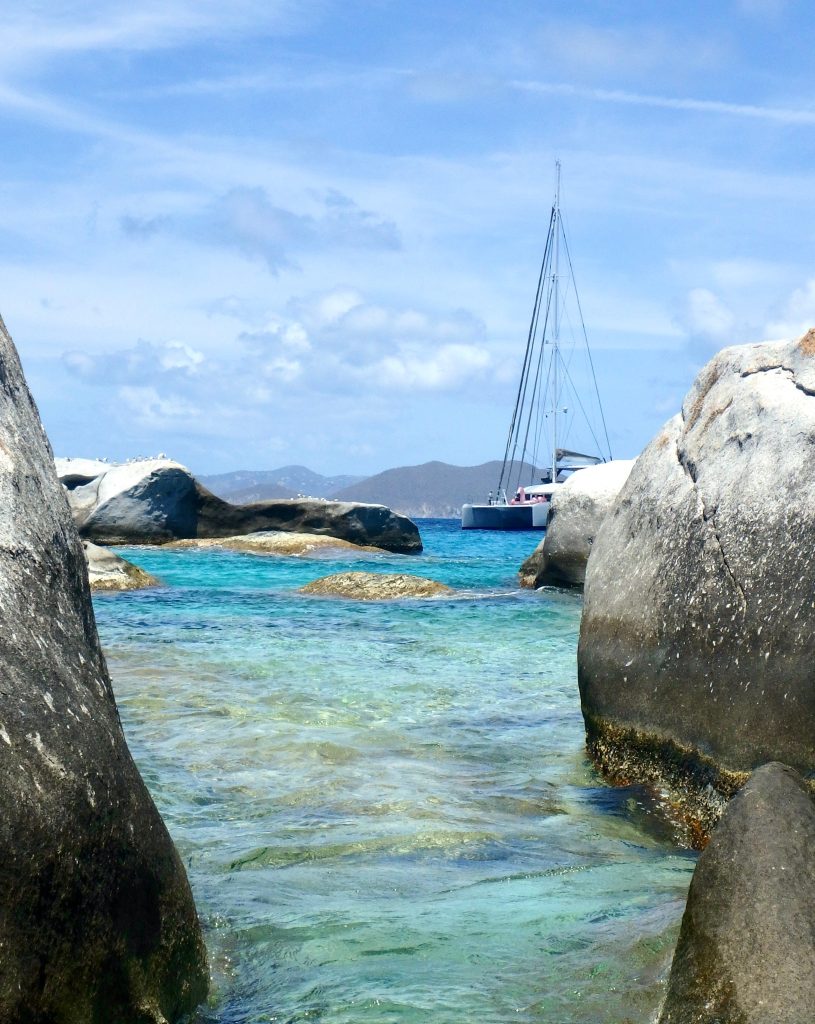
Great Harbour, White Bay, Foxy’s
Jost Van Dyke
Port of entry · 9nm from Red Hook, St Thomas · 8nm back to Tortola
Small, steep and given over almost entirely to beach bars. Great Harbour fills with boats most evenings and Foxy’s has been running since 1968. Around the headland, White Bay is a quarter-mile of sand fine enough to squeak underfoot, and the Soggy Dollar Bar — named for the swim ashore, since there is no dinghy dock — is where the Painkiller was invented. White Bay is open to northerly swell and can roll badly, so most crews take a mooring in Great Harbour and dinghy round.
Full British Virgin Islands guide →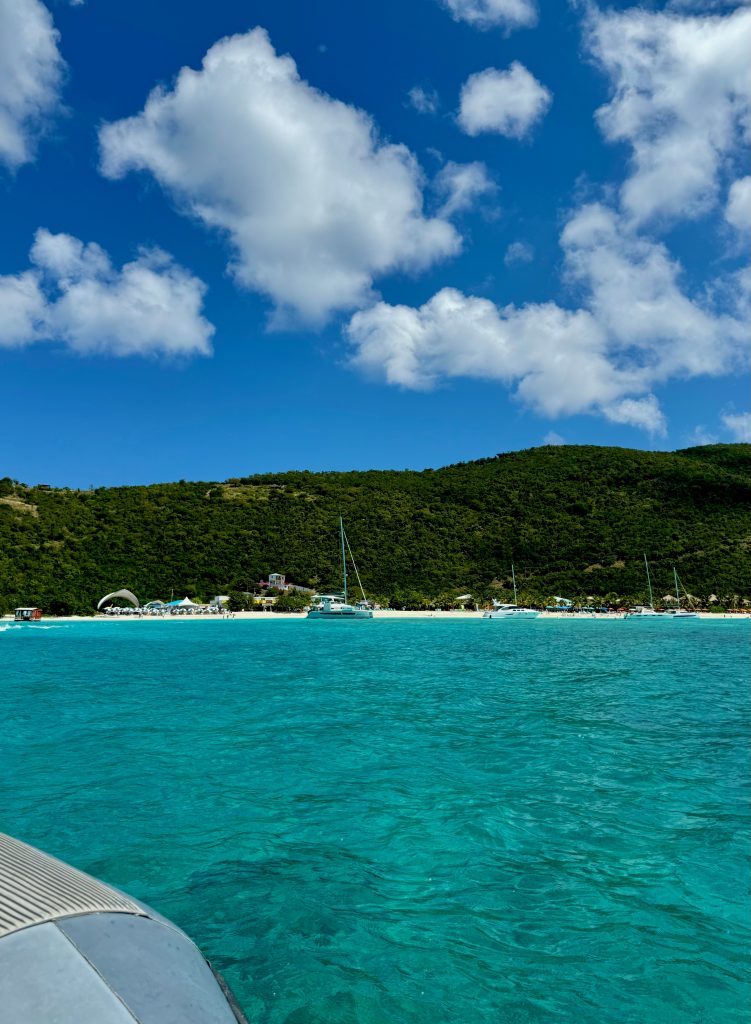
The only coral island in a volcanic chain
Anegada
15–25nm and 3–5 hours from Virgin Gorda · Horseshoe Reef · check your bareboat contract allows it
Everything else here is a volcanic peak. Anegada is a flat coral atoll that barely breaks 28 feet, ringed by Horseshoe Reef — the third-largest barrier reef in the Caribbean. That reef is why the island is empty and why the approach demands care: stay strictly inside the marked channel, leave North Sound by about 08:00 so you arrive with the sun high enough to read the water, and do not follow boats cutting the corner. The reward is miles of unpeopled beach at Loblolly and Cow Wreck, flamingos in the salt ponds, and spiny lobster grilled on the sand — call ahead on VHF, they cook to order. Many bareboat contracts still exclude Anegada or require a skipper for the passage, so confirm it before you build a week around it.
Full British Virgin Islands guide →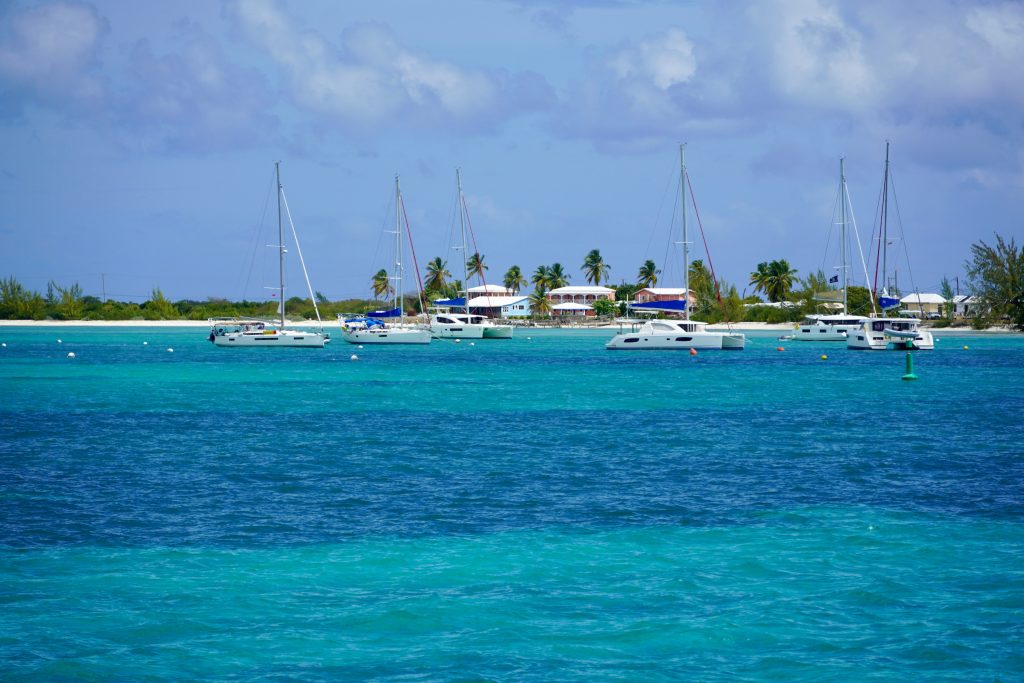
The south side of the channel
Norman, Peter, Salt & Cooper
All within 1–2 hours of Road Town · The Indians and the wreck of the RMS Rhone · day-use park moorings
The chain along the south side of the Sir Francis Drake Channel is where most weeks begin and end. Norman Island’s Bight is one of the busiest overnight mooring fields in the BVI, with The Caves at its western point and the floating Willy T anchored in the bay. The Indians, a set of rock pinnacles just west, hold the easiest good snorkelling in the territory — national park moorings, day use only, no anchoring. Off Salt Island lies the wreck of the RMS Rhone, the best-known dive in the Virgin Islands. Cooper Island’s Manchioneel Bay has a beach club, a rum bar, a brewery and turtles at Cistern Point.
Full British Virgin Islands guide →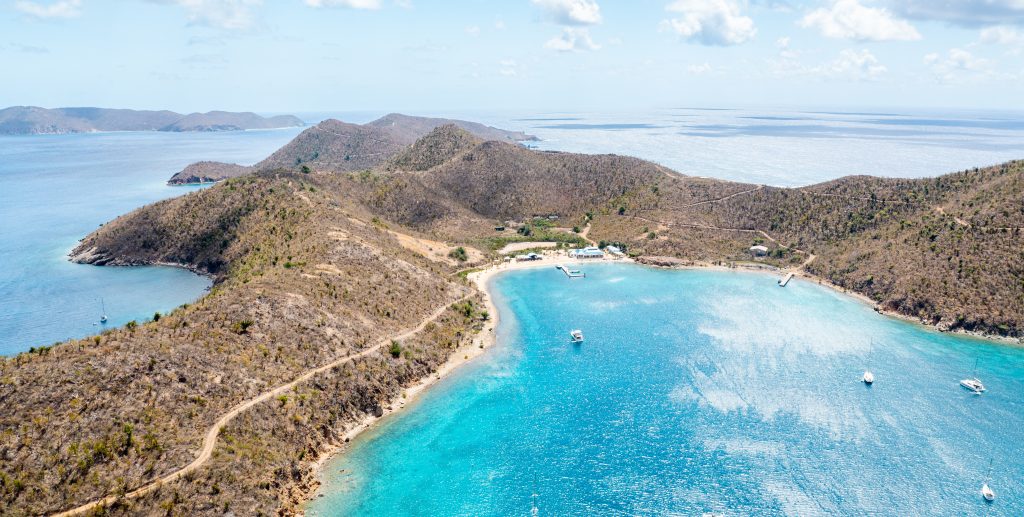
Where US charters start
St Thomas
STT airport · Charlotte Amalie, Yacht Haven Grande, Crown Bay, Frenchtown, Red Hook · no passport for US citizens
The practical gateway to the whole archipelago. Cyril E. King airport is two miles from Charlotte Amalie, and Yacht Haven Grande takes yachts to 656 feet — the only berth in the territory built for that. Frenchtown is the main USVI bareboat base, Red Hook on the east end is the day-charter and ferry hub, and Christmas Cove is a mile off it. US citizens fly in without a passport, though since May 2025 they do need a REAL ID-compliant licence. Taxis are regulated shared vans with published rates — Charlotte Amalie is $9–11 per person, Red Hook $17–23 — and there is no Uber or Lyft on the island.
Full US Virgin Islands guide →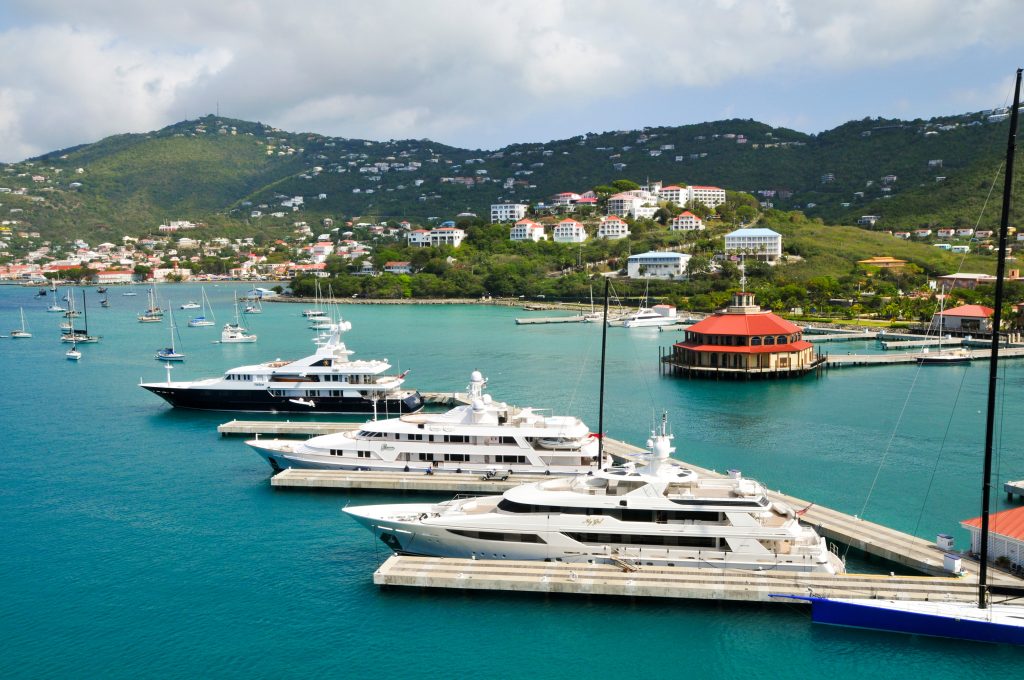
Two-thirds national park
St John
NPS moorings $26 per night · Trunk Bay $5 per person · 3nm from Red Hook
Virgin Islands National Park covers most of the island and much of the water around it, which is why St John looks the way it does. Trunk Bay has a marked 400-foot underwater snorkelling trail with interpretive plaques set on the bottom, shallow and gentle enough for beginners. Maho Bay is a seagrass turtle bay, Waterlemon Cay off Leinster Bay is the best snorkel on the island, and Francis, Salt Pond and Great Lameshur all have park moorings with pay stations. Those moorings are strictly first-come, first-served with no reservations — you pay at the ball through the Recreation.gov app, up to seven nights in any one bay and 30 nights a year per vessel.
Full US Virgin Islands guide →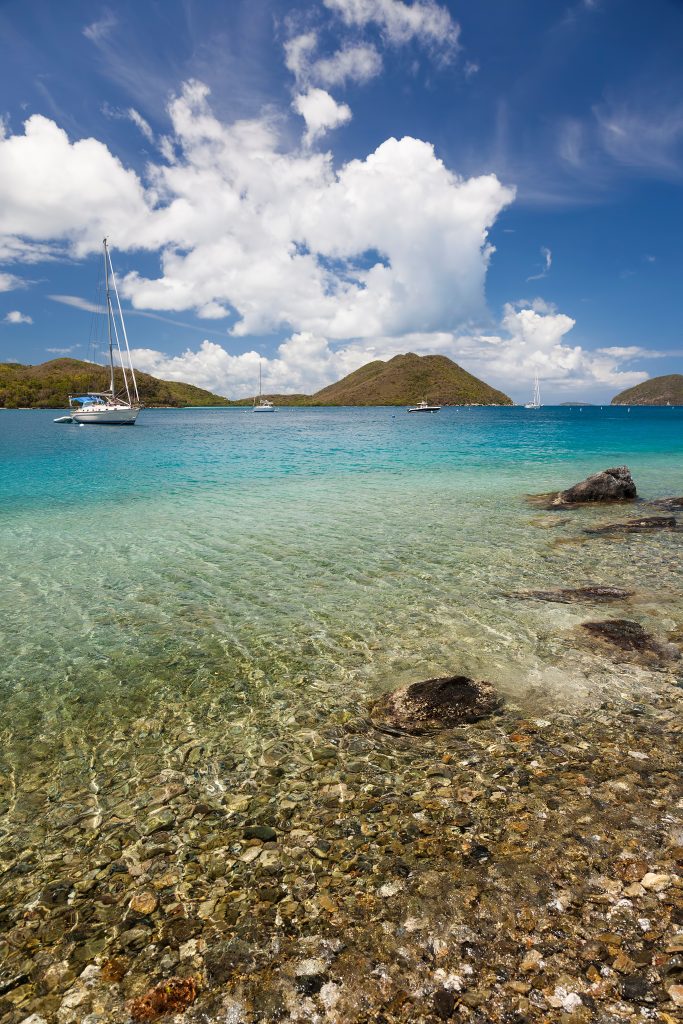
The short hops off St Thomas
Water Island & Christmas Cove
Honeymoon Beach · Pizza Pi at Christmas Cove · minutes from Crown Bay and Red Hook
Two anchorages that make a US Virgin Islands week work when nobody wants a passage. Water Island sits just off Crown Bay and Honeymoon Beach is an easy afternoon stop with good holding. Christmas Cove, tucked behind Great St James a mile from Red Hook, is home to Pizza Pi — a converted vessel that bakes to order; text the boat name and your time ahead. Take a mooring rather than anchoring here: the bottom is seagrass and it is protected.
Full US Virgin Islands guide →
33nm south, and worth two of your seven days
St Croix
Buck Island Reef National Monument · Christiansted and Green Cay · 4–6 hours from St John
St Croix sits well south of everything else and is a real passage rather than a hop — a beam reach going down, a broad reach with swell on the quarter coming back, and uncomfortable above 15 knots whichever way you point. Budget two of your seven days for it. What you get is Buck Island Reef National Monument with its own underwater trail, Danish colonial Christiansted behind Fort Christiansvaern, Green Cay’s sheltered 154-slip lagoon, and the Frederiksted pier dive on the protected west end. It suits a competent crew in shoulder season. It is not a first-bareboat add-on.
Full US Virgin Islands guide →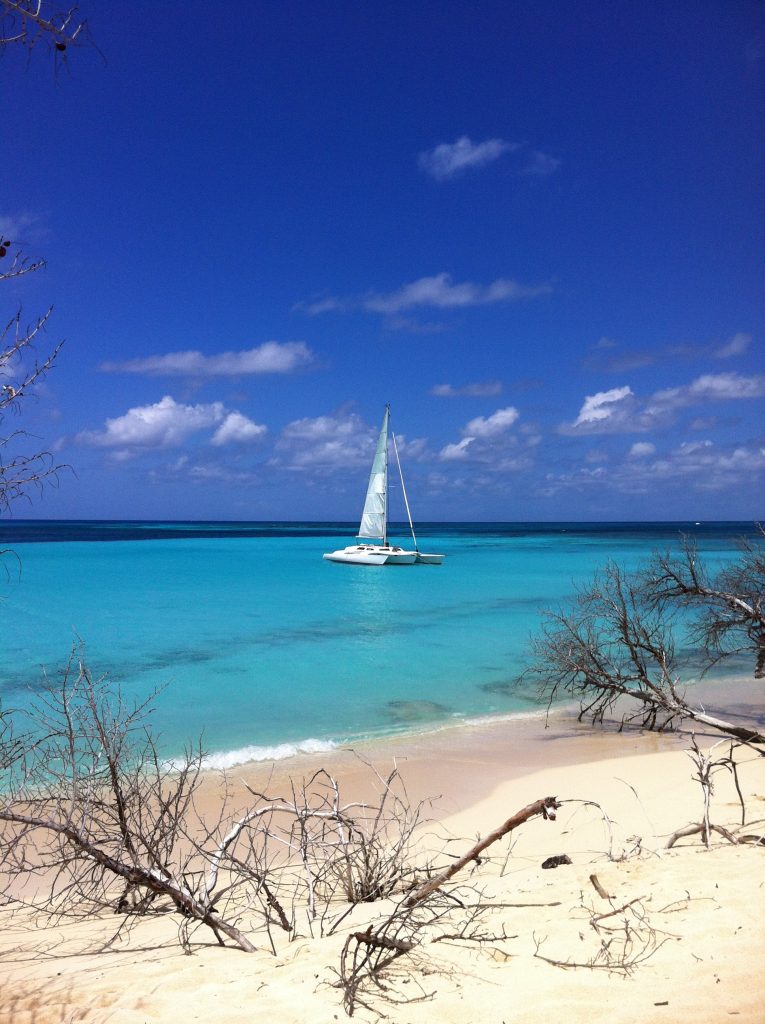
The anchoring island
Culebra
Ensenada Dakity: 20+ free government moorings · about 20nm west of St Thomas · Dewey for provisions
Culebra is the one place in the Spanish Virgin Islands with genuinely good sheltered anchoring, and that is why it takes almost all the charter traffic out here. Ensenada Dakity, tucked behind the reef at the mouth of Ensenada Honda, has more than twenty free government mooring balls and almost no swell — it is the standard overnight. Ensenada Honda itself is a large, well-protected hurricane hole with the town of Dewey, three small grocery stores and a dinghy dock. Flamenco Beach on the north shore is regularly ranked among the best beaches in the Caribbean, though it is exposed to the north and only works as a day stop in settled weather. Bahía de Almodóvar on the east side has free moorings and flat water behind the reef. Offshore, Culebrita and Cayo Luis Peña sit inside the Luis Peña Channel Natural Reserve — Puerto Rico’s first no-take marine protected area, designated in 1999 — with day-use buoys and the best snorkelling in the group. Government balls are free and first come, first served, and capped at 60-foot vessels.
Full Puerto Rico & Spanish Virgin Islands guide →
The mainland base
Fajardo
Safe Harbor Puerto del Rey · 60–90 minutes from San Juan airport · 17nm to Culebra
Fajardo is where a Spanish Virgin Islands charter actually starts. Safe Harbor Puerto del Rey is one of the largest marinas in the Caribbean — over 1,200 wet slips, berths from 32 to 200 feet, 15 feet of draft, a 165-ton travel lift and high-speed diesel. It is also the last dependable fuel and the last full supermarket before the islands, which matters more than it sounds: Culebra has three small grocery stores and cruisers have arrived to find every fuel station on the island dry. Sunbay Marina adds another 282 slips in the same town, and the Yacht Club at Palmas del Mar down the coast at Humacao takes yachts to 175 feet. Isla Palominos sits six miles offshore with free government moorings and is the obvious first night out of the marina. From here Culebra is 17 nautical miles dead upwind, which is why we tell sailing crews to get that leg done on day one and run the rest of the week downhill.
Full Puerto Rico & Spanish Virgin Islands guide →
How almost everyone arrives
San Juan
SJU international gateway · 60–90 minutes by road to Fajardo · about 35nm by sea
San Juan is the region’s air gateway, and the reason a Puerto Rico charter is often easier to reach than a British Virgin Islands one. SJU takes direct flights from a long list of US mainland cities and, for US citizens, it is a domestic arrival — no passport, no immigration queue. From the airport it is sixty to ninety minutes by road out to the Fajardo marinas depending on traffic and whether you take the toll road. By sea it is about 35 nautical miles around the north-east corner of the island. San Juan Bay Marina in the city handles yachts to 160 feet and is a formal port of entry, which makes it the practical first landfall for anyone arriving under their own keel rather than joining a boat at Fajardo. Most charter guests fly in, drive east, and never see the harbour.
Full Puerto Rico & Spanish Virgin Islands guide →
Beautiful, and quietly difficult
Vieques
Few protected anchorages · no marina and no confirmed yacht fuel · two no-anchoring safety zones off the east end
Vieques is the larger of the two and, to a lot of eyes, the more beautiful — long empty beaches at Sun Bay and Bahía de la Chiva, and Mosquito Bay, which holds the Guinness World Record as the brightest bioluminescent bay on earth. It is also markedly less visited, and the reason is practical rather than aesthetic: there is nowhere very safe to leave the boat. Esperanza on the south coast has moorings and is the jumping-off point for the bio bay, but the bay is open. Vieques has its own Ensenada Honda and, unlike Culebra’s, it is shallow and choppy in the trades. There is no marina, and no yacht fuel dock we can confirm anywhere on the island. Off the eastern end, two permanent federal safety zones in force since April 2021 prohibit anchoring outright while unexploded ordnance from the old Navy range is cleared — work expected to run around twenty years — and a large part of the eastern wildlife refuge is closed ashore for the same reason. The result is an island most crews visit for a day and a night rather than build a week around. Take the boat down for Esperanza and the bio bay, then run back to Culebra’s protected water to sleep.
Full Puerto Rico & Spanish Virgin Islands guide →
British Virgin IslandsUS Virgin IslandsSpanish Virgin Islands & Puerto RicoCoastlines from public-domain 100 m coastline data. Not for navigation.
- Typical passage: 1 to 3 hours. Tortola to Norman Island is about 7nm and 90 minutes; Norman to Peter is 5nm; Cooper to Virgin Gorda 6 to 10nm.
- Anegada is the one long leg — roughly 15 to 25nm and 3 to 5 hours from Virgin Gorda.
- The USVI core ground is tiny. Charlotte Amalie to Cruz Bay is under 8nm, Red Hook to Christmas Cove about a mile, and the whole St Thomas to St John ground fits inside 10nm.
- Crossing between territories is short, but it is a border. Red Hook to Jost Van Dyke is about 9nm and Cruz Bay to Norman Island about 10nm — both need clearance and a passport. St Croix is the other exception: 33nm of open water from Ram Head, a genuine passage that costs two of your seven days.
Get a shortlist for your week
Tell us the dates, the number of people and roughly what you want to spend, and we will come back with three or four real boats that are actually free that week — with the permits, fees and crossing rules already worked into the number.
What happens next: a broker reads this personally and comes back within 24–48 hours with three to five boats that genuinely fit your dates and budget — not an automated list.
Prefer to talk it through? Call 1-561-463-6840. We have been brokering Caribbean charters since 1992 and we do not charge you for the shortlist.

Hansel and Adrian Sneed — your enquiry goes straight to them, not a call centre. Sneed Charters has been placing clients on these boats since 1992. Meet the brokers →
How much does a Virgin Islands yacht charter cost?
A week in the Virgin Islands can cost $1,650 or $225,000, and the gap is almost entirely about whether you sail the boat yourself and who feeds you. The figures below are what boats in each band are actually listing at for the 2026/27 season — not headline teasers. Rates move with the calendar rather than smoothly: high season runs 16 December to 1 January and 1 February to 31 March, mid season covers January and April, low season is May to early July and November to mid-December, and the deepest discounts sit in the 10 July to 5 November off-season, which is also hurricane season.
| Size | Low / off season | High season |
|---|---|---|
| 38–40 ft | $5,000–6,000 | $8,000–9,000 |
| 42–45 ft | $6,500–10,500 | $9,500–13,500 |
| 46–50 ft | $8,000–11,200 | $11,000–14,200 |
| 50 ft and up | $13,000–15,000 | $16,000–19,000 |
| Size | Low / off season | High season |
|---|---|---|
| 30–32 ft | $1,650–1,850 | $2,500–2,700 |
| 35–39 ft | $2,600–2,700 | $4,000–4,200 |
| 41–44 ft | $3,400–4,500 | $4,750–6,300 |
| 47–53 ft | $4,900–6,300 | $7,000–8,800 |
| Size | Low / off season | High season |
|---|---|---|
| Entry, captain-only | from $15,000 | — |
| Entry, all-inclusive | from $18,000 | — |
| 48–55 ft, 6–8 guests | $20,000 | $35,000 |
| 55–65 ft, 8–10 guests | $30,000 | $55,000 |
| Size | Low / off season | High season |
|---|---|---|
| 84–90 ft, 8 guests | $42,000 | $56,000 |
| 87 ft, 10 guests | $75,000 | $85,000 |
| 100 ft, 8 guests | from $48,000 | — |
| 133 ft, 10 guests | $195,000 | $225,000 |
The same boat typically moves 40 to 70 per cent between off-season and Christmas. A Fountaine Pajot Elba 45 listing at $10,500 in October is $13,500 in March. If your dates are flexible, mid-April to early June and November buy you most of the conditions at a good deal less than most of the money.
Those are the rates. What they do not include is where charter budgets go wrong — a bareboat rate is the boat and nothing else, while a crewed all-inclusive rate is very nearly everything. Budget roughly $1,500 to $2,500 on top of a bareboat week for a crew of six once fuel, food, moorings, permits and the damage waiver are counted, and 15 to 20 per cent on top of a crewed week for the gratuity.
Budget $1,500–$2,500 on top of the week for a crew of six.
Nearly everything is inside the rate. Budget 15–20% on top for the crew.
What permits, taxes and clearance fees apply?
No VAT on a charter in any of the three.Greece takes up to 24 per cent and Croatia 13 — on a $70,000 charter that is a difference of up to $16,800.
- $6 on a BVI-based boat, $16 on a foreign-based one
- Environmental and tourism levy $10 per person
- National Parks Trust permit $25–$55 a week by party size
- Departure tax around $20–$25 · VISAR contribution about $2
- Park moorings at The Baths, The Caves, The Indians and The Dogs are day use only — no anchoring there
Passport for every nationality · clear in at Road Town, Soper’s Hole, Great Harbour or Spanish Town
- Maximum 7 nights per bay, 30 a year per vessel
- Trunk Bay $5 per person aged 16 and over
- VIPCA moorings $40 a night, vessels to 60ft
- No cruising permit and no park entrance fee
- Park balls are first come, first served — no reservations, so do not fix your bay in advance
No clearance and no passport for US citizens · REAL ID needed to fly
- First come, first served, capped at 60ft
- Not to be used with sails hoisted, or in winds above 40mph
- No cruising permit and no fees
- $3 per person DRNA ecological fee on day boats out of Fajardo
No immigration · but report into Puerto Rico from the USVI on the free CBP ROAM app
One 2025 change to know before you choose a boat. On 1 June 2025 the BVI sharply raised what it charges foreign-based charter vessels — in practice, any boat based in the US Virgin Islands or Puerto Rico. Those boats now pay $16 per person per day in BVI waters against $6 for a BVI-based one, on top of an annual licence and a fee per cruise, and they are capped at seven BVI charters a year. For a party of eight over four BVI days that gap alone is $512 against $128, and it is built into the rate you are quoted. The rule we work to is simple: match the boat’s base to where you actually want to spend the week. Worth checking separately — plenty of bareboat contracts restrict or prohibit crossing the border at all, quite apart from the fees.
What a charter week actually costs
Fuel, provisioning, moorings, permits, the damage waiver, and how an APA really works — set out so you can build a realistic budget before you speak to anyone. No obligation, and no fee to you for using a broker.
The PDF arrives by email straight away — no waiting on a callback.
When is the best time to charter in the Virgin Islands?
Short answer: February and March for the conditions, May and November for the value, and avoid September and October unless price is the only thing that matters. The trade winds blow from the east in every single month of the year, which is what makes this ground so predictable — what changes is how hard they blow, how much rain comes with them, and how much the same boat costs. Pick a month.
Virgin Islands climate and charter season month by month
Mid season
- North-east trades at 15–20 knots; the 25–30 knot Christmas winds usually ease off in the first week or two.
- Air 75–82°F, sea around 77°F — the coolest water of the year, and still warmer than most swimming pools.
- Rates drop into mid-season pricing from 2 January, roughly 10–15% below the peak weeks either side of it.
High season
- Steady easterly trades, 15–20 knots, day after day.
- The driest month at around 2 inches of rain, and what falls comes in short bursts.
- Book nine to twelve months out. February and March weeks on the good crewed boats go first.
High season
- Easterly 15–20 knots, about as reliable as trade-wind sailing gets.
- Around 2 inches of rain; air 75–84°F.
- The last of true high season — rates step down on 1 April.
Mid season
- Easterly 15–20 knots, easing as the month goes on.
- Air 77–86°F, water warming past 80°F.
- Mid-season pricing all month, and the anchorages thin out noticeably after Easter.
Low season
- East to south-east at 12–18 knots, with seas often under two feet.
- Air 77–86°F, water 81°F. Rain picks up but stays brief.
- Low-season rates from 1 May, and the easiest month of the year for the St Croix crossing.
Low season
- South-east 10–15 knots. Lighter air suits catamarans and motor yachts more than it suits monohulls.
- Air 79–89°F, water 82°F.
- Storm risk in June is historically low, but this is the month where travel insurance stops being a judgement call.
Off season
- South-east 10–15 knots, and the highest mean wind speed of the year in the US Virgin Islands.
- Air 79–89°F, hot and humid, with rain in short heavy bursts.
- Off-season pricing begins 10 July. Expect 40–50% off the peak rate on the same boat.
Off season
- South-east 10–15 knots and unsettled.
- Historically one of the two busiest months for storms passing near the islands.
- Some operators close or move boats out. Cancellation cover is essential rather than optional.
Off season
- The weakest and least reliable trades of the year.
- About 3.7 inches of rain, the wettest month; water at its warmest, near 84°F.
- Peak hurricane risk. Many bases are shut or running a skeleton fleet.
Off season
- The lightest average winds of the calendar — fine for a motor yacht, frustrating under sail.
- Still wet at around 3.5 inches, and still inside the serious storm window.
- Bases typically reopen from late October into the first week of November.
Low season
- North-east 15–20 knots returning through the month.
- Hurricane season formally ends 30 November, and risk drops sharply after the first week.
- Low-season rates run to 15 December, which makes the last week of November close to ideal.
High season
- North-east 15–20 knots, building to the 25–30 knot Christmas winds late in the month.
- Air 76–83°F and around 1.6 inches of rain.
- High season starts 16 December. Christmas and New Year are both the most expensive and the windiest weeks of the year — more breeze than some first-timers want.
High season, 16 Dec–1 Jan and 1 Feb–31 MarMid season, Jan and AprLow season, May–early Jul and Nov–15 DecOff season, 10 Jul–5 Nov · hurricane season runs 1 Jun–30 Nov
One thing worth saying plainly about hurricane season, since most charter sites skate over it: the official Atlantic season runs 1 June to 30 November, but the realistic threat window is mid-August through October. Named-storm cancellation terms differ from operator to operator and we will put the exact wording for your boat in front of you before you pay a deposit rather than paraphrase it here.
What does a week in the Virgin Islands actually look like?
Four routes cover almost everything people ask for. The British Virgin Islands loop is the classic — a week out of Tortola taking in Norman Island, The Baths, Anegada and Jost Van Dyke. The US Virgin Islands short break is the low-friction answer: four days, no border, no cruising permit and no passport for US citizens. The St Thomas round trip adds the BVI to a US start and back again, which is how most American crews actually do it. And the Fajardo round trip takes in all three territories in a week, by motor yacht rather than under sail. Distances are approximate and depend on your base and the wind.
Pick a route, then a day, for the passage, the mooring situation and what is actually there.
The classic 7-day British Virgin Islands loop, from Road Town
Day 1
Road Town to Norman Island
Boat briefing and checkout usually run to lunchtime, so day one is deliberately short. The Bight is a wide horseshoe with one of the largest mooring fields in the territory. Snorkel The Caves at the western point in the afternoon, then decide whether the Willy T, anchored in the bay, is your kind of evening or emphatically not.
Day 2
The Indians, then Cooper Island
Leave early and pick up a park ball at The Indians — four rock pinnacles with the easiest first-class snorkelling in the BVI, sea fans, and enough fish to keep children in the water for an hour. There is current, so keep an eye on weaker swimmers. Carry on east to Manchioneel Bay at Cooper Island for the beach club, the rum bar, the brewery and the turtles at Cistern Point.
Day 3
The Baths, then North Sound
Be on a Baths mooring by 08:30 if you can. The boulder grottoes fill with day-trippers out of Road Town by mid-morning, and the walk through to Devil’s Bay is a different experience without a queue. Then run north into North Sound and take your pick of Bitter End, Saba Rock or Leverick Bay. This is where you decide whether Anegada is on.
Day 4
North Sound to Anegada
The one real passage of the week. Leave by about 08:00 so you arrive with the sun high enough to read the water, stay strictly inside the marked channel past the Two Sisters, and post someone on the bow. The island is so flat you will not see it until you are a couple of miles off. Radio ahead for lobster — they grill to order on the beach at Setting Point, and the salt ponds hold flamingos.
Day 5
Anegada to Jost Van Dyke
A long, fast downwind leg back across the top of the chain. Great Harbour is the sensible overnight: take a mooring, clear the dinghy in and walk the beach to Foxy’s. White Bay is around the headland and is the better beach by some distance — a quarter-mile of squeaking sand and the Soggy Dollar, where the Painkiller was invented — but it rolls, so most crews visit by dinghy rather than sleep there.
Day 6
Jost Van Dyke to Cane Garden Bay
A short hop back onto Tortola’s north shore. Cane Garden Bay is the liveliest anchorage on the island, with bars along the beach and live music most nights in season. Walk up the hill to the Callwood distillery, which has been making rum on the same site for generations. If cruise ships are in, it gets busy by day and quiets down again by evening.
Day 7
Soper’s Hole and back to base
Round the west end into Soper’s Hole for the last morning — sheltered, tidy, Pusser’s Landing ashore, and a port of entry if anyone is joining or leaving. Top up fuel and water here, then take the short run back down the channel to Road Town in time for the boat handover. Flights out of EIS are five minutes from the base.
A 4-day US Virgin Islands short break, from St Thomas
Day 1
Charlotte Amalie to Christmas Cove
Pick the boat up in Charlotte Amalie or Frenchtown and go nowhere far. Water Island sits just off Crown Bay and Honeymoon Beach has easy holding and a bar ashore. Round to Christmas Cove behind Great St James, a mile off Red Hook, where Pizza Pi bakes to order — text your boat name and a time ahead. Take a mooring rather than anchoring; the bottom is protected seagrass. Four days is short, so the point of day one is to start swimming instead of motoring.
Day 2
Across Pillsbury Sound to St John
Cruz Bay has the National Park visitor centre, provisioning and a three-hour daytime anchorage; Caneel Bay just north has a pay station and a quieter night. Then Trunk Bay — the marked 400-foot underwater trail with interpretive plaques set on the bottom, $5 per person for anyone 16 and over, shallow and gentle enough for a first-time snorkeller. Stay horizontal and do not stand on the coral.
Day 3
Maho, Leinster Bay and Waterlemon Cay
The best day of the four, and barely any moving in it. Maho Bay is seagrass and reliably full of green turtles. Round to Leinster Bay and swim or dinghy out to Waterlemon Cay — rays, turtles, tarpon and a wall of reef fish around the little island, and the best snorkelling on St John by a distance. The Annaberg sugar mill ruins are a short walk up from the beach if anyone wants an hour off the water.
Day 4
Back to St Thomas
Head back west, either round the north shore to Magens Bay — a deep sheltered inlet and one of the best-known beaches in the territory — or straight down Pillsbury Sound with a last stop at Christmas Cove. Fuel, hand the boat back, and you are ten minutes from the airport. Four days, no clearance paperwork, no cruising permit, and for US citizens no passport at any point.
St Thomas to the BVI and back: 7 days
Day 1
Charlotte Amalie to Christmas Cove
A deliberately short first leg while the boat briefing settles. Christmas Cove behind Great St James is a mile off Red Hook, with Pizza Pi anchored in it and good snorkelling on the rocks at either end. Take a mooring — the bottom is protected seagrass. Provision properly in Charlotte Amalie before you leave: it is the last full supermarket until you are back.
Day 2
Christmas Cove to Jost Van Dyke, and into the BVI
The border day. Clear into the British Virgin Islands at Great Harbour on Jost Van Dyke — every nationality including US citizens needs a passport with a blank page, and pre-registering on SailClear up to 72 hours ahead saves time at the desk. The cruising permit and the $10 environmental levy are paid here. White Bay round the headland is the reason people come; tender in for the Soggy Dollar and sleep back in Great Harbour, because White Bay rolls.
Day 3
Jost Van Dyke to Norman Island, via The Indians
Round Tortola’s west end past Soper’s Hole and turn down into the Sir Francis Drake Channel. Pick up a National Parks Trust ball at The Indians — four rock pinnacles holding the easiest first-class snorkelling in the territory, day use only, no anchoring. The Bight at Norman Island is one of the largest overnight mooring fields in the BVI, with The Caves at its western point and the floating Willy T in the bay.
Day 4
Norman Island to Virgin Gorda, via the RMS Rhone
East up the channel past Peter and Salt. The wreck of the RMS Rhone off Salt Island is the best-known dive in the Virgin Islands and sits on a park mooring. Be on a Baths ball by 08:30 if you can — the day boats out of Road Town fill it by mid-morning, and the scramble through the granite grottoes to Devil’s Bay is a different experience without a queue. North Sound at the top of the island for the night.
Day 5
Virgin Gorda to Cooper and Peter Island
Turn for home and take the south side of the channel slowly. Cooper Island’s Manchioneel Bay has the beach club, the rum bar, the brewery and turtles at Cistern Point. Peter Island’s Great Harbour and Little Harbour are quieter still. This is the day people wish they had another of — if your dates allow eight nights rather than seven, this is where the extra one goes.
Day 6
Peter Island to St John, clearing out at Soper’s Hole
Work west down the channel and clear out of the BVI at Soper’s Hole on Tortola’s West End — sheltered, tidy, Pusser’s Landing ashore, and fuel and water if you need them. Then cross back into US waters. Caneel Bay or Cruz Bay on St John for the night, on a National Park ball at $26, paid at the ball on the Recreation.gov app.
Day 7
St John to Charlotte Amalie, via Trunk Bay
One last swim before the boat goes back. Trunk Bay’s marked underwater trail is a fitting end and takes an hour; Maho round the corner if the turtles matter more than the plaques. Then west across Pillsbury Sound to Charlotte Amalie, fuel, and hand back. Cyril E. King airport is two miles from the harbour.
All three territories: a 7-day round trip from Fajardo, by motor yacht
Day 1
Fajardo to Culebra
Board at Puerto del Rey and provision there — it is the last full supermarket of the week. Under power the Vieques Passage stops being the two-hour beat it is under sail and becomes a short hop, which is the whole logic of running this route on a motor yacht. Anchor off Flamenco Beach for the afternoon while the light is good, then move round into Ensenada Dakity behind the reef for the night — more than twenty free government mooring balls and almost no swell. Those balls are capped at 60-foot vessels, so anything larger anchors in Ensenada Honda instead.
Day 2
Culebra to St Thomas
Straight across into the US Virgin Islands. There is no border formality going this way — CBP’s reporting requirement runs into Puerto Rico from the USVI, not the other way — though it is worth having that confirmed in writing for your particular boat. Yacht Haven Grande takes anything up to 656 feet if you want a berth, power and provisioning. Christmas Cove behind Great St James, a mile off Red Hook, is the better anchorage, and Pizza Pi bakes to order if you text your boat name and a time ahead.
Day 3
St Thomas to St John
A token passage and the best snorkelling day of the week. Trunk Bay has the marked 400-foot underwater trail with interpretive plaques set on the bottom, $5 per person for anyone 16 and over. Maho round the corner is seagrass and reliably full of green turtles, and Waterlemon Cay off Leinster Bay is the best of the three. Park balls are strictly first come, first served and paid at the ball on the Recreation.gov app — there are no reservations, so pick the bay when you get there rather than the night before.
Day 4
St John to Jost Van Dyke, and into the BVI
The border. Clear into the British Virgin Islands at Great Harbour on Jost Van Dyke: every nationality including US citizens needs a passport with a blank page, and pre-registering on SailClear up to 72 hours ahead saves time at the desk. This is also where the cruising permit gets paid, and where a Puerto Rico-based boat costs you more than a BVI-based one — $16 per person per day against $6. White Bay round the headland is the reason people come; tender in for the Soggy Dollar, then take the night in Great Harbour, because White Bay rolls.
Day 5
Jost Van Dyke to Virgin Gorda
The one day where speed genuinely buys you something. Run down the Sir Francis Drake Channel and be on a Baths mooring by 08:30, before the day boats out of Road Town fill it — the scramble through the granite grottoes to Devil’s Bay is a different experience without a queue. Day use only, no anchoring, no overnight stay. Then up into North Sound for the night: Bitter End, Saba Rock, Leverick Bay, and the most protected water in the territory.
Day 6
Virgin Gorda back to the USVI, via the channel islands
Work back down the south side of the channel and take the three best stops on it. The wreck of the RMS Rhone off Salt Island is the best-known dive in the Virgin Islands and sits on a park mooring. Cooper Island’s Manchioneel Bay has the beach club, the rum bar, the brewery and turtles at Cistern Point. The Indians, four rock pinnacles west of Norman Island, hold the easiest first-class snorkelling in the BVI. Clear out at Soper’s Hole at Tortola’s West End, then cross back into US waters for the night at Cruz Bay or Christmas Cove.
Day 7
Back to Fajardo, via Culebra
West, with the sea behind you for once. Stop at Culebra for a last swim — Playa Carlos Rosario inside the Luis Peña reserve if you want the reef, Flamenco if you want the beach — then the short run back across the passage. This is the leg where the paperwork bites: arriving into Puerto Rico from the US Virgin Islands does require you to report to CBP, and it takes about two minutes on the free ROAM app. Fuel at Puerto del Rey, and San Juan airport is sixty to ninety minutes up the road.
Why this one is a motor yacht. About 150 nautical miles, and nearly all the outbound work is dead into the trades — under sail that is four of your seven days spent beating. At 20 knots each transfer drops to an hour or two, so you anchor somewhere different every night. Budget fuel honestly, and note that Vieques and St Croix sit too far south of this track to fit.
One legal point worth raising early. A crewed charter that both starts and finishes in Fajardo runs into the US Passenger Vessel Services Act unless the yacht is coastwise-qualified — a 2019 CBP ruling is explicit on this, and most foreign-built charter yachts are not qualified. Bareboat is unaffected, because a demise charter is not carriage of passengers for hire. Running it St Thomas to Puerto Rico, or Puerto Rico to St Thomas, avoids the issue entirely. We confirm which applies before quoting.
We’ll tell you which of these boats is actually free on your dates
Say which route appeals and roughly when you want to go. You’ll get a shortlist of yachts genuinely available that week — crewed or bareboat — with the permits and fees already priced in.
Where does a Virgin Islands charter start?
Your base decides your first and last day, and on a seven-night charter that is nearly 30 per cent of the week. Tortola’s airport is five minutes from Road Town; St Thomas’s is two miles from Charlotte Amalie. Both are easy. What differs is what you can reach on the first afternoon.
The charter capital of the Caribbean. The Moorings base, Village Cay with 106 berths to 180ft, and Inner Harbour all sit here.
Full yard on the south-west coast, room for 33ft-beam catamarans, dockage $1.25–$1.50 per foot per night. Shortest hop to Norman Island.
Hotel, restaurant, dive shop and provisioning close to the airport. A head start if Virgin Gorda and Anegada are the priority.
Deep-water slips including five for yachts to 160ft, with a resort marina village. Skews to luxury motor yachts and crewed catamarans.
The right base if you want Anegada early in the week rather than late.
Sheltered, with fuel and showers. The natural start and finish for anything involving Jost Van Dyke or the US Virgin Islands.
Three-phase power and in-slip fuelling. The only USVI facility built for megayachts, and where most crewed charters embark.
Marina and cruise district, a short taxi from the airport.
The main US Virgin Islands bareboat base, running Fountaine Pajot catamarans and Dufour monohulls.
The hub for day charters and the St John ferry. Christmas Cove is a mile off it.
Visitor centre, finger pier, dinghy dock and a three-hour daytime anchorage.
Green Cay sits in a sheltered lagoon with the easiest access to Buck Island.
One of the largest marinas in the Caribbean, with 15 feet of draft and high-speed fuel. Sixty to ninety minutes from San Juan airport, and where the region’s small charter fleet is based.
Fuel on four of the docks and 24-hour security.
Takes wide-body catamarans, with in-slip fuelling.
Handles superyachts, and useful if you are arriving from further afield.
On the islands themselves, expect anchorages and free government buoys rather than marinas. Culebra has dinghy docks at Dewey and three small grocery stores; there is no yacht fuel dock we can confirm on either island.
BVI, USVI or the Spanish Virgin Islands — which should you charter?
Until 2025 this was barely a question: you flew into St Thomas, cleared into the BVI and sailed the British side, because that is where the boats and the anchorages were. The fee change has made it a real decision, and there is a third answer most brokers never mention. The short version — if you want the classic Caribbean sailing week, charter a BVI-based boat. If you want the least friction, the fewest forms and the shortest passages, charter in the US Virgin Islands and do not cross at all. If you want empty anchorages and do not need anything ashore, look west to the Spanish Virgin Islands.
| British Virgin Islands | US Virgin Islands | Spanish Virgin Islands | |
|---|---|---|---|
| Money | |||
| Cruising permit | $6 per person per day on a BVI-based boat, $16 on a foreign-based one | None | None |
| Other fees | $10 environmental levy per person, National Parks permit $25–$55 a week, departure tax around $20–$25 | National Park moorings $26 a night, Trunk Bay $5 per person | Government mooring buoys are free, but capped at 60ft vessels |
| Bareboat catamaran, high season | $9,500–$14,200 for 42–50ft | $8,995–$11,494 for 42–46ft | About $10,500–$15,000 for 42–46ft, from one small fleet |
| VAT | None | None | None |
| Paperwork | |||
| Clearance | Clear in and out at a port of entry. Passport required for every nationality, including US citizens. | No clearance and no passport for US citizens — though a REAL ID is required to fly since May 2025. | No immigration and no passport for US citizens, but you report arrival into Puerto Rico from the USVI on the CBP ROAM app. |
| Ports of entry | Road Town, Soper’s Hole, Great Harbour on Jost Van Dyke, Spanish Town | Cruz Bay and Red Hook, for anyone arriving from the BVI | Reporting is by app; San Juan Bay Marina is a formal port of entry |
| The sailing | |||
| Ground | A 20-mile channel with 50-odd islands. Passages of 1–3 hours, line of sight the whole way. | Under 10nm end to end in the core ground. Hops of 30–60 minutes. | A triangle of Puerto Rico, Culebra and Vieques, roughly two hours a side. |
| The long leg | Anegada, 15–25nm and 3–5 hours | St Croix, 33–38nm and 4–6 hours across open water | The beat. Culebra is dead upwind of Fajardo, and it is a hard windward return from St Thomas. |
| Moorings | Commercial fields at Norman, Cooper, North Sound and Jost Van Dyke, $30–$55 a night, some reservable | National Park balls at $26, strictly first-come and not reservable, 7 nights maximum per bay | Free DRNA balls, first-come, 60ft maximum, no sails hoisted, not in over 40mph |
| What you actually see | |||
| Signature stops | The Baths, Anegada, Foxy’s and the Soggy Dollar, the wreck of the RMS Rhone, The Indians | Trunk Bay’s snorkel trail, Waterlemon Cay, Christmas Cove, Buck Island off St Croix | Flamenco Beach, Ensenada Dakity, Culebrita, and Mosquito Bay — the brightest bioluminescent bay on earth |
| Ashore | Beach bars are the point. Busy, sociable, and loud where you want it. | Quieter and greener. Charlotte Amalie for dining and duty-free; St John is mostly national park. | Almost nothing. Three grocery stores on Culebra and fuel that runs out. That is the appeal and the problem. |
| Who it suits | |||
| Best for | A first bareboat, sailing-led weeks, and anyone who came for the classic Caribbean charter | Families who want no paperwork at all, short hops, and US travellers on a tight schedule | Experienced crews who want empty anchorages and do not need anything ashore |
| Fleet size | The largest charter fleet in the Caribbean — around 650 yachts listed on one platform alone | A short list of operators, smaller fleets, and peak weeks that book out early | About six yachts, from essentially one operator. Book a long way ahead. |
| Watch for | Crowds at The Baths and Norman Island in February and March, and Anegada restrictions on bareboats | First-come moorings mean you cannot fix an itinerary in advance; St Croix is a genuine passage, not an add-on | Live ordnance and two no-anchoring safety zones off east Vieques; thin provisioning; the windward return |
Ten days or more and the question mostly disappears — you do two of the three, clearing once each way. The crossings are short: Red Hook to Jost Van Dyke is about 9nm, Cruz Bay to Norman Island about 10nm, St Thomas to Culebra about 20nm. It is the paperwork, the per-person permit and, heading west, the beat home that make it a decision rather than a detour.
And the third option most brokers never mention. The Spanish Virgin Islands — Culebra, Vieques and the cays off eastern Puerto Rico — are US territory about twenty nautical miles west of St Thomas, and they are the emptiest cruising ground in this part of the Caribbean. No cruise docks, no marina villages, no queues for a mooring ball. The catch is the fleet: on one major booking platform the BVI list around 650 charter yachts and Fajardo lists six, essentially from a single operator, with no crewed fleet based in Puerto Rico at all. Provisioning matches — three small grocery stores on Culebra and fuel that sometimes runs dry — so you leave Fajardo with full tanks and treat the islands as somewhere you visit rather than resupply. One rule catches everyone: Puerto Rico sits inside the US customs zone and the USVI does not, so arriving into Puerto Rico from the US Virgin Islands means reporting to CBP on the free ROAM app, even though there is no immigration check and no passport needed for US citizens. In practice most people add Culebra and Vieques to a ten-day charter out of St Thomas rather than starting there. Pick either on the chart above for the detail.
Still torn between the three? Tell us how you like to travel and we’ll say which territory fits →
Who plans your charter?
Two people, both named, both reachable. We are brokers rather than a fleet, which means we are not trying to fill a particular boat — we are trying to find the one that fits your week, on whichever side of the channel makes sense.
Swipe to see both brokers
Offices in Palm Beach Gardens, San Juan and Barcelona. 3,000+ vessels in the network, 40 to 300+ feet.
Virgin Islands yacht charter FAQs
How much does a Virgin Islands yacht charter cost?
A bareboat monohull starts around $1,650 a week off-season and a bareboat catamaran around $5,000. Crewed all-inclusive catamarans run from about $18,000 to $55,000, and motor yachts and superyachts from roughly $29,700 to $225,000. On a crewed boat add 15–20% gratuity; on a bareboat week for six, budget $1,500–$2,500 of extras for fuel, food, moorings, permits and the damage waiver.
Do I need a passport for a Virgin Islands yacht charter?
For the US Virgin Islands, US citizens do not — it is a US territory and the flight is domestic — though since 7 May 2025 you do need a REAL ID-compliant licence to fly. The moment you cross into the British Virgin Islands by yacht, every US citizen needs a valid passport with a blank page for the stamp. There is no birth-certificate or WHTI-card workaround for arrival by private vessel.
When is the best time to charter a yacht in the BVI?
February and March. They are the driest months at roughly 2 inches of rain, with the steadiest easterly trades at 15–20 knots and air temperatures of 75–84°F. They are also the priciest and busiest weeks of the year. For value without much compromise, take May or November, which give you most of the same conditions at low-season rates.
What is the cheapest time to charter in the Virgin Islands?
10 July to 5 November, when the same boat can list 40–50% below its Christmas rate. That window is also the heart of hurricane season — September is the wettest month with the weakest trades of the year, and some bases close entirely. Cancellation cover is essential rather than optional if you book into it.
Can I sail from St Thomas to the British Virgin Islands?
Yes, and the distance is trivial — Red Hook to Jost Van Dyke is about 9nm. The cost is not. Since 1 June 2025 a USVI-based charter vessel pays $16 per person per day in BVI waters against $6 for a BVI-based boat (BVI Government), plus an annual licence of $7,500 to $24,000 and $1,200 per cruise, and it is capped at seven BVI charters a year. If the BVI is the point of the trip, charter a boat based there.
How much does it cost to hire a captain for a bareboat?
$300 to $350 a night for a skipper across the full charter. A one-day checkout skipper who takes you as far as your first overnight anchorage is about $250 plus return transport, and an instructional captain runs around $350 a day. Gratuity for a hired skipper is customarily about 10%, against 15–20% for a full crew.
What is APA on a Virgin Islands charter?
An Advance Provisioning Allowance — a prepaid account of typically 30–35% of the base fee, held by the captain and spent at cost on fuel, food, drink, dockage and shore expenses, with the unspent balance refunded at the end of the charter. It applies to motor yachts and larger yachts sold “plus expenses”. Most Virgin Islands crewed catamarans are sold all-inclusive with no APA at all.
Do I need a licence to bareboat charter in the BVI?
No. Neither territory requires a sailing certificate by law. Charter companies assess a sailing resume instead: time as skipper, on a boat within 8 to 10 feet of the one you want, ideally within the last five years. Catamarans additionally require twin-screw handling experience. ASA, RYA and ICC qualifications help but are not mandatory here, unlike the Mediterranean where an ICC or equivalent is required.
Can I take a bareboat to Anegada?
Sometimes, and you must check. Many BVI bareboat contracts exclude Anegada outright, grant a waiver only to returning customers with a clean record, or require a skipper for the passage — Horseshoe Reef is the reason. It is 15–25nm from Virgin Gorda and 3 to 5 hours, and it should be approached with the sun high enough to read the water. Confirm it on your specific boat before building a week around it.
How many days do you need for a Virgin Islands charter?
Seven nights is the standard and it covers the classic BVI loop comfortably — Norman Island, Cooper, The Baths, Anegada, Jost Van Dyke and Cane Garden Bay. Ten days lets you sail the BVI properly and still cross to St John. Below five nights the checkout and check-in days start to dominate the week.
Is a Virgin Islands charter cheaper than the Mediterranean?
On tax alone, considerably. Neither territory charges VAT on a charter, while Greece takes up to 24% and Croatia 13%. On a $70,000 charter that is a difference of up to $16,800 before anything else is counted. Flights from the US mainland are shorter and cheaper too, though European provisioning and dockage can be less expensive once you are there.
Can you charter a yacht in the Spanish Virgin Islands?
Yes, but the fleet is tiny. On one major booking platform the BVI list around 650 charter yachts and Fajardo lists six — essentially one bareboat operation, running a Jeanneau Sun Odyssey 440 and a few Lagoon 42s and 46s at roughly $5,500 to $15,000 a week depending on boat and season. We have found no crewed fleet based in Puerto Rico at all. In practice most people add Culebra and Vieques to a ten-day charter out of St Thomas rather than starting there, and if you do want to start in Fajardo you need to book a long way ahead.
Do you need to clear customs between the USVI and Puerto Rico?
Yes — and almost everyone gets this wrong. There is no immigration check, no passport requirement for US citizens and no cruising permit for a US-flagged boat. But the US Virgin Islands sit outside the US customs territory while Puerto Rico sits inside it, so CBP requires you to report your arrival into Puerto Rico, including Vieques and Culebra, when coming from the USVI. It takes a couple of minutes on the free CBP ROAM app, and vessels of 30ft and over also need a DTOPS user-fee decal.
Can you take a yacht into Mosquito Bay on Vieques?
No. You cannot take the yacht in, you cannot take the dinghy in, and you cannot swim — swimming is banned in all of Puerto Rico’s bioluminescent bays, and La Parguera is the only one that allows motorboats at all. Access to Mosquito Bay is only with a DRNA-permitted operator, on an electric boat or a kayak, booked in advance and with no sunscreen or repellent in the water. The bay also closes the night before, of and after a full moon. Anchor off Esperanza and go ashore with a licensed guide — and plan your dates around the new moon, when it is brightest.
Last updated 25 August 2026. Rates, permits and fees checked for the 2026/27 season against operator rate cards, the BVI Government cruising permit schedule and US Customs and Border Protection.
Keep planning
If the Virgin Islands are one option among several, the neighbouring grounds are worth a look: the Leeward Islands put nine islands and six borders into a week for more variety and more clearance paperwork, the Windward Islands are longer passages and greener landfalls, and Puerto Rico and the Spanish Virgin Islands sit just west of St Thomas with almost no charter traffic. The Caribbean overview compares all of them.
If you are weighing skippering the boat yourself, the Virgin Islands bareboat guide covers what the operators require on a sailing resume, the permits and fees that sit outside the headline rate, and the point at which adding a skipper is the better call.
On the practical side: how much a yacht charter costs breaks the numbers down across every destination we broker, how to charter a yacht walks through the process from first enquiry to boarding, and if you already know the boat type you want, browse catamarans, sailing yachts or motor yachts. Diving-led weeks — the RMS Rhone, Buck Island, the Frederiksted pier — are covered under diving charters, and trip cancellation insurance matters more than usual if you are booking inside hurricane season.
The Virgin Islands in pictures


Ready to plan your Virgin Islands week?
Tell us your dates, your group, and roughly what you want to spend. Within 24–48 hours you’ll have three to five boats that are genuinely free that week — crewed or bareboat, across all three territories — with permits and fees priced in rather than bolted on afterwards. No obligation, and no fee to you for using a broker.