

Mediterranean Yacht Charter
Crewed catamarans, motor yachts and superyachts from the Greek islands to the Balearics. Broker-led since 1992.
Reviewed by Adrian Sneed, Charter Broker at Sneed Charters — a family brokerage arranging crewed yacht charters in the Mediterranean since 1992. Rates, VAT and cruising fees checked September 2026.
A crewed week in the Mediterranean runs €15,000 to €500,000+ depending on the yacht, before an APA of 25–35% and VAT that changes with the country you start in — 13% in Greece and Croatia, 20% in France, 21% in Spain, 22% in Italy. Sneed has been arranging crewed charters since 1992.
Where to charter in the Mediterranean
For the same yacht, Greece and Croatia land cheaper than France, Italy or Spain, because charter VAT is 13% rather than 20–22%. On a €60,000 week that difference is about €4,800. Choose the Riviera when the shore programme is the point. Choose Greece or Croatia when the sailing is.
Where we charter in the Mediterranean
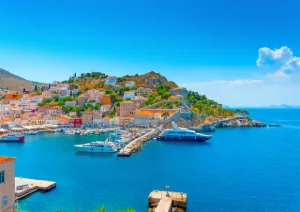
Greece
The most cruising ground, and the most weather. Meltemi country.
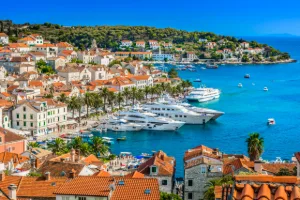
Croatia
Short hops between walled towns. The easiest first week.
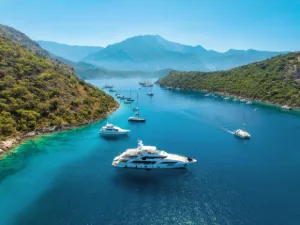
Turkey
Sheltered bays in the lee of the promontories, and better value.
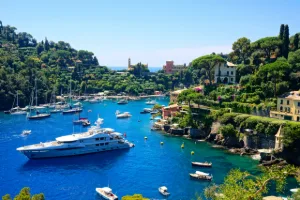
Italy
Portofino, the Amalfi Coast and Sardinia. The best coastline, the highest tax.
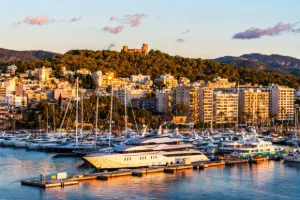
Balearic Islands
Nightlife and short runs — with new anchoring rules since April 2026.
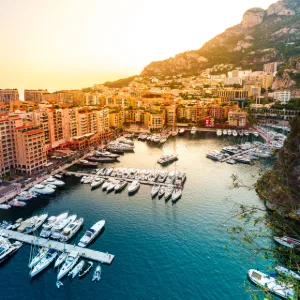
French Riviera
The best food and the least sailing. The yacht as a very good hotel.
| Destination | Best months | Wind | VAT | Best for |
|---|---|---|---|---|
| Greek islands — Cyclades | Jun, Sep | Meltemi, peaks mid-Jul to mid-Aug | 13% | Cruising ground and scenery, if you can sail |
| Greek islands — Ionian & Saronic | May–Oct | Outside the meltemi system; 3–5 Bft typical | 13% | July and August with non-sailors aboard |
| Croatia | Jun, Sep | Bora is a winter wind; summer is settled | 13% | Easiest first charter — short hops, walled towns |
| Turkey — Bodrum to Göcek | May–Oct | Sheltered in the lee of the promontories | 20% | Quiet bays, value, fewer crowds |
| Balearic Islands | Jun–Sep | Generally light | 21% | Nightlife and beach clubs — note the 2026 anchoring rules |
| French Riviera | May–Sep | Mistral affects the Gulf of Lion, west of the Riviera | 20% | Shore programme, restaurants, events |
The 13% shown for Greece is the statutory rate for a commercial crewed charter of more than 48 hours. Yachts certified under the Greek reduction regime are invoiced on a reduced taxable value, which commonly brings the rate actually charged to 6.5%. We confirm which applies to your yacht before you sign.
Two things the table cannot tell you. Berths at Hvar, Korčula and in the Kornati need arranging weeks ahead for anything above mid-size. And Greece, with 41.6% of its nights falling in July and August, is the better second charter — it rewards already knowing how you like to sail.
The trade-off worth saying out loud: if nobody in your party wants to be under way for more than two hours a day, the Riviera or the Balearics will suit you better than the Cyclades, whatever the photographs suggest.
And if the Mediterranean turns out not to be the right water for your week, we broker the Caribbean and beyond — see all our yacht charter destinations.
Where your week starts
Most Mediterranean charters board at Nice, Cannes, Athens, Dubrovnik, Naples or Ibiza, and many yachts will run a one-way itinerary that finishes in a different port if the schedule allows. Turkish weeks generally start at Bodrum or Göcek. Delivery and redelivery fees apply where the yacht has to reposition.
The starting port matters more than people expect, for three reasons: it fixes which VAT rate applies to the whole charter; it decides how much of your first day is spent getting clear of a busy harbour; and in Greece it decides whether you are pointing into the meltemi on day one or running with it.
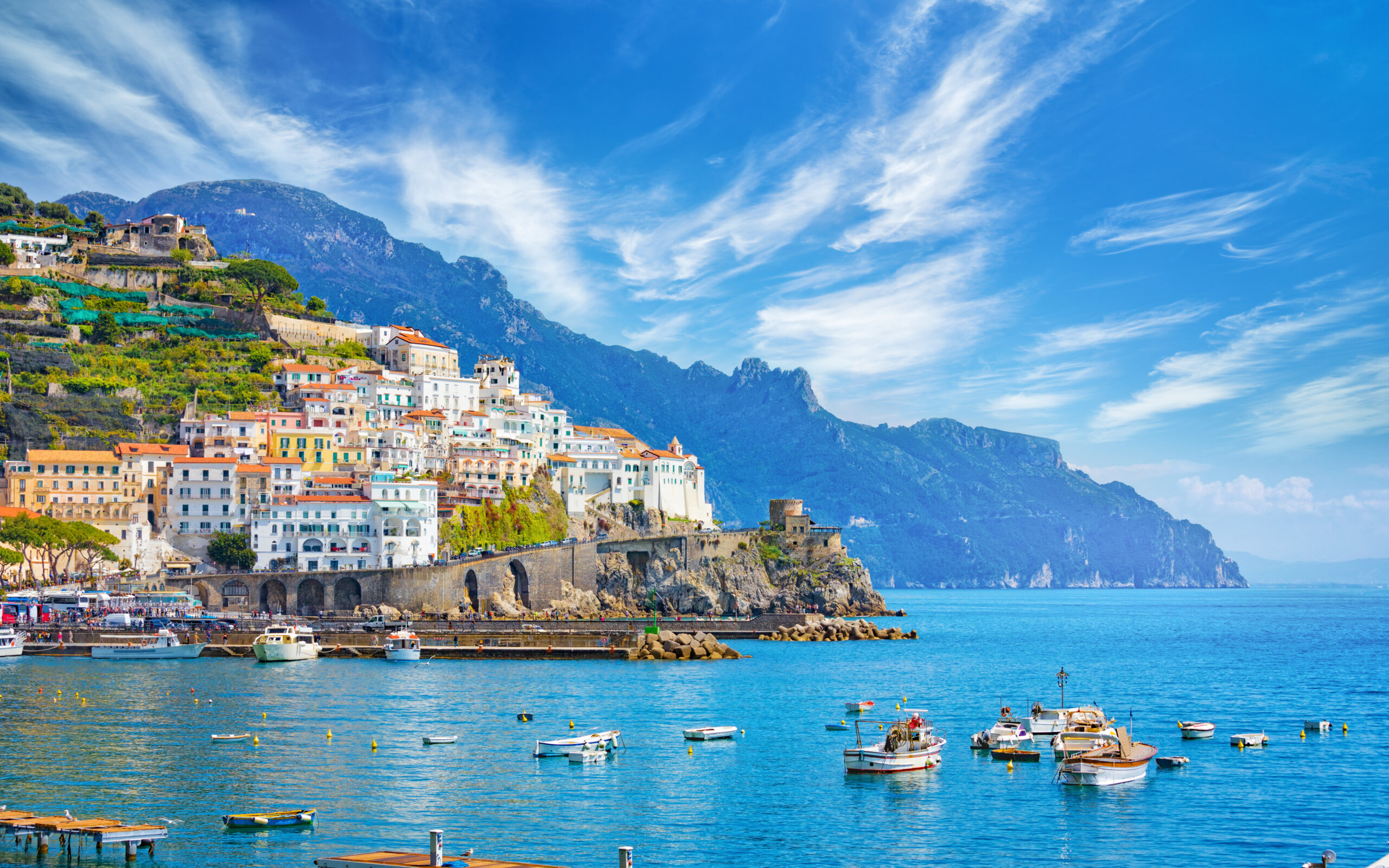
The meltemi, and why it is a Greek question
The meltemi is a northerly wind that blows across the Aegean from May to September, peaking between mid-July and mid-August, and regularly holding above 29 knots with gusts of 39–49. It is the single biggest variable in a Greek week — and it is very nearly irrelevant everywhere else in the Mediterranean.
The Ionian sits outside the worst of it; Croatia, Italy, the Balearics and the Riviera are not affected by it at all. On the Turkish coast it reaches the Bodrum peninsula and the Gulf of Gökova as an afternoon breeze, while Göcek’s bays are more sheltered. That is worth saying plainly, because a great deal of Mediterranean charter writing treats an Aegean wind as though it governed the whole basin.
If Greece is on your shortlist, our Greece yacht charter guide sets out which islands the meltemi rules out, where it does not reach, and how we plan a week around it. Our guide to the meltemi covers the climatology, the season-by-season record and the documented ferry shutdowns in full.
When to go
The Mediterranean charter season runs May to October. July and August are peak — hottest, busiest, most expensive and windiest in the Aegean. May, June, September and October are shoulder. Sea temperature off the Cyclades peaks at 24°C in August and is still 23.5°C in September.
September is the best week of the Mediterranean year, and it is the one we recommend most often. The sea is still at 23.5°C, the meltemi is past its peak, the air has dropped from an August mean of 25.8°C to 23.2°C, and the ports have emptied. You are paying shoulder-season rates for better sailing than August delivers.
Why we steer people away from the first half of August. The meltemi’s documented maximum falls in the first week of August. It is simultaneously the single most crowded fortnight in the European tourism calendar. You are paying the highest rate of the year for the most wind and the fewest berths. If August is the only fortnight you have, take it — but take it on a motor yacht, or take it in the Ionian.
Best months at a glance
The recommended months from the table above, laid across the season.
| Destination | April | May | June | July | August | September | October |
|---|---|---|---|---|---|---|---|
| Greek islands — Cyclades | Not recommended | Not recommended | Recommended | Peak — not recommended | Peak — not recommended | Recommended | Not recommended |
| Greek islands — Ionian & Saronic | Not recommended | Recommended | Recommended | Recommended | Recommended | Recommended | Recommended |
| Croatia | Not recommended | Not recommended | Recommended | Peak — not recommended | Peak — not recommended | Recommended | Not recommended |
| Turkey — Bodrum to Göcek | Not recommended | Recommended | Recommended | Recommended | Recommended | Recommended | Recommended |
| Balearic Islands | Not recommended | Not recommended | Recommended | Recommended | Recommended | Recommended | Not recommended |
| French Riviera | Not recommended | Recommended | Recommended | Recommended | Recommended | Recommended | Not recommended |
| Month | Aegean air | Aegean sea | Riviera air | Riviera sea | Season |
|---|---|---|---|---|---|
| May | 19.5°C | 18.5°C | 21.0°C | 17°C | Shoulder |
| June | 23.7°C | 21.5°C | 24.7°C | 20°C | Shoulder |
| July | 25.7°C | 23.5°C | 27.5°C | 23°C | Peak |
| August | 25.8°C | 24.0°C | 27.9°C | 24°C | Peak |
| September | 23.2°C | 23.5°C | 24.8°C | 22°C | Shoulder |
| October | 19.8°C | 21.9°C | 21.0°C | 19.5°C | Shoulder |
What a Mediterranean charter costs
Weekly rates start around €15,000 for a crewed catamaran and run past €500,000 for a large superyacht. Most Mediterranean charters are quoted on MYBA terms — “plus expenses” — so the weekly rate buys the yacht and her crew, and fuel, food, drink and berthing run through a separate APA.
Indicative weekly rates for a crewed Mediterranean charter, before APA, VAT and gratuity
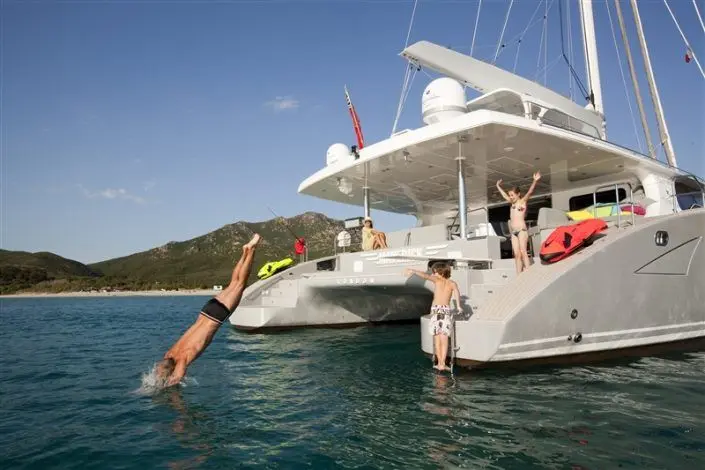
Crewed catamaran (45–75 ft)
€15,000–€60,000 per week
Far more deck space per euro than a monohull of the same length, and a shallow draft that reaches bays the bigger boats cannot. The sensible first Mediterranean charter and the easiest boat to put a family on.
Best for: First charters, families, 6–10 guests
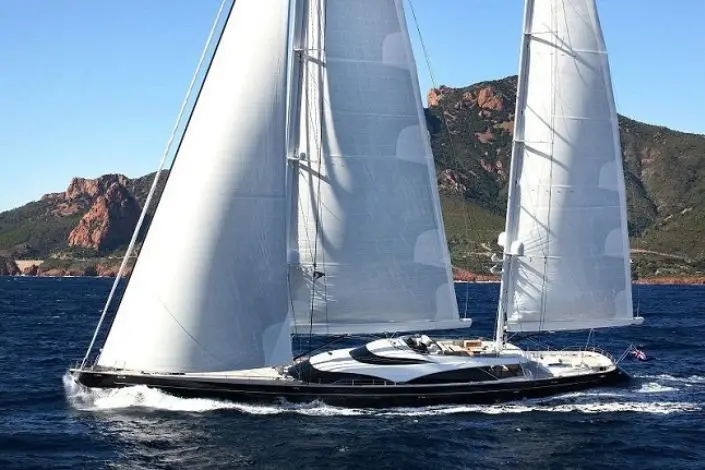
Sailing yacht (75–150 ft)
€30,000–€250,000 per week
Quoted plus expenses. The Aegean was made for this — a proper sailing yacht turns the meltemi from a problem into the point of the week, and burns a fraction of the fuel a motor yacht does.
Best for: The Aegean under sail, quieter weeks, 6–12 guests
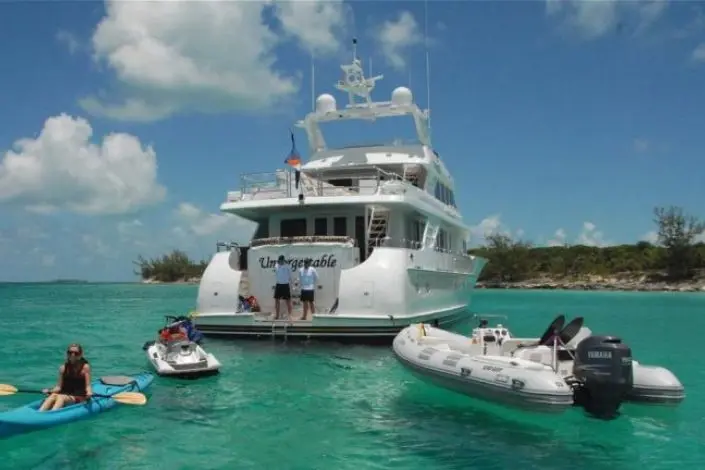
Motor yacht (75–130 ft)
€60,000–€250,000 per week
Speed is what you are buying. In the Cyclades in August it is the difference between sitting out a blow and moving between weather windows; on the Riviera it turns Monaco to St Tropez into an afternoon.
Best for: Covering ground, the Riviera, August in the Cyclades, 8–12 guests
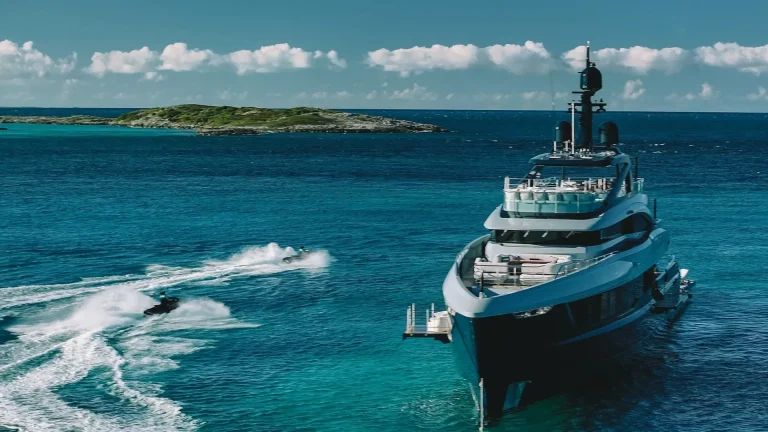
Superyacht (130 ft and above)
€250,000–€500,000+ per week
Full crew, tenders, a chef and the toys aboard. At this size the binding constraints are berth availability in peak weeks and, in Greek waters, the 35-metre licensing threshold described further down.
Best for: Full service, extended cruising, 10–12 guests
| Yacht class | Indicative weekly rate | Guests | Best for |
|---|---|---|---|
| Crewed catamaran (45–75 ft) | €15,000–€60,000 per week | 6–10 guests | First charters, families |
| Sailing yacht (75–150 ft) | €30,000–€250,000 per week | 6–12 guests | The Aegean under sail, quieter weeks |
| Motor yacht (75–130 ft) | €60,000–€250,000 per week | 8–12 guests | Covering ground, the Riviera, August in the Cyclades |
| Superyacht (130 ft and above) | €250,000–€500,000+ per week | 10–12 guests | Full service, extended cruising |
Charter prices are set by the yacht’s owner rather than by us, which is why the rate is the same wherever you book it. There is more on how charter pricing works in our yacht charter cost guide.
What APA, VAT and gratuity add on top
Budget 25–35% of the charter fee for the APA — the Advance Provisioning Allowance, a refundable float for fuel, food, drink and berthing — VAT at the rate of the country you board in, and a discretionary crew gratuity of 10–15%. On a €60,000 week starting in Greece that is roughly €15,000–€21,000 of APA, €7,800 of VAT and €6,000–€9,000 of tips.
The APA — Advance Provisioning Allowance — is a float, not a fee. It is paid to the captain before you board and spent on your behalf on fuel, food, drink, berthing and port charges. The captain accounts for it during the week and refunds whatever is left, or asks for a top-up if you have run through it. Fuel is what moves the number: a fast motor yacht run hard will burn through an APA that would comfortably cover a sailing yacht for the same week.
VAT is charged where the charter starts, and the rates are not close to each other. The same yacht, the same week, is taxed at 13% out of Athens and 21% out of Palma — about €4,800 on a €60,000 week.
| You board in | VAT on the charter fee | What changes it |
|---|---|---|
| Greece | 13% | Reduced to 6.5% or 5.2% depending on the yacht’s Certificate of Compliance. A charter of 48 hours or less is taxed at 24%. |
| Croatia | 13% | Charged pro rata for days in Croatian waters if the charter starts outside the EU. |
| France | 20% | Only the documented portion spent outside EU territorial waters is relieved. The old flat-rate reduction ended in November 2020. |
| Spain, incl. Balearics | 21% | No reduction at all for time outside EU waters. The strictest of the Mediterranean majors. |
| Italy | 22% | The 6.6% lump-sum rate for yachts over 24 m was abolished in November 2020. Any quote still citing it is out of date. |
| Turkey | 20% | Raised from 18% in July 2023. |
Cheapest place to board: Greece and Croatia, both at 13% VAT on the charter fee. The most expensive is Italy at 22%, with Spain and the Balearics at 21%. On a €60,000 week, boarding in Athens rather than Palma saves about €4,800 — and if your Greek yacht is certified under the reduction regime, the rate charged falls to 6.5%, which widens the saving to roughly €8,700.
Gratuity sits outside all of it. Customarily 10–15% of the charter fee, occasionally up to 20%, entirely at your discretion and paid at the end of the week. There is no clause in the MYBA agreement that requires it.
Payment runs 50/50. Half the charter fee on signing the agreement, the balance plus VAT and APA due roughly a month before you board. A refundable security deposit, where the yacht requires one, is paid with the balance.
That is the whole cost picture — the weekly rate, an APA of 25–35%, VAT at the rate of the country you board in, and a discretionary gratuity. Nothing else appears later.
Get My ShortlistYour broker replies within one business day with yachts that are actually free for your week, priced with APA and VAT included. No fee to you.
What is included, and what is not
On MYBA terms the weekly rate covers the yacht, her full crew, insurance and the use of everything aboard. Fuel, food, drink, berthing, port charges and communications are paid from the APA. VAT, gratuity and any delivery fee sit outside both.
In the charter fee
- The yacht for the week, and her full crew — captain, chef, deck and interior
- Insurance, and the yacht’s own running maintenance
- Water toys and tenders carried aboard
- A pre-charter preference sheet so the chef provisions to your tastes and allergies
Paid from the APA
- Fuel for the yacht and her tenders
- All food and beverage for your party
- Berthing, mooring and port charges
- Communications, personal laundry, shoreside deliveries
Outside both
- VAT at the rate of the country you board in
- Crew gratuity, at your discretion
- Delivery or redelivery fees, where the yacht repositions for you
- Greek cruising tax (TEPAI) and Croatian sojourn tax, where applicable
- Travel insurance, flights and shoreside accommodation
Your brokers
You get a named broker, not a call centre. The same person takes your first message, negotiates the contract and is reachable while you are aboard.

Hansel Sneed
Founder & Charter Broker
Hansel founded Sneed Charters in 1992 and has been placing crewed charters for more than thirty years.

Adrian Sneed
Charter Broker
Adrian is the broker who reviewed the rates, taxes and cruising fees published on this page, and the person who will answer when you send your dates.
Get a shortlist for your dates

Tell us the week, the destination and how many are aboard. Your broker replies within one business day with yachts that are genuinely free for those dates, priced with APA and VAT included. No fee to you — the yacht’s owner pays our commission.
Your broker replies within one business day with yachts that are actually free for your week, priced with APA and VAT included. No fee to you — the yacht’s owner pays our commission. We’re NDA-friendly and your details go no further.
What happens after you send your dates
Your broker replies within one business day with yachts that are genuinely free for your week, priced with APA and VAT included so you are comparing landed cost rather than headline rate. There is no fee to you — the yacht’s owner pays our commission, and it is the same whether you book through us or direct.
- You send dates, party size and a budget band. That is enough to start.
- We check real availability — not a catalogue, the yachts actually open for that week.
- You get a shortlist with landed costs: charter fee, APA estimate, VAT, delivery fees where they apply.
- We negotiate and contract on MYBA terms. 50% on signing, balance about a month out.
- Preference sheets go to the chef and captain before you fly.
- Your broker stays reachable while you are aboard.
If this is your first charter, our guide to how to charter a yacht walks through the same sequence in more detail.
Frequently asked questions
How much does it cost to charter a yacht in the Mediterranean for a week?
Weekly rates run from about €15,000 for a crewed catamaran to €500,000 and above for a large superyacht. On top of the rate you budget an APA of 25–35% for fuel, food and berthing, VAT at the rate of the country you board in, and a discretionary crew gratuity of 10–15%.
What is APA and how much should I budget on top?
APA stands for Advance Provisioning Allowance. It is a float paid to the captain before you board and spent on your behalf on fuel, food, drink, berthing and port charges. Budget 25–35% of the charter fee. Whatever is unspent is refunded to you at the end of the week.
When is the best time to charter a yacht in the Mediterranean?
The season runs May to October. September is our usual recommendation: the sea is still 23.5°C off the Cyclades, the meltemi has passed its mid-July to mid-August peak, and the ports have emptied. July and August are the hottest and busiest, and carry the strongest Aegean winds.
Do I pay a fee to use a charter broker?
No. The yacht’s owner pays the broker’s commission, so the price is the same whether you book through us or approach the yacht directly. What you get at no cost is real availability, landed pricing with APA and VAT included, and a named person who answers while you are aboard.
How far in advance should I book a Mediterranean charter?
For July and August, six to twelve months. Peak weeks on the better yachts go early, and the berth shortage in the Cyclades and along the Croatian coast makes late planning expensive. Shoulder weeks in May, June, September and October can often be arranged inside three months.
Can I charter for less than a week?
Most Mediterranean charters are weekly. Some yachts will take shorter bookings in the shoulder season. Note that in Greece a charter of 48 hours or less is taxed at the full 24% VAT rate rather than the reduced rate that applies to longer charters, so a short trip is not proportionally cheaper.
Which Mediterranean destination suits a first charter?
Croatia, usually — short hops between walled towns, settled summer weather and almost no passage-making. Greece offers more cruising ground and more wind. The French Riviera offers the best food and the least sailing. Greece and Croatia are also taxed at 13% against 20–22% further west.
Is the meltemi bad enough to avoid the Cyclades in August?
In the first half of August, usually yes. The meltemi’s documented maximum falls in the first week of August, and it regularly holds above 29 knots with gusts of 39–49. On 31 July 2026 the Hellenic National Meteorological Service forecast 7 to 8 Beaufort across the Aegean with local gusts to force 9; sailings were suspended from Rafina and Lavrio and ferries to Syros, Tinos and Mykonos were cancelled. The same day the Ionian saw 3 to 5 Beaufort and Saronic Gulf services ran normally. If August is the only fortnight you have, take a motor yacht that can move between weather windows, or take the week in the Ionian.
Can I still anchor in the Balearics after the 2026 seagrass ban?
Only away from seagrass. Royal Decree 191/2026 came into force on 2 April 2026 with no transitional period, prohibiting anchoring over seagrass meadows across all Spanish Mediterranean waters, the Balearics included. Authorised buoy fields are the practical alternative, and a Balearics itinerary is now planned around those rather than around the prettiest bay on the chart. Any captain working the islands regularly knows where they are.
Which Mediterranean country is cheapest to charter from?
Greece or Croatia, on tax alone. Charter VAT is 13% in both, against 20% in France and Turkey, 21% in Spain and 22% in Italy. On a €60,000 week the difference between boarding in Athens and boarding in Palma is about €4,800. VAT is charged where the charter starts, so the starting port fixes the rate for the whole week however far you cruise afterwards.
Will I actually pay 13% VAT in Greece, or less?
13% is the statutory rate for a commercial crewed charter of more than 48 hours. Yachts certified under the Greek reduction regime are invoiced on a reduced taxable value, which commonly brings the rate actually charged to 6.5%. Which applies depends on the individual yacht’s Certificate of Compliance, so we confirm it per yacht before you sign. A charter of 48 hours or less is taxed at 24%.
Why might a large yacht be unavailable in Greek waters late in the season?
Because she has spent her days. Foreign-flagged commercial yachts over 35 metres charter in Greek waters under the e-Charter Permission regime, capped at 21 days a calendar year with a possible seven-day extension. Since 14 May 2026 charter agreements and passenger manifests are filed through the Ministry of Shipping’s e-Charterparty platform. None of this is yours to administer, but it is worth establishing before you fall in love with a particular yacht.
What changed in Mediterranean waters in 2026
Three rule changes decide where a charter yacht may anchor and which yachts may work Greek waters. Two took effect this year; the third has been enforced through the French courts since 2023.
| Where | What changed | What it means for your week |
|---|---|---|
| Greece | Charter agreements and passenger manifests moved onto the Ministry of Shipping’s e-Charterparty platform on 14 May 2026. TEPAI, the cruising tax, applies to every leisure vessel over 7 metres regardless of flag — €8 per metre per month above 12 metres. | Foreign-flagged yachts over 35 metres are capped at 21 charter days a calendar year, so a particular yacht may simply have run out of days by late season. |
| Spain | Royal Decree 191/2026 imposed a general ban on anchoring over seagrass across all Spanish Mediterranean waters from 2 April 2026, with no transitional period. | A Balearics itinerary is now planned around authorised buoy fields rather than around the prettiest bay on the chart. |
| France | Anchoring in protected posidonia is prohibited for larger yachts and actively prosecuted, with a €150,000 maximum — though in July 2026 an appeal court rejected the ecological-damage valuation method behind the headline awards. | Size thresholds vary by local decree between 20 and 24 metres, so the yacht’s agent checks the specific bay rather than a national rule. |
The detail — country by country, with the enforcement record and the judgments — is in our guide to Mediterranean anchoring rules. The full rate table, reductions and penalties are in our guide to TEPAI, the Greek cruising tax.
Sources
- Tyrlis & Lelieveld, Journal of the Atmospheric Sciences — climatology and dynamics of the summer Etesian winds
- Hellenic National Meteorological Service — the climate of Greece
- Independent Authority for Public Revenue, Greece — e-TEPAI cruising tax
- Boletín Oficial del Estado — Real Decreto 191/2026, seagrass protection in Spanish Mediterranean waters
- Préfecture maritime de la Méditerranée — posidonia ecological-damage judgment, Marseille, November 2024
- Eurostat — tourism seasonality, 2025 reference year
- MYBA, The Worldwide Yachting Association — the MYBA Charter Agreement
Send your dates
Tell us the week, the part of the Mediterranean you are drawn to and how many are aboard, and your broker comes back with the yachts that are actually free — and what they cost with APA and VAT included.