
Virgin Islands Bareboat Charter: BVI, USVI and What It Really Takes
Can you skipper it? Resume standards, 2026/27 rates, the real fee stack, and the June 2025 licence change that decides whether you can sail both territories.
Bareboat means you are the captain. No crew, no chef, and nobody to pick up the mooring while you hold the boat into the wind. The Virgin Islands are the most forgiving place in the world to try it — short hops, deep water, and line-of-sight navigation — and they are also where people most often overestimate what they can handle on a week they booked a year in advance. Below is what the operators actually require, what it costs, and how to tell which side of that line you are on.
Short answer: bareboat means you skipper the yacht yourself, with no crew aboard. Neither the BVI nor the USVI requires a sailing licence — the charter operator decides, and typically wants five days or 100 miles as skipper on a comparable boat. Expect $3,300 to $15,000 a week depending on season and boat, plus $1,200 to $2,000 in permits, moorings and fuel. A professional skipper adds about $330 a night.
Written by Adrian Sneed, Caribbean charter broker, and reviewed by Hansel Sneed, who founded Sneed Tropical Yacht Charters in 1992.
Eight questions, about a minute · We will say plainly whether to bareboat it or not


Hansel and Adrian Sneed — your enquiry goes straight to them, not a call centre. We place bareboat, skippered and crewed weeks, so we have no stake in which one you pick.
What does bareboat mean on a Virgin Islands charter?
Bareboat means you charter the yacht alone and skipper it yourself — no captain, no chef, nobody else aboard. Neither the British nor the US Virgin Islands requires a sailing licence to do it, but the charter operator will assess your experience before confirming. Weekly rates start near $3,300, and adding a professional skipper costs about $330 a night.
A bareboat charter hands you the yacht and the responsibility. The base gives you a boat briefing and a chart briefing, and after that you provision, you navigate, you anchor, you cook, and you are liable for the boat. Nobody else is aboard.
There is a middle rung most people miss. A skippered bareboat puts a professional captain aboard to handle the sailing while the rest of the week stays self-catered. It runs roughly $330 a night plus the skipper’s provisions, and it costs you a cabin or a saloon berth. A crewed charter is a different product again: captain and chef as a minimum, all-inclusive pricing, and nothing on the boat is your job.
Most people who ask us about bareboating the Virgin Islands end up on one of those three, and not always the one they started on.
Can you skipper it? What the sailing resume has to show
No government licence is required in either territory. The operator decides instead, on a sailing resume. Sunsail publishes the standard as five days or 100 miles as skipper on an equivalent size yacht, and The Moorings applies a comparable test. Catamarans need twin-screw experience specifically. If the resume falls short, the base puts a skipper aboard at your cost.
Neither the British nor the US Virgin Islands requires a government sailing licence to charter a bareboat. That surprises people, and it should not reassure them. The decision has simply been handed to the charter operator, and the operator is the one carrying the insurance.
The major fleets ask for a sailing resume before they confirm the booking. Sunsail publishes the standard for Caribbean destinations as five days or 100 miles as skipper on an equivalent size yacht (Sunsail qualifications), and The Moorings applies a comparable test. Bases also want that experience to be reasonably recent and on a boat close in size to the one you are chartering. For a catamaran they want twin-screw experience specifically, because docking two engines is a different skill from docking one engine and a rudder.
What they are really checking is narrower than the mileage suggests: can you set an anchor and trust it, pick up a mooring under load, dock in a crosswind, and read a chart well enough to stay off the reef at the entrance to Trellis Bay.
BVI or USVI: where should the week start?
Start in the BVI if it is your first bareboat week — short line-of-sight hops, a mooring ball almost everywhere, and the largest charter fleet in the world. Start in the USVI if you want fewer boats and can be aboard the same afternoon you land, and will accept longer open-water legs. Crossing from the USVI into the BVI is now restricted.
Both territories are good bareboat ground. They are not interchangeable, and the choice comes down to fleet, flights and paperwork rather than scenery.
| British Virgin Islands | US Virgin Islands | |
|---|---|---|
| Fleet | The largest concentration of bareboats anywhere. Bases at Road Town, Nanny Cay, Hodges Creek and Soper’s Hole | Small fleets, all on St Thomas: Frenchtown Marina, Compass Point and Yacht Haven Grande |
| Getting there | Fly to St Thomas, then ferry, or fly into Beef Island. Add roughly half a day each way | Fly to St Thomas and be aboard the same afternoon. No passport needed on US domestic arrivals |
| The sailing | Sir Francis Drake Channel. Line-of-sight navigation, anchorages rarely more than three hours apart | More open water, longer legs, and Pillsbury Sound can be lumpy in the trades |
| Paperwork | Cruising permit, environmental levy and a National Parks Trust permit | US territory. No customs, no cruising permit, no clearance |
| Moorings | Commercial fields, $30–$65 a night, mostly bookable by app | National park moorings at $26 a night, first come first served, paid before you spend the night |
| Crossing over | Straightforward into the USVI, with clearance both ways | Restricted into the BVI since June 2025 — see below |
For a first bareboat week, the BVI is the easier place to make mistakes. Short hops, sheltered water, and a mooring ball at the end of almost every one of them. The USVI rewards a crew that already knows what it is doing and wants fewer boats around.
How does the June 2025 BVI licence change affect your charter?
It only affects boats based outside the BVI. Since 1 June 2025 a foreign-based vessel under 115 feet pays $7,500 a year on a restricted licence or $24,000 unrestricted, plus $1,200 for every cruise, and is capped at seven BVI charters a year. Many USVI-based boats no longer enter BVI waters at all. A BVI-based boat is unaffected.
In June 2025 the BVI overhauled commercial licensing for foreign-based charter yachts. A foreign-based vessel under 115 feet now pays $7,500 a year on a restricted licence or $24,000 unrestricted, and $1,200 on top for every cruise. Foreign-based vessels are capped at seven charters a year, cannot stay more than sixty continuous days without further permits, and any foreign-based bareboat over sixty feet must be under the command of a licensed captain. Summary of the amended Charter Acts, O’Neal Webster.
Going the other way is simpler. A BVI-based bareboat can usually visit the USVI, but you clear out of the BVI and into the US at a designated port of entry, and back again. Do not skip it for an overnight. Charter contracts prohibit it, several fleets fit trackers, and if the boat is detained the person who signed the contract carries the loss — including any delay to the next charter.
Want one week across both territories? Tell us your dates and we will send only the boats licensed to do it →
How much does a Virgin Islands bareboat charter cost?
A bareboat week runs from about $3,300 in low season to $15,000 in high season, depending on the boat and the month. Adding a skipper costs around $330 a night on top. The same boat fully crewed is roughly double the bareboat rate. Full breakdown by boat type and territory below.
| Boat | Low season | High season | What that buys |
|---|---|---|---|
| Bareboat monohull, BVI | $3,300 | $14,500 | Yacht only. You skipper it. |
| Bareboat catamaran, BVI | $4,100 | $15,000 | More space, shallower draft, twin screws. |
| Bareboat monohull, USVI | $4,500 | $7,600 | Smaller fleet, narrower spread. |
| Bareboat catamaran, USVI | $5,500 | $18,900 | Best boats book a year out. |
| Skipper added to a bareboat | About $330 a night | Plus provisions, and a berth. | |
| Crewed catamaran, BVI | $13,000 | $50,000+ | Crew, all meals, bar, fuel and toys. |
Those low-season figures are not typos. August through October is materially cheaper and genuinely quieter, and it is also hurricane season, which is a conversation about cancellation terms and insurance rather than about the weather on any given week.
The comparison people avoid: a 46-foot catamaran bareboat in March for eight people lands near $12,000–$15,000 before fees. The same boat crewed is roughly double. Split eight ways, the gap is a few hundred dollars a head against a week in which nobody provisions, nobody cooks, nobody washes up, and nobody has to dock.
We quote all three side by side for the same week
Same dates, same group, same budget — so you can see what the difference actually costs before you commit.
What fees are not included in a bareboat charter rate?
Budget roughly $1,200 to $2,000 on top of the charter rate for a crew of six. The main items are the BVI cruising permit at $6 per person per day, a $10 environmental levy, a National Parks Trust permit, overnight moorings, customs clearance, a $20 departure tax and the damage waiver. Every one is itemised below.
None of the following is optional, and most operators bill them separately or collect them at the base.
| Charge | Current rate | Notes |
|---|---|---|
| BVI cruising permit | $6 per person, per day | BVI-based charter yachts, flat all year. Foreign-based boats pay $16. BVI Government |
| Environmental & Tourism Levy | $10 per person | Everyone aged three and over, collected by Customs on arrival. BVI Government |
| National Parks Trust permit | $25–$55 per week | Priced by headcount, not boat length. Bought from the BVI National Parks Trust. |
| Overnight moorings | $30–$65 (BVI), $26 (USVI park) | USVI park balls are first come, first served, paid before you spend the night through the Recreation.gov app, and limited to seven nights per bay. US National Park Service |
| Customs clearance | around $30 in and out | Plus a $2 per person search-and-rescue contribution. |
| Departure tax by sea | $20 per person | Charged when you leave the BVI by boat. |
| Yacht damage waiver | $600–$910 per week | Reduces but does not remove your deposit liability. |
| Fuel and provisioning | $150–$500 fuel; $50–$75 per person per day | Order through the base at least five days ahead, or shop in Road Town. |
Budget roughly $1,200 to $2,000 on top for a crew of six once permits, moorings, fuel and the waiver are counted. It rarely comes in under that, and no reputable operator will pretend otherwise.
Should you charter a monohull or a catamaran?
Take a catamaran if the group includes non-sailors. It does not heel, the cockpit and saloon sit on one level, the draft is shallow, and the cabins are split between two hulls. Take a monohull for a lower rate, better upwind sailing, and one engine and a rudder rather than the twin screws most bases want separate experience for.
Most Virgin Islands bareboats are catamarans now, and for good reason. They do not heel, the cockpit and saloon sit on one level, the draft is shallow enough for the anchorages you actually want, and the cabins are split between two hulls — which matters more than anyone admits when four couples share a boat for a week.
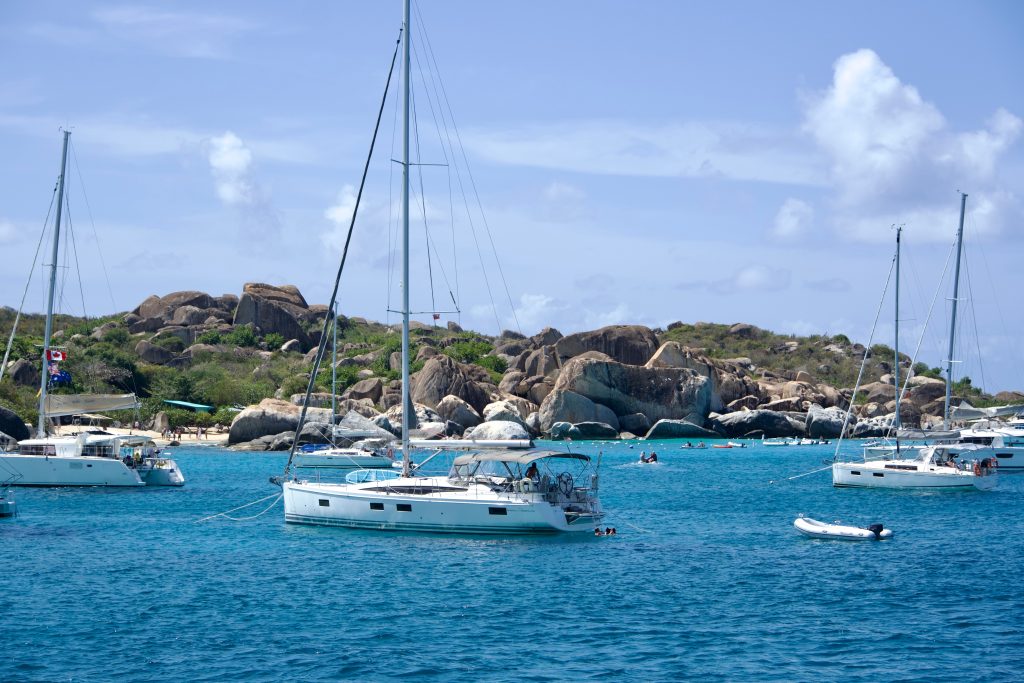
Monohulls are cheaper, point better upwind, and give you one engine and a rudder instead of two engines and a lot of windage. If your resume is built on monohull sailing and you have never handled twin screws, the honest options are to charter a monohull or to book the checkout skipper and spend the first morning learning to dock the cat properly.
What does a week bareboating the BVI actually look like?
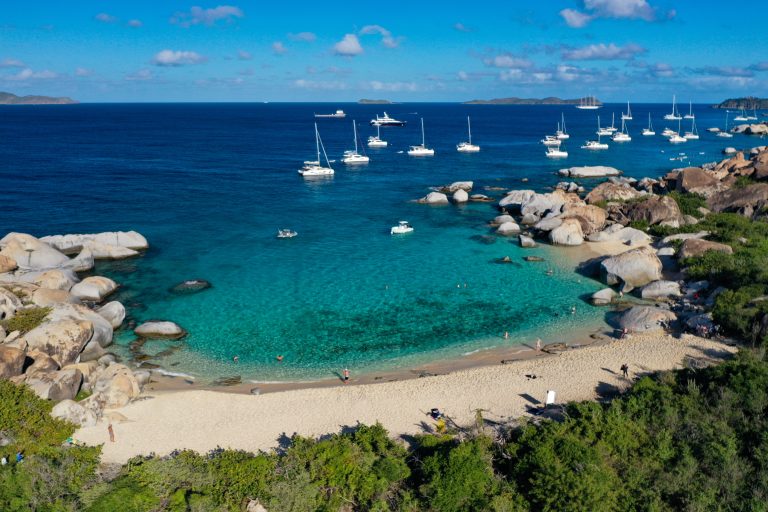
The standard first week runs Road Town to Norman Island, Cooper Island, Virgin Gorda and North Sound, then back by Marina Cay, Jost Van Dyke and Soper’s Hole. Nothing on it is more than about three hours, and one day has no passage at all. The loop has barely changed in thirty years, for good reason.
| Day | Route | Roughly |
|---|---|---|
| 1 | Board at Road Town or Nanny Cay, briefings, then a short hop to The Bight, Norman Island | 7nm, 90 min |
| 2 | Norman Island to Manchioneel Bay, Cooper Island | 6nm, 1 hr |
| 3 | Cooper Island to Virgin Gorda — The Baths early, then North Sound | 12nm, 3 hrs |
| 4 | North Sound layover. Day sailing inside the sound, Saba Rock, Leverick Bay | Nil |
| 5 | North Sound to Marina Cay or Trellis Bay | 10nm, 2.5 hrs |
| 6 | Trellis Bay to Jost Van Dyke, Great Harbour or White Bay | 13nm, 3 hrs |
| 7 | Jost Van Dyke to Soper’s Hole, then back to base | 8nm, 2 hrs |
Nothing on that list is more than about three hours, and one day has no passage at all. That is deliberate.
First bareboat weeks go wrong when the itinerary requires being somewhere by a particular time, because that is when crews leave a mooring they should have stayed on. Build in the layover day and you will use it.
Swipe for more →
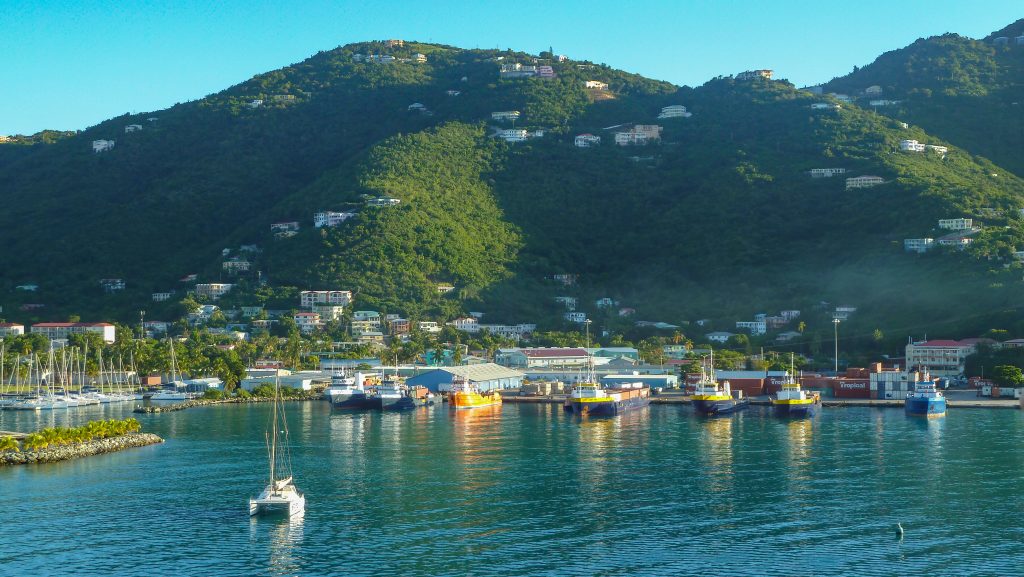 Day 1 · Road Town · Nanny Cay
Where the week starts
Four bases sit within a short drive of each other on Tortola, and this is where the boat briefing, the chart briefing and the provisioning happen. Allow the whole afternoon; nobody leaves the dock as early as they planned.
A working island rather than a resort one, which is exactly what you want on day one and day seven.
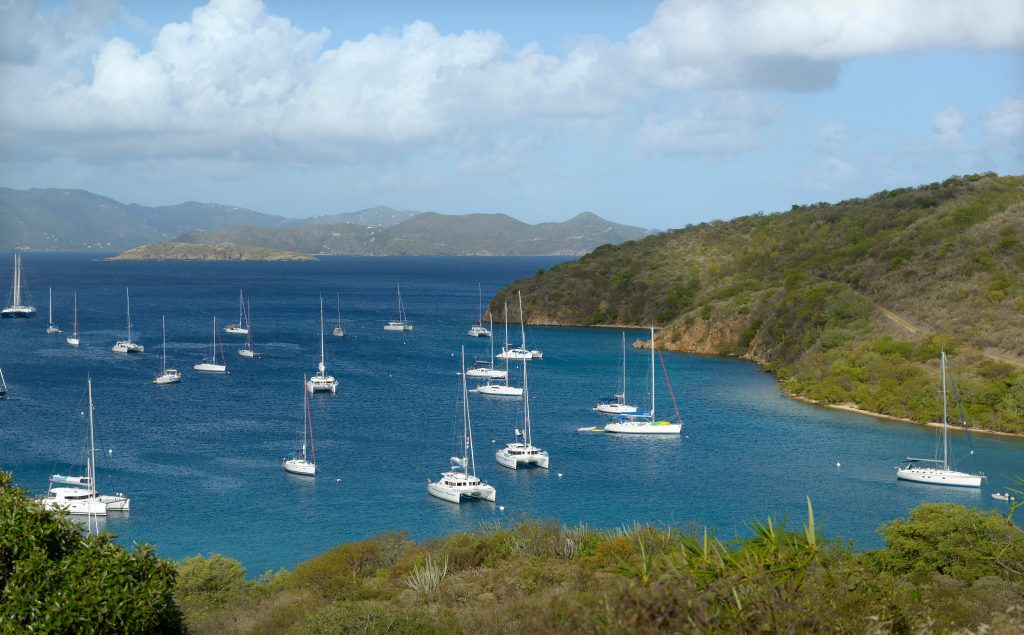 Day 1–2 · Norman Island
The first night on the hook
Ninety minutes from Road Town, and the standard first stop for good reason — a wide sheltered bay, a full mooring field, and nothing to hit on the way in.
A soft place to discover that your mooring technique needs work.
 The long leg · Anegada
The one real passage
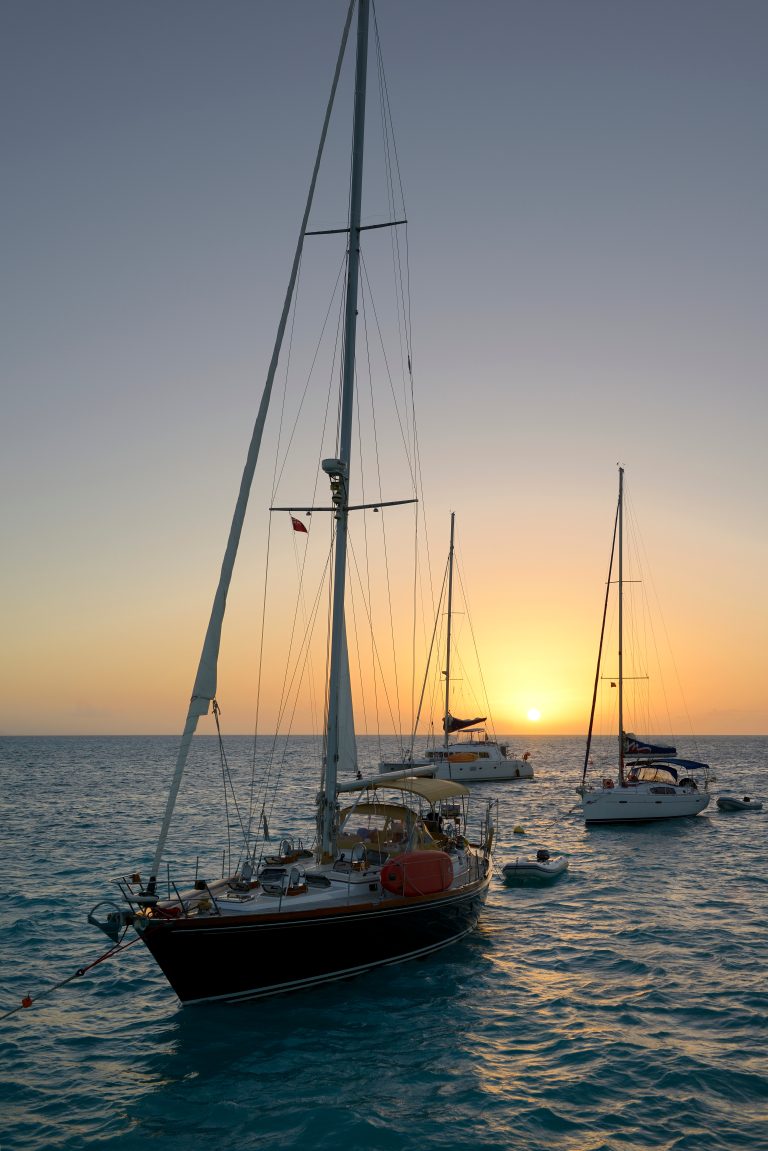
Anegada is 15 to 25 miles from Virgin Gorda and three to five hours across open water, to a low coral island you cannot see until you are close to it.
Some operators restrict it to certain months or ask you to check in by radio. It is the only leg on a BVI week that needs planning rather than pointing.
 The other side · St Thomas
If you start in the USVI
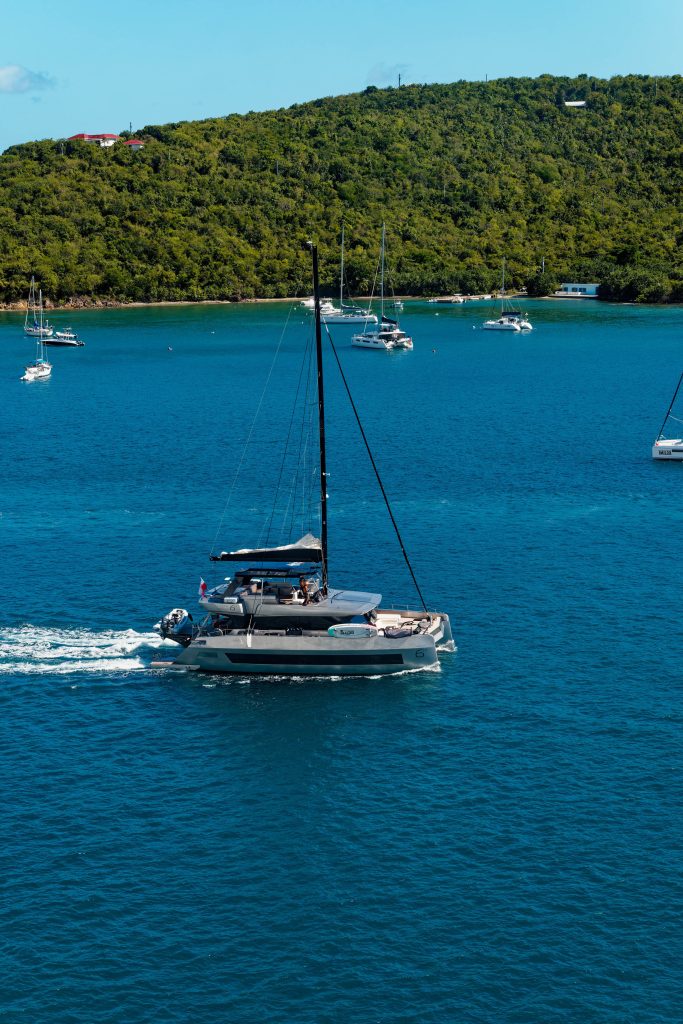
Smaller fleets, no cruising permit, and you can fly in and be aboard the same afternoon. The trade is more open water and fewer sheltered overnight options.
Check the boat holds a current BVI licence before you plan on crossing.
When should you not bareboat the Virgin Islands?
When the skipper is the only competent sailor aboard and everyone else expects a holiday rather than a watch system. Also when your last comparable trip was more than five years ago, when small children or anyone unsteady on deck is coming, or when you want both territories without carrying the clearance risk yourself. Usually the fix is a skipper, not a full crew.
We place bareboat, skippered and crewed weeks, so we have no stake in which one you pick. These are the patterns where bareboat weeks tend to disappoint:
- The skipper is the only competent person aboard, and everyone else expects a holiday rather than a watch system.
- Your last comparable trip was more than five years ago, or was on a very different boat.
- Small children, or a multi-generational group where somebody cannot move around a deck easily.
- You want the BVI and the USVI in the same week without carrying the clearance risk yourself.
- The point of the trip is a holiday for the person who would be doing all the sailing.
In most of those cases the fix is not a crewed charter, it is a skipper. At around $330 a night a professional aboard removes the docking, the anchoring and the weather calls while keeping the boat, the budget and the informality of a bareboat week. Going fully crewed is the right answer when you also want the cooking and the provisioning to stop being your problem.
What a charter week actually costs
Fuel, provisioning, moorings, permits, the damage waiver, and how an APA really works — set out so you can build a realistic budget before you speak to anyone. No obligation, and no fee to you for using a broker.
Virgin Islands bareboat FAQs
Do I need a sailing licence to bareboat in the Virgin Islands?
No. Neither territory requires a government licence. The charter operator decides, based on the sailing resume you submit. ASA, RYA or US Sailing certification helps your case but does not replace time as skipper on a comparable boat.
Can I take a BVI bareboat over to the US Virgin Islands?
Usually yes, with clearance out of the BVI and into the US at a designated port of entry, and the same in reverse. Confirm it with the operator first — some contracts prohibit it outright, and several fleets fit trackers.
Can I take a USVI bareboat into the BVI?
Often not, since the June 2025 licensing changes. Get written confirmation that the specific yacht holds a current BVI commercial licence before you pay anything.
What happens if the base decides I cannot handle the boat?
They put a skipper aboard at your cost. That is the usual outcome, and it costs a berth as well as the daily rate. Submitting the resume months ahead is how you avoid finding out at the dock.
How many people actually fit on a 46-foot catamaran?
Four cabins will sleep eight to ten. Six to eight is comfortable for a week. Berth count and comfort count are different numbers, and on a self-catered boat the gap between them shows up by about day four.
Is chartering during hurricane season worth the saving?
August to October is the cheapest and quietest time to be there, and most weeks pass without incident. The decision is about the named-storm and cancellation terms in the contract, and about travel insurance, rather than the odds on any single week.
How far ahead should I book a Virgin Islands bareboat?
For Christmas, New Year and February half-term, nine to twelve months. For the rest of the high season, six months. Low season can often be done inside eight weeks, though the newest catamarans go first whatever the month.
How much does adding a skipper cost for a whole week?
About $330 a night, so roughly $2,300 for seven nights, plus the skipper’s provisions and a berth. On a boat that sleeps eight that usually means taking six or seven guests instead. It is still far less than the gap between a bareboat and a fully crewed yacht.
How does provisioning work on a bareboat?
Order through the charter base at least five days ahead and it is aboard when you arrive, or shop yourself in Road Town, where the supermarkets are a short taxi from the marinas. Budget $50 to $75 per person per day. Most crews do both — a base order for staples, then fresh food locally.
Can you do a one-way charter between St Thomas and Tortola?
Rarely. Almost every bareboat contract requires the yacht back at its home base, and where a one-way is offered at all it carries a relocation fee. Ask before you build a plan around flying home from the other territory.
Will a partner who has never sailed enjoy a bareboat week?
Often yes on a catamaran, which does not heel and keeps the cockpit and saloon on one level. It goes wrong when the only competent sailor aboard is also the only person who wanted to come. If that is the situation, put a skipper on for the week — it turns it into a holiday for both of you.
Tell us what you have actually sailed
Send us the dates, the group, and an honest account of your sailing. We will tell you whether to bareboat it, put a skipper on it for the week, or go crewed — and send the boats genuinely free that week, with permits and fees priced in rather than bolted on afterwards.
What happens next: a broker reads this personally and comes back within 24–48 hours with three to five boats that genuinely fit your dates and your experience — not an automated list.
Prefer to talk it through? Call 1-561-463-6840. We have been brokering Caribbean charters since 1992, and we would rather talk somebody out of the wrong week than sell them one.
Keep planning
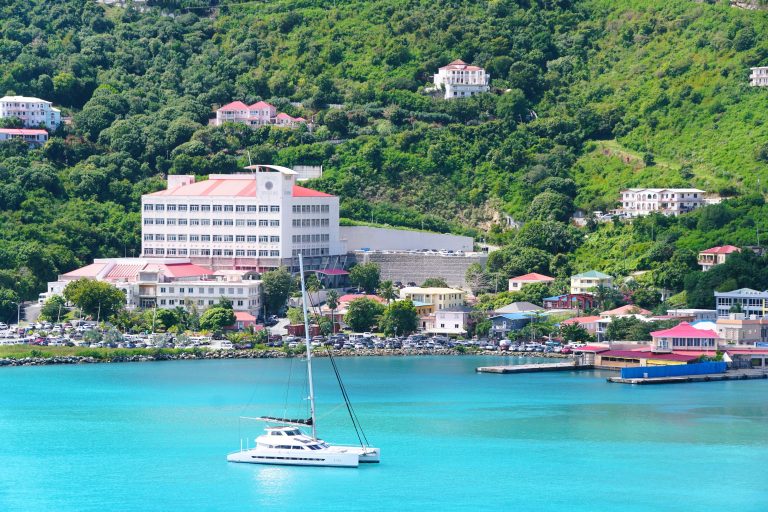
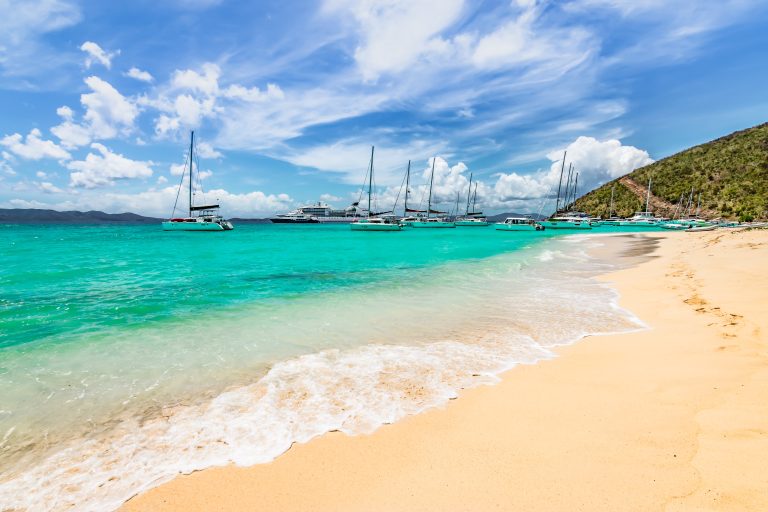
Bareboat is one way to sail these islands. For the destinations themselves — where you go, what it costs crewed, and what each territory is like — read the British Virgin Islands and US Virgin Islands guides, or the Virgin Islands overview which compares all three territories side by side. If you are still weighing the format, how to charter a yacht and what a charter costs cover the rest.
Last updated 2 September 2026. Government fees verified against the BVI cruising permit schedule, the Environmental and Tourism Levy notice and the US National Park Service fee page for Virgin Islands National Park. Licensing changes from a legal summary of the amended BVI Charter Acts. Charter rates are 2026/27 operator rate cards.
Not sure which side of the line you are on?
Send us the boat you are looking at and the sailing you have actually done. Within 24–48 hours you will have a straight answer — bareboat, skippered or crewed — and three to five boats that are genuinely free that week.
Get my shortlist →Prefer to talk it through? 1-561-463-6840 · No fee to you for using a broker