
British Virgin Islands Yacht Charter: Bareboat, Crewed and What It Really Costs
Bareboat from $3,300 a week, crewed all-inclusive from $16,700. Real 2026/27 rates, every permit and fee, and what changed in June 2025. Brokers since 1992.
Sixty-odd islands inside a twenty-mile channel, line-of-sight navigation, and anchorages rarely more than three hours apart. The British Virgin Islands are the most forgiving cruising ground in the Caribbean and the busiest charter base in the world. Bareboat weeks start near $3,300 and crewed all-inclusive catamarans from around $16,700. Below is what a BVI week actually costs in 2026/27, including the permits and fees that never appear in a headline rate. We have been brokering these charters since 1992.
Eight questions, about a minute · No obligation, and no fee to you for using a broker
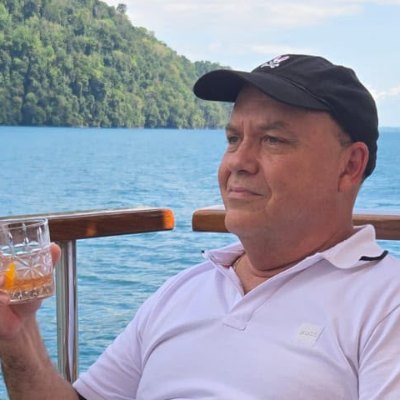

Hansel and Adrian Sneed — your enquiry goes straight to them, not a call centre. Sneed Charters has been placing clients on these boats since 1992.
One thing worth knowing: the BVI charges no VAT on yacht charters, against 20% or more in the Mediterranean. The fee stack above looks long, but on a typical bareboat week it adds roughly $600 to $900 for a crew of six — not the thousands people often fear.
Where do you actually sail in the BVI?
Almost every BVI charter happens along the Sir Francis Drake Channel, a twenty-mile corridor of protected water with Tortola on its north side and a chain of smaller islands to the south. You can generally see your next anchorage from the one you are leaving. The tidal range is roughly twelve inches, currents are mild, and there is no open-water passage anywhere on a standard itinerary. That combination is why first-time bareboat crews are sent here rather than almost anywhere else.
Typical passages run one to three hours. Tortola to Norman Island is about 7nm and ninety minutes. The one genuinely long leg is Anegada — roughly 15 to 25nm and three to five hours from Virgin Gorda, across open water to a low coral island you cannot see until you are close to it. Some operators still restrict Anegada to certain months or ask you to check in by radio.
Swipe for more islands →
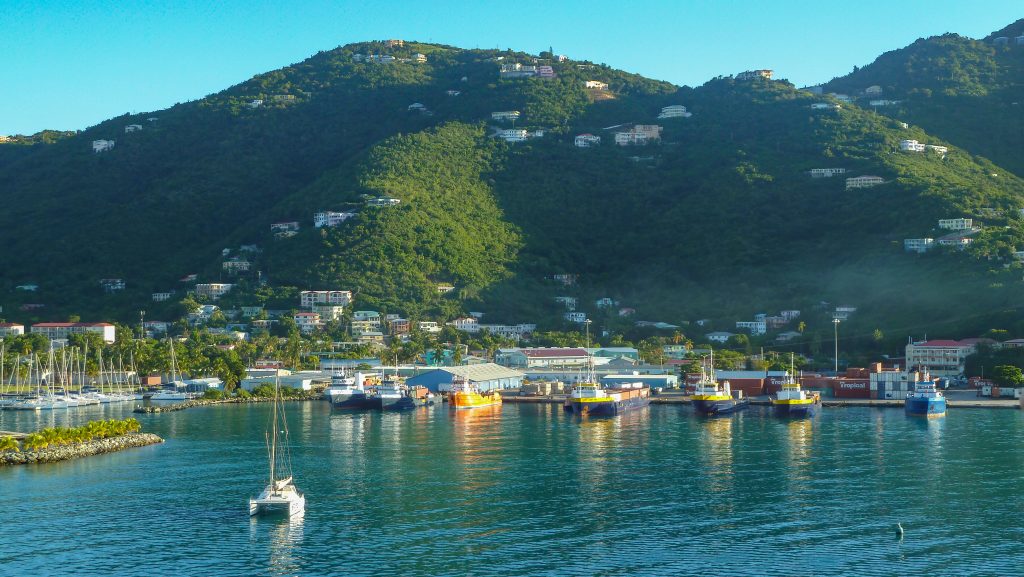 Road Town · Nanny Cay · Hodges Creek · EIS airport
Tortola
Road Town is the charter capital of the Caribbean, and most BVI weeks begin and end here. Four separate bases sit within a short drive of each other, the airport is on Beef Island across a bridge, and Norman Island is ninety minutes away once you drop the lines.
A working island rather than a resort one — provisioning, chandlery and repairs are all easier here than anywhere else in the chain.
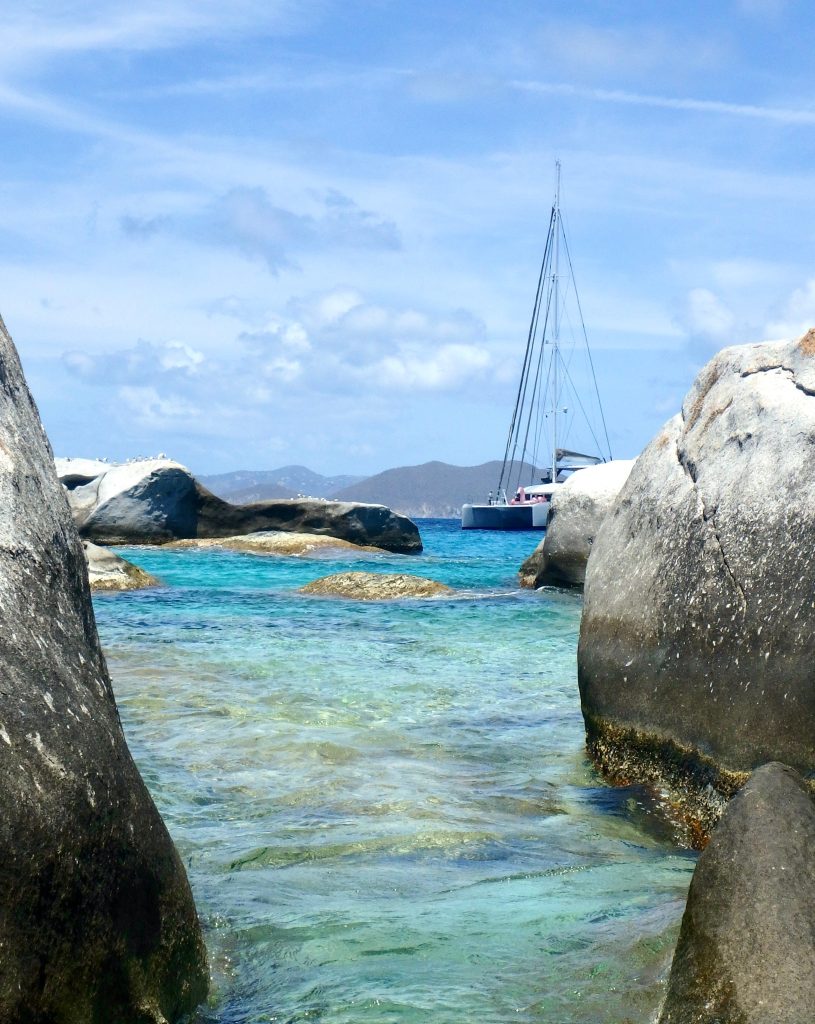 The Baths · North Sound · port of entry
Virgin Gorda
The Baths are the most photographed place in the BVI — granite boulders the size of houses forming grottoes and tidal pools. They sit inside a National Parks Trust area: day-use moorings, no anchoring, no overnight stays.
North Sound at the other end is a large protected basin with Leverick Bay, Saba Rock and Oil Nut Bay around its edges — the easiest place in the BVI to sit out a windy day.
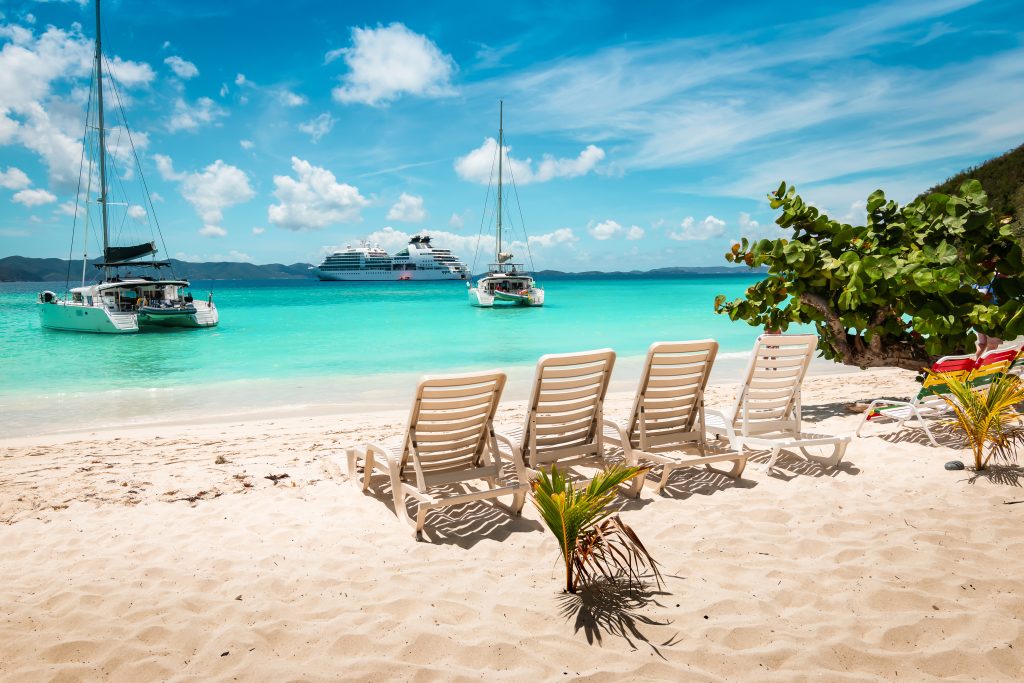 White Bay · Great Harbour · port of entry
Jost Van Dyke
Small, hilly and disproportionately famous. White Bay and Great Harbour are the anchorages, and the island’s reputation rests on a handful of beach bars that have been serving charter crews for decades.
It is also a port of entry, which makes it a practical first or last stop if you are crossing to or from the US Virgin Islands.
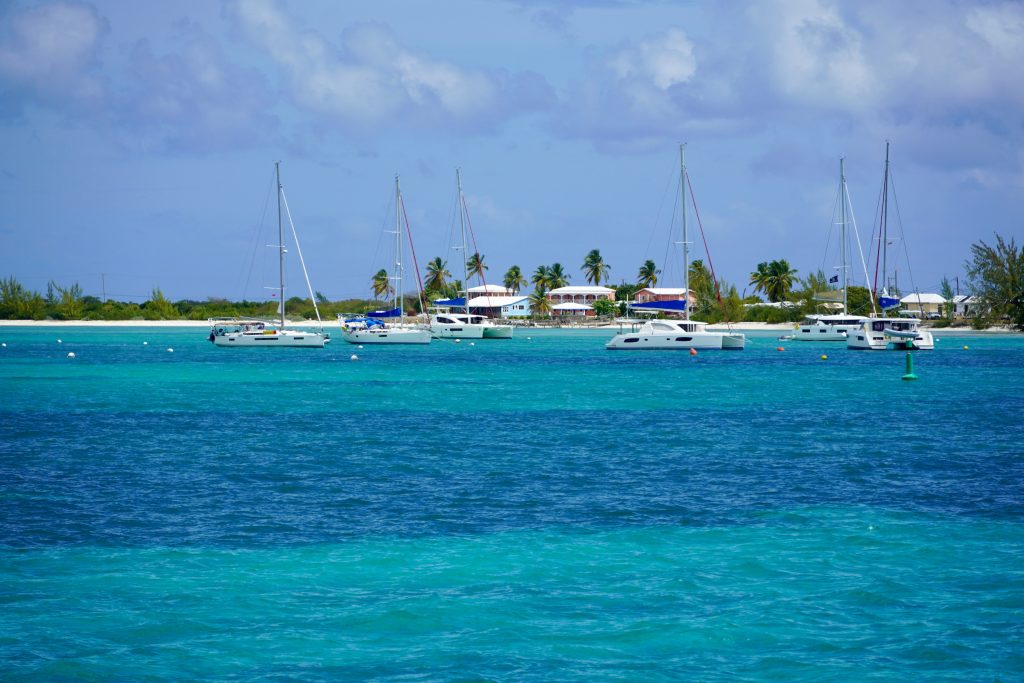 15–25nm from Virgin Gorda · 3–5 hours · coral, not volcanic
Anegada
The odd one out. Anegada is flat coral ringed by Horseshoe Reef, and the approach needs attention in a way nothing else in the BVI does.
The reward is lobster, genuinely empty beaches and an island that feels nothing like the rest of the chain. Build in a full day for it.
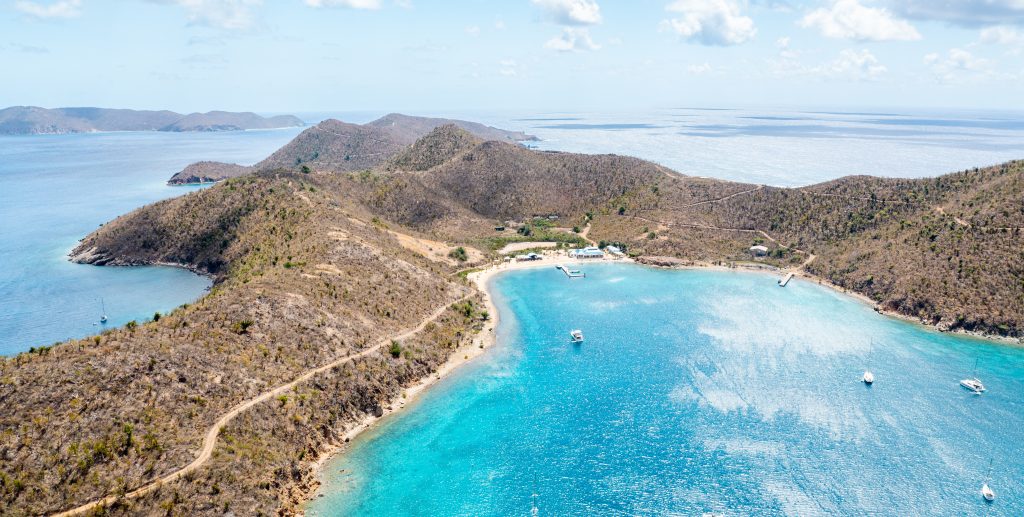 The Bight · Deadman’s Bay · RMS Rhone · 1–3 hours apart
Norman, Peter, Salt and Cooper
The south side of the Drake Channel. Norman has The Bight and the caves at Treasure Point; Peter has Great Harbour and Deadman’s Bay; Salt has the wreck of the RMS Rhone, the best-known dive in the territory; Cooper has a small resort and a busy mooring field.
These are the islands that make the BVI feel dense — you can move between three of them in a single afternoon.
You can generally see your next anchorage from the one you are leaving.
When is the best time to charter in the BVI?
December to March or April is high season: settled north-east trades, the least rain, every restaurant and beach bar open, and rates roughly double. Mooring fields genuinely fill, and the reservable balls are gone within minutes of releasing at 07:00.
May to November is low season and overlaps the Atlantic hurricane season, which officially runs 1 June to 30 November. Rates are at their lowest, anchorages are empty, and shoreside hours contract — some bases shorten their opening from July to September.
The value window is the shoulder: late April into early June, and November. You get close to high-season sailing conditions at close to low-season prices. November sits inside the official hurricane window, so if you book May through November it is worth taking travel insurance that covers named-storm cancellation.
What does a BVI yacht charter cost in 2026/27?
A BVI week can cost $3,300 or $50,000, and almost all of the difference is whether someone else is sailing the boat and cooking your dinner. These are weekly rate bands across the main operators for the 2026/27 season, low season to high.
| Type of charter | Low season | High season | What that buys |
|---|---|---|---|
| Bareboat monohull | $3,300 | $14,500 | Yacht only. You skipper it. |
| Bareboat catamaran | $4,100 | $15,000 | Yacht only. More space, shallower draft. |
| Crewed catamaran, all-inclusive | $13,000 | $50,000+ | Crew, all meals, bar, fuel and water toys. Most six to eight guest boats sit at $16,000–$25,000. |
| Motor yacht | $6,700 | $14,000 | Power, wider range, higher fuel. |
Adding a skipper to a bareboat costs roughly $330 a night plus their provisions. It is the cheapest way to sail the BVI without holding the qualifications yourself, and for a first Caribbean charter it is often the better call than a full crewed boat.
The fees that are not in the headline rate
This is where BVI quotes diverge from what people actually pay. None of the following is optional, and most operators bill them separately or collect them at the base.
| Charge | Current rate | Notes |
|---|---|---|
| Cruising permit | $6 per person, per day | For BVI-based charter yachts, flat all year. Foreign-based boats pay $16. The peak and off-peak split was abolished in 2017. |
| Environmental & Tourism Levy | $10 per person | Everyone aged three and over, payable in cash on arrival. |
| National Parks Trust marine permit | $25–$55 per week | Priced by headcount, not boat length: $25 for up to four guests, $55 for up to ten. Day use only. |
| Overnight moorings | $30–$65 per night | Commercial fields, not park moorings. Reservable balls around $55; first-come around $30–$40. |
| Customs clearance | around $30 in and out | Plus a $2 per person search-and-rescue contribution. |
| Departure tax by sea | $20 per person | Charged when you leave by boat or ferry. |
| Yacht damage waiver | $600–$910 per week | Reduces but does not remove your deposit liability. |
| Fuel and provisioning | $150–$500 fuel; $50–$75 per person per day food | Bareboat only. Crewed charters include both. |
| Crew gratuity | 15–20% of the charter fee | Crewed charters. On a $20,000 week that is $3,000–$4,000, and it is expected rather than optional. |
We price your BVI week with the permits and fees already in it
Cruising permit, levy, park permit, moorings and waiver — quoted up front rather than collected at the base.
What changed in June 2025, and does it affect your charter?
On 1 June 2025 the BVI brought three amended acts into force, covering commercial recreational vessel licensing, home port permits and customs duties. Four changes matter:
- Licences now attach to a specific vessel rather than an owner or fleet.
- Foreign-based commercial vessels are capped at seven charters a year, and cannot stay more than sixty continuous days.
- Home-based vessels must originate at least 70% of their charters in the BVI.
- Foreign-flagged bareboats over sixty feet now require a licensed captain.
If you book a BVI-based operator, essentially none of this touches you. Cruising permit rates did not change. The amendments were aimed at foreign-based operators — overwhelmingly boats based in the US Virgin Islands — and the fee increases on that group were severe, in some categories over 4,000%. A foreign-based vessel under 115 feet now pays $7,500 a year on a restricted licence or $24,000 unrestricted, plus $1,200 for every cruise. Summary of the amended Charter Acts, O’Neal Webster.
Do you need a licence to bareboat in the BVI?
No government licence is required. What you need is to satisfy the operator, and every one of them works from a sailing resume rather than a certificate.
The Moorings and Sunsail use a resume rating system where the bareboat threshold is roughly five days or 100 miles as skipper on a comparable yacht. BVI Yacht Charters ask for recent command of a vessel within five feet of the one you are booking, within the last five years, and want catamaran experience if you are taking a catamaran. Certifications such as ASA or RYA help your case but do not replace the resume.
The part people do not expect: base staff can require you to take a skipper on arrival, at your own cost, if the check-out briefing leaves them unconvinced. It is not common, but it happens, and it is why an honest resume serves you better than an optimistic one. If your experience is genuinely thin, booking a skipper for the first day or two is far cheaper than being told to hire one for the week.
Weighing bareboat against a skipper? Read the Virgin Islands bareboat guide →
Where does a BVI charter start?
Your base decides your first and last day, and on a seven-night charter that is nearly thirty per cent of your time. All of the main bases are on Tortola.
| Base | Operators | Notes |
|---|---|---|
| Road Town, Wickhams Cay II | The Moorings, Sunsail | The largest concentration of charter tonnage in the Caribbean. Roughly 30 minutes from the airport. |
| Road Town, Inner Harbour | BVI Yacht Charters | Village Cay and its 106 slips are next door. |
| Nanny Cay | Navigare, MarineMax | South side of Tortola, around 300 berths, haul-out on site. |
| Hodges Creek | Dream Yacht | About 15 minutes from Beef Island airport — the shortest transfer of any base. |
| Scrub Island | Pyper Yachts | 55 deep-water slips including five megayacht berths, resort attached. |
| Soper’s Hole, West End | Various | A port of entry and a natural start for a Jost Van Dyke-first itinerary. |
Check your check-in time. Bases differ, and at least one is changing: Navigare moves to a 17:00 check-in and 10:00 check-out from 1 October 2026, against midday both ways before that. A late check-in means your first night is spent on the dock, which changes how you plan day one.
Flights arrive at Terrance B. Lettsome International (EIS) on Beef Island, connected to Tortola by bridge, with year-round nonstop service from Miami and regional connections through San Juan and St Thomas. The alternative is to fly into St Thomas and take the ferry. Charlotte Amalie to Road Town runs from around $25 to $30 each way; Red Hook to West End is a shorter crossing at a higher fare. Everyone aboard needs a passport; it is an international border.
Know what it costs and what the rules are? Tell us your dates and we will send the boats actually free that week →
A classic seven days in the BVI
This is the loop most first-time crews sail, and there is a reason it has not changed much in thirty years. Every leg is short, nothing is committing, and you end up back at Road Town without a long final passage.
| Day | Route | Roughly |
|---|---|---|
| 1 | Road Town to Norman Island — The Bight, and the caves at Treasure Point | 7nm, 90 min |
| 2 | Norman to Cooper Island, via the Rhone wreck off Salt Island | 6nm, 1 hr |
| 3 | Cooper to Virgin Gorda — The Baths, then into North Sound | 10nm, 2 hr |
| 4 | North Sound to Anegada — the one open-water leg | 15nm, 3 hr |
| 5 | Anegada back down to Jost Van Dyke | 25nm, 4–5 hr |
| 6 | Jost Van Dyke to Cane Garden Bay or Soper’s Hole | 6nm, 1 hr |
| 7 | Back to Road Town | 8nm, 90 min |
Drop Anegada and the whole week loosens considerably — that is the usual advice for a crew that wants long lunches rather than early starts. Add it and you get the one day that feels like a passage rather than a hop.
Things to do ashore and at anchor
The sailing is only half of a BVI week. These are the stops crews actually talk about afterwards — most of them a tender ride from an anchorage you were going to visit anyway.
Swipe for more →
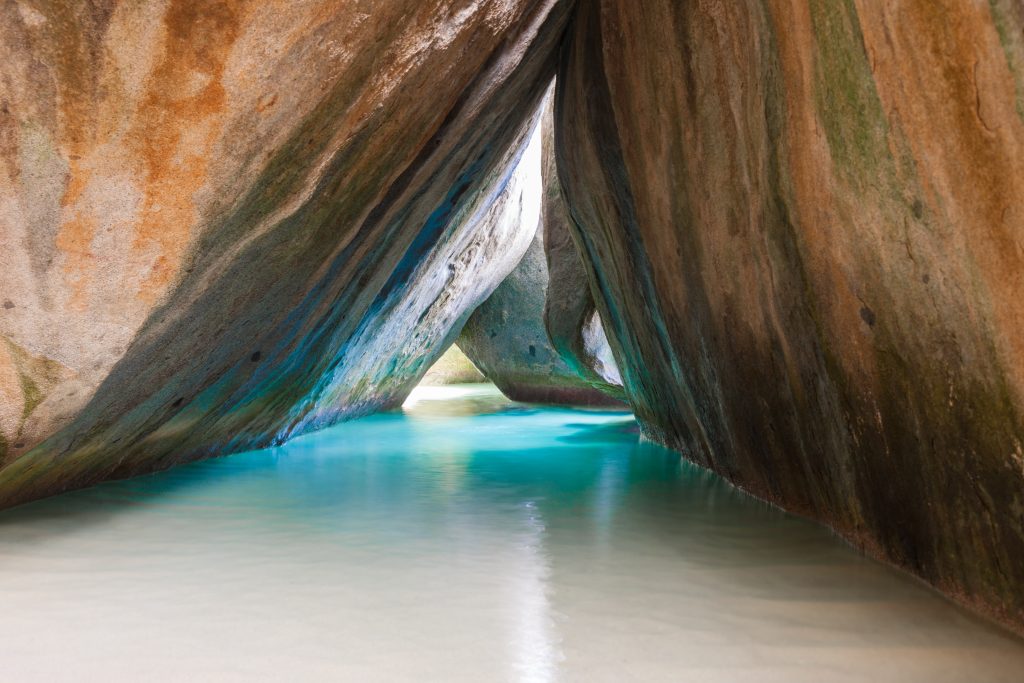 Virgin Gorda · day-use moorings · no anchoring or overnight
The Baths, Virgin Gorda
Granite boulders the size of houses, tumbled into grottoes and tidal pools along Virgin Gorda’s south-west shore. You pick up a mooring, swim in from the boat, and scramble through the caves to Devil’s Bay.
It sits inside a National Parks Trust marine area, so it is day use only — no anchoring, no overnight stays, and the mooring field fills early. Your park permit covers it and waives the beach entry fee.
 North Sound · reachable only by boat · reservable moorings
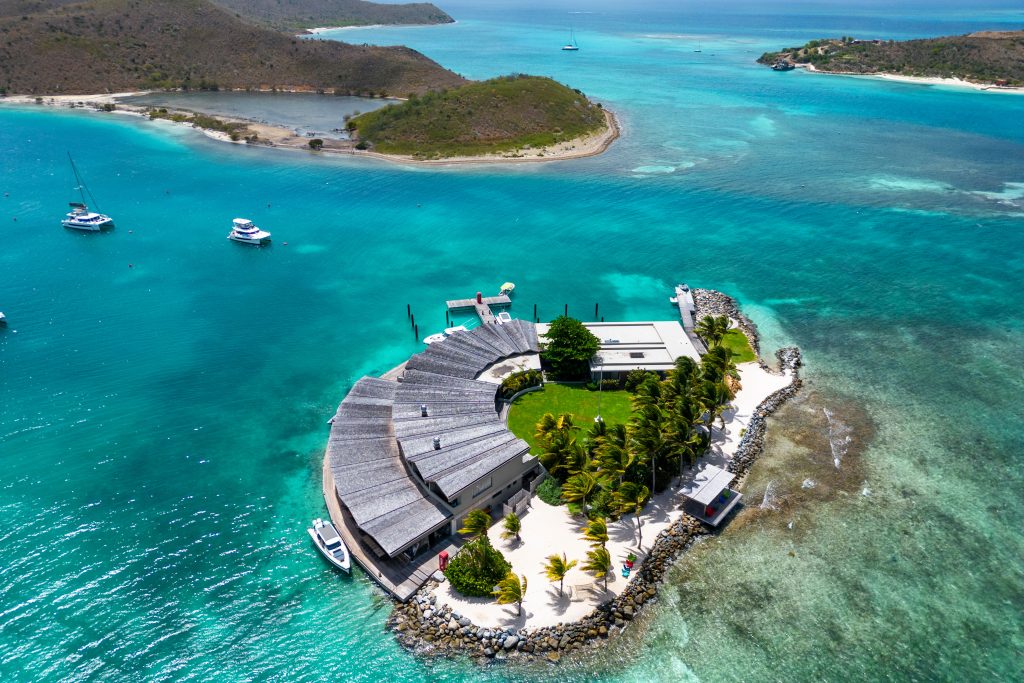
Saba Rock, North Sound
A private one-acre island in North Sound with a bar, restaurant and dock — reachable only by water, which is precisely the appeal. Rebuilt after the hurricane and open daily for breakfast, lunch and dinner.
It is one of the reservable mooring sites in the BVI, and the balls go within minutes of releasing at 07:00 in high season. Leverick Bay and Oil Nut Bay are the neighbours if it is full.
 Anegada · north shore · day trip from the anchorage
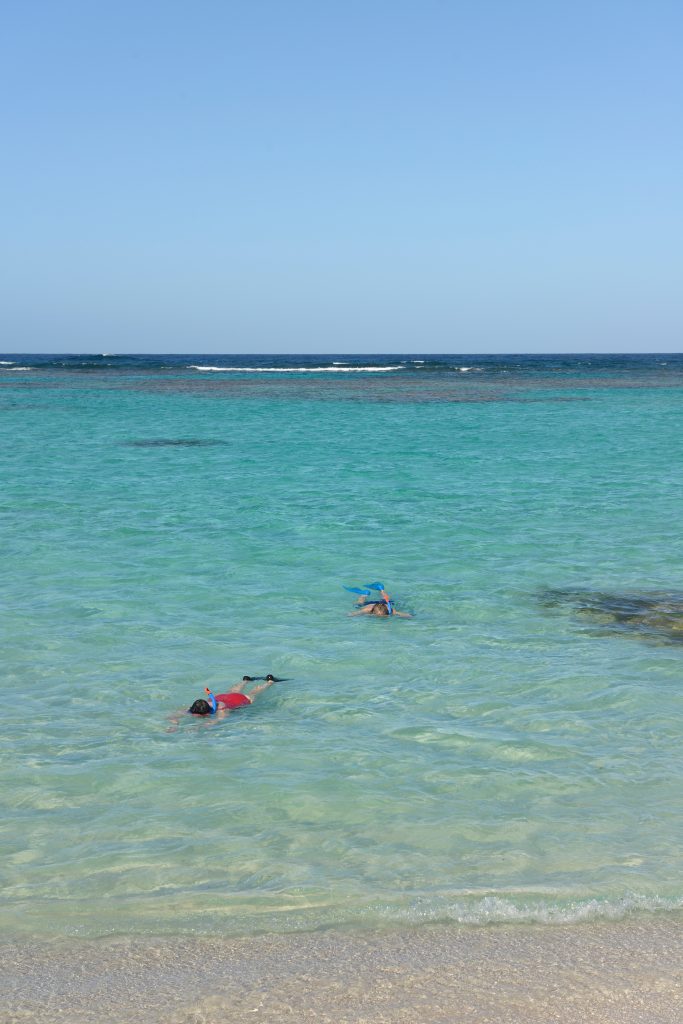
Snorkel Loblolly Bay
Anegada is ringed by Horseshoe Reef, and Loblolly on the north shore is where you get to swim on it — shallow, clear and sheltered behind the coral.
It is a taxi or a long walk from the anchorage at Setting Point, which is part of why Anegada wants a full day rather than a lunch stop.
 Anegada · lobster · book it in the morning
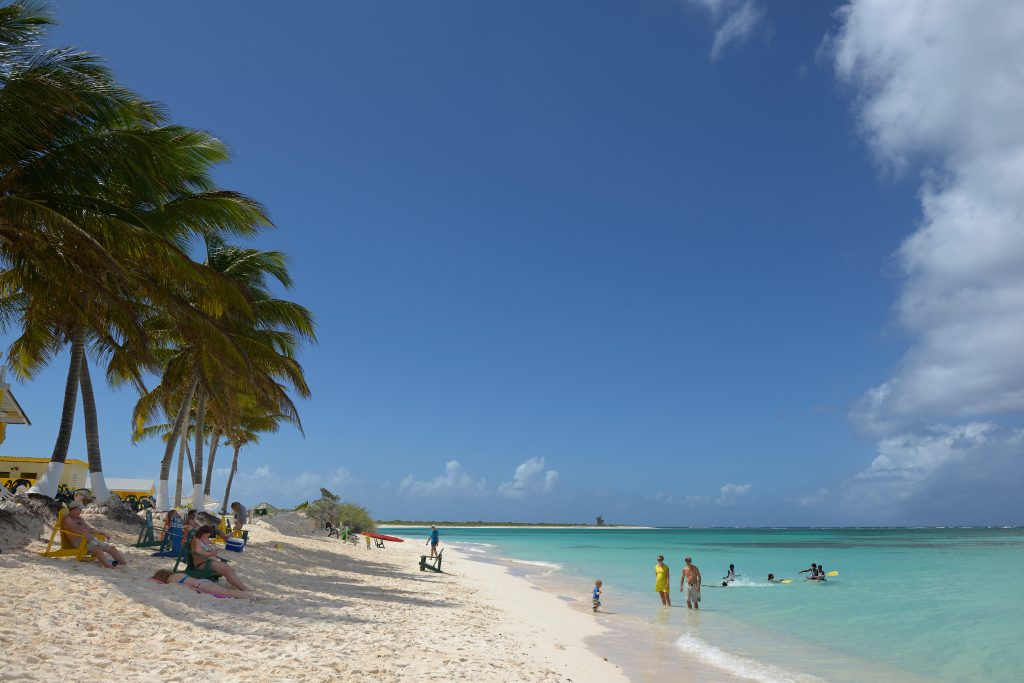
Lobster at Cow Wreck Beach
Anegada lobster is the thing people plan a week around. The convention is to radio or walk in and order in the morning for that evening, because it is caught to your booking rather than kept waiting.
Cow Wreck sits on the north-west shore, about as far from anywhere as the BVI gets.
 Norman Island · The Bight · 90 minutes from Road Town
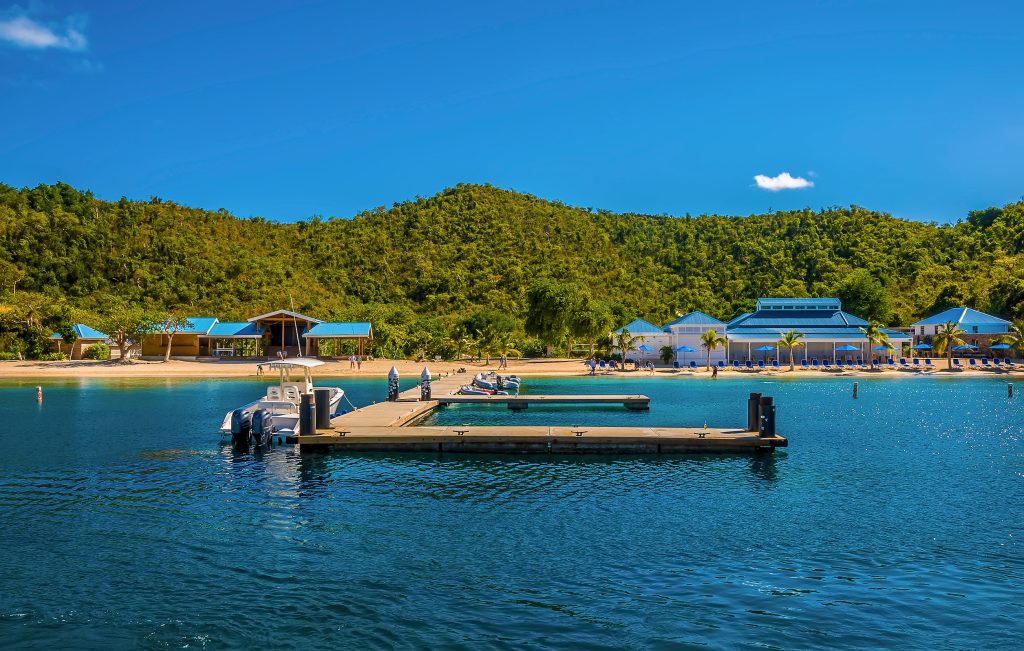
The caves at Treasure Point
Three sea caves at the western end of Norman Island, shallow enough to snorkel into and the reason most charters make The Bight their first night.
Take the tender round in the morning before the day boats arrive from Tortola.
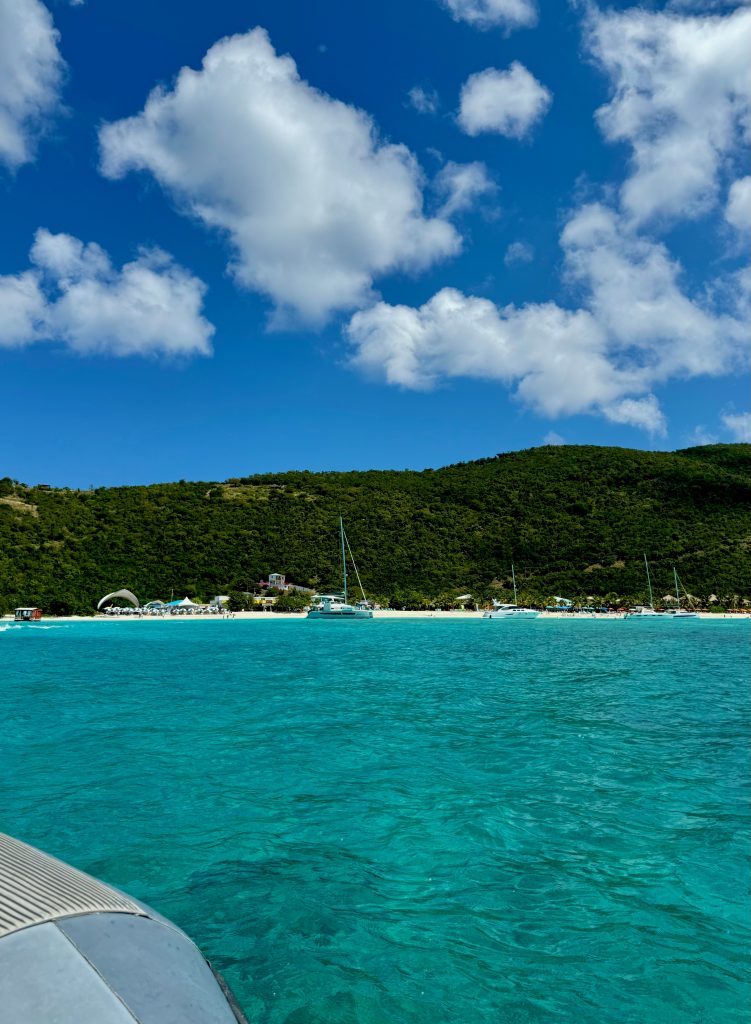 Jost Van Dyke · White Bay · Great Harbour
The beach bars of Jost Van Dyke
A handful of bars on a small island have been serving charter crews for decades, and they are as much a part of a BVI week as the sailing.
White Bay has no dock — you anchor off and swim or tender in through the surf line, which is exactly the point.
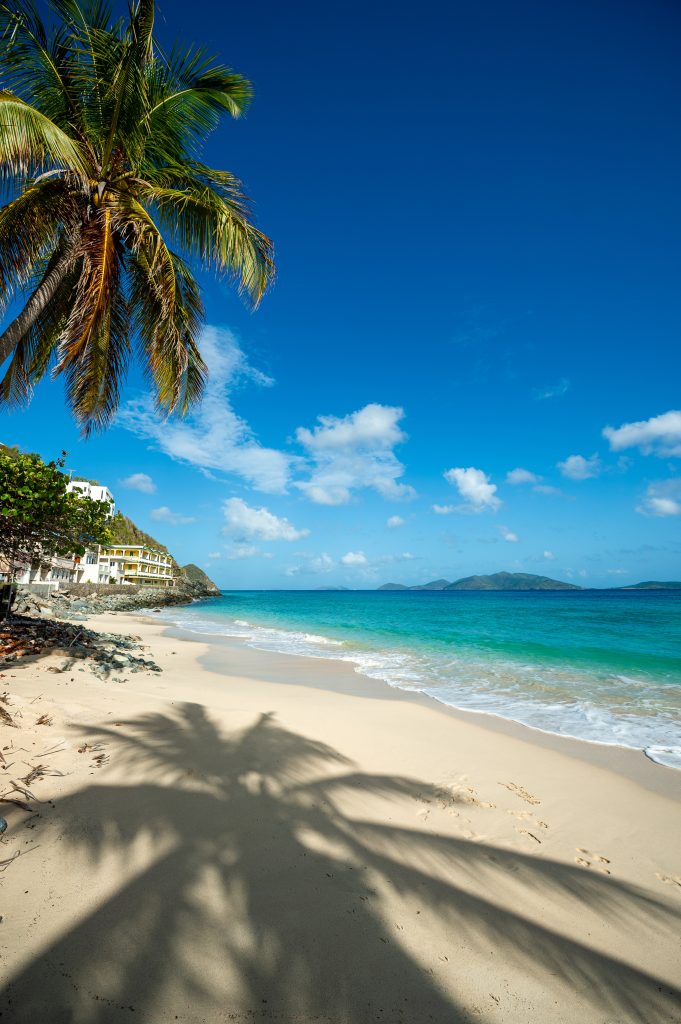 Tortola · north shore · surf beach
Apple Bay and the north shore
The north side of Tortola faces the open Atlantic and picks up swell the Drake Channel never sees, which makes Apple Bay the island’s surf beach.
Most crews see it by taxi over the ridge from Road Town rather than by boat.
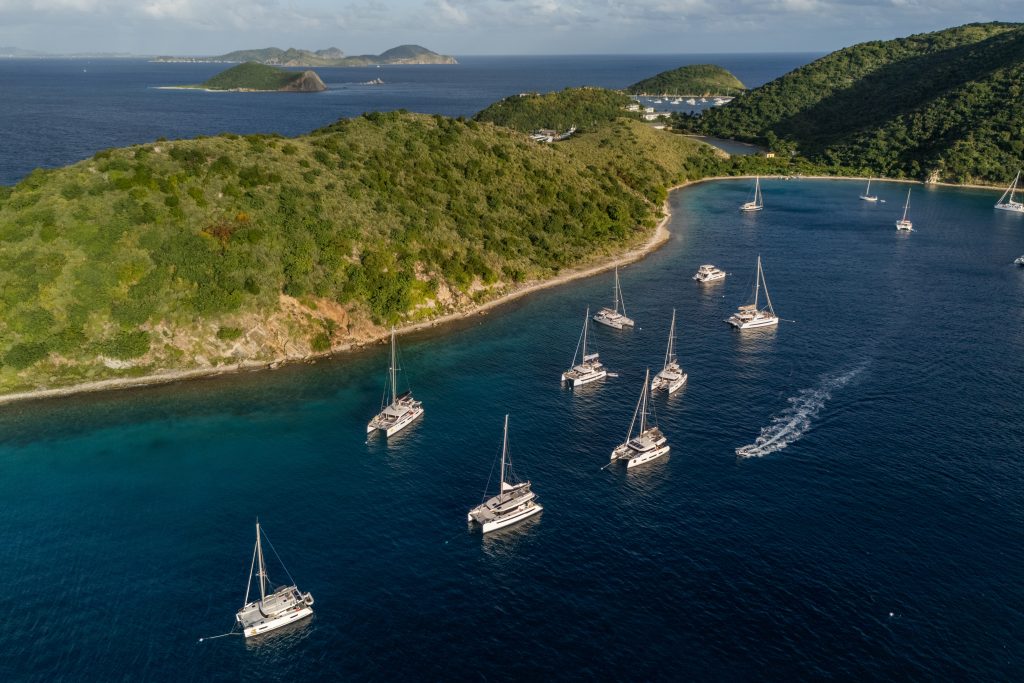 Peter Island · Great Harbour · Deadman’s Bay
Deadman’s Bay, Peter Island
A curve of sand on the south side of the Drake Channel, twenty minutes from Norman and an easy first or last stop.
Peter Island is privately held, so what is open ashore changes — worth checking before you plan a night around it.
What a charter week actually costs
Fuel, provisioning, moorings, permits, the damage waiver, and how an APA really works — set out so you can build a realistic budget before you speak to anyone. No obligation, and no fee to you for using a broker.
British Virgin Islands charter FAQs
Do I need a licence to charter a bareboat in the BVI?
No government licence is required. Operators assess you on a sailing resume — broadly five days or 100 miles as skipper on a comparable yacht. Base staff can require you to take a skipper on arrival if they are not satisfied, at your cost.
How much is the BVI cruising permit?
$6 per person per day for BVI-based charter yachts, flat all year. Foreign-based boats pay $16. Some operators still quote $4, a rate that appears to be out of date — ask yours to confirm the figure they will bill, as it is usually pre-collected on your invoice.
What is the National Parks Trust permit and do I need one?
It covers daytime use of park mooring balls at places like The Baths, The Indians and The Caves. It costs $25 a week for up to four guests and $55 for up to ten — priced by headcount, not boat length. Overnight stays on park moorings are not allowed and neither is anchoring in those areas. Overnight moorings elsewhere are commercial and charged separately.
Can I take a BVI charter into the US Virgin Islands?
Usually yes, and it is a short hop — but it is an international border in both directions, so everyone aboard needs a passport and the boat must clear customs each way. Confirm with your operator first, as some bareboat contracts restrict it.
Is it safe to charter during hurricane season?
The season runs 1 June to 30 November, with the climatological peak around 10 September. Many operators reduce their fleet or close bases from August to October. Charters run through the shoulder months routinely; the sensible precaution is travel insurance covering named-storm cancellation.
Bareboat or crewed — which suits a first Caribbean charter?
If you hold the experience, the BVI is the easiest place in the Caribbean to bareboat. If you do not, adding a skipper to a bareboat at around $330 a night costs far less than a full crewed yacht and still gives you the boat to yourselves.
Get a BVI shortlist for your week
Tell us the dates, the number of people and roughly what you want to spend, and we will come back with the boats actually available that week — bareboat, skippered or crewed — with the permits and fees priced in rather than bolted on afterwards.
What happens next: a broker reads this personally and comes back within 24–48 hours with three to five boats that genuinely fit your dates and budget — not an automated list.
Prefer to talk it through? Call 1-561-463-6840. We have been brokering Caribbean charters since 1992, and there is no fee to you for using a broker.
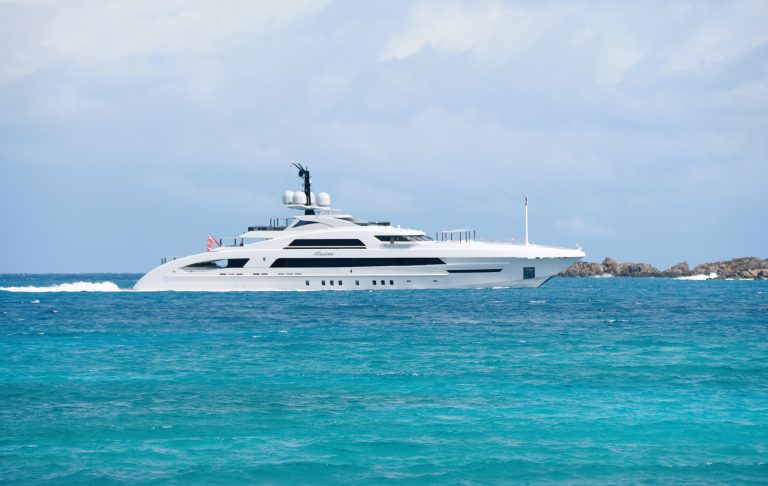
Keep planning
The BVI is one of three territories that make up a Virgin Islands charter. If you are still deciding between them, the Virgin Islands overview compares all three side by side, or read about the US Virgin Islands and Puerto Rico and the Spanish Virgin Islands. Planning to skipper it yourself? The Virgin Islands bareboat guide covers resume standards, the full fee stack, and when putting a skipper aboard is the better call.
Last updated 25 August 2026. Rates and fees checked for the 2026/27 season against operator rate cards and the BVI Government cruising permit schedule.
Ready to plan your BVI week?
Tell us your dates, your group, and roughly what you want to spend. Within 24–48 hours you will have three to five boats that are genuinely free that week — bareboat, skippered or crewed — with permits and fees priced in rather than bolted on afterwards.
Get my shortlist →Prefer to talk it through? 1-561-463-6840 · No fee to you for using a broker